
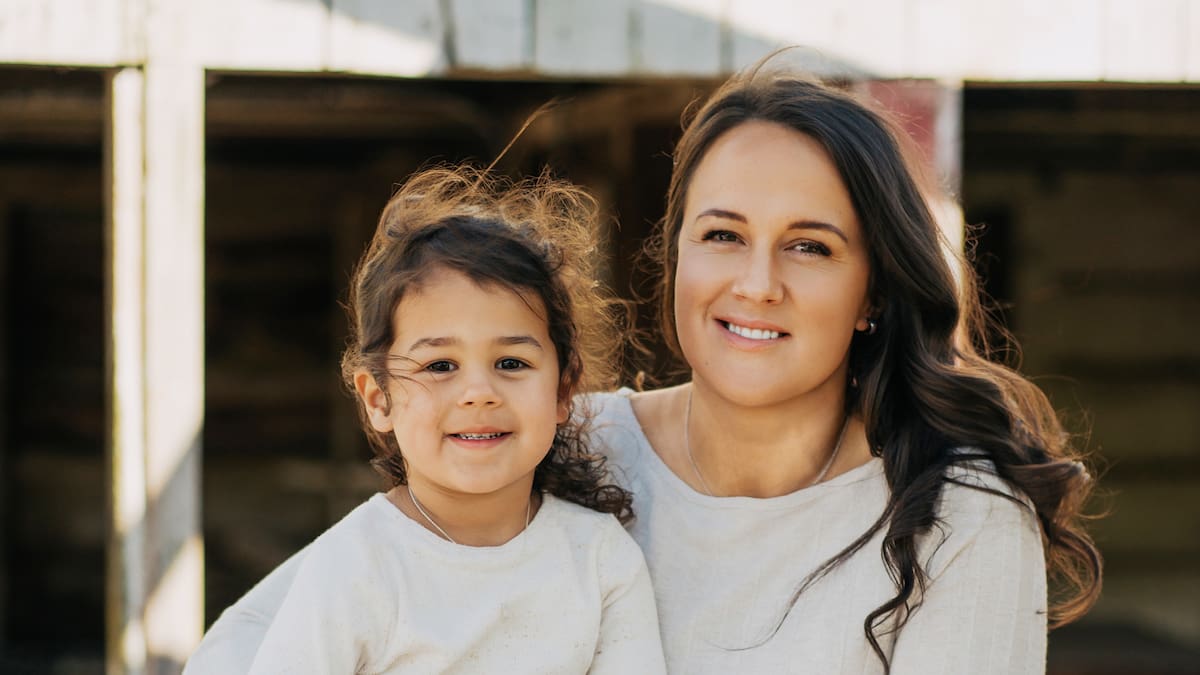
Charmaine Smith with Tamati and Amīria. Photo / Kirsty Joy Photography
But at 12 weeks, test results showed their baby had a one-in-five chance of developing a chromosomal disorder that would not be compatible with life. When they saw an obstetrician a week later for further tests, the prognosis was grim, though still not definitive.
Tells Charmaine, “The specialist said, ‘I would be really surprised if your baby didn’t have one of those conditions.’ So I prepared for the worst but hoped for the best. Tamati’s the opposite − he is so optimistic and glass-half-full. I started grieving from that point, but he was like, ‘We’ll wait until we get the results.’”
While the news alone was devastating, one of the hardest parts of the process for the Whangārei-based couple was the waiting. It was a five-week emotional rollercoaster, says Charmaine, all while nurturing a baby she wasn’t sure she would ever get to see grow up.
Amīria kept her mum going. Photo / Kirsty Joy Photography
“It was weeks of going around in circles – feeling positive, then worried and not being able to function. It was really hard. I found myself looking for other people’s stories, trying to feel less alone. That’s part of why I decided to share mine − because I know what it feels like to need that.”
Throughout it all, Amīria kept her mum going.
“She was a ray of sunshine,” Charmaine smiles. “Sometimes she would see Mum sad and not understand why. But she would come out and give us dance performances. You’re having the worst moments of your life, but then there’s this beautiful little person.”
And on the day they received the devastating news that their baby had triploidy – three copies of every chromosome instead of the usual two – and would not survive, it was Amīria’s joyful singing that Charmaine remembers most vividly.
Charmaine credits Tamati for being her rock, even as he navigated his own grief. Photo / Kirsty Joy Photography
“She was sitting in the back of the car singing, ‘If you’re happy and you know it, clap your hands.’ It was such a surreal moment on one of the hardest days of our lives.”
On September 22, at 10.20pm, Charmaine and Tamati’s tiny baby girl was born sleeping. This unimaginably difficult experience was made harder, says Charmaine, because she was treated in a surgical ward, which meant she wasn’t under the care of her midwife.
“I found that part hard to understand,” she says. “No one was at fault − it just made an already heartbreaking experience feel even harder.”
Baby Marama was laid to rest on Charmaine’s parents’ farm, where grieving whānau can visit her whenever they like. Charmaine wears a moon pendant with Marama’s birthstone, so she feels as if she’s always with her. And her name, Marama − which means the moon in te reo Māori − carries deep significance.
“We thought how beautiful that we could look up in every night sky, and see her and think of her.”
Through it all, Charmaine credits Tamati for being her rock, even as he navigated his own grief. Two months on, they’re taking one day at a time, but looking to the future with positivity. After seven years together, Tamati, 34, proposed earlier this year over a quiet family dinner in Paihia and wedding plans are underway.
Charmaine tells, “He bought this ring five years ago and hid it amongst his tools in the garage. He was just finding the right time in our lives. We want to get married and even more so after going through this. He is my person.”