
2025 was quite an eventful year as far as the Indo-Pacific is concerned, with perhaps the least surprising aspect being that China has continued its trajectory of belligerent behavior towards Taiwan and in the South China Sea while continuing its military buildup.
However, the open conflicts that erupted between India and Pakistan, as well as Thailand and Cambodia, took many observers by surprise. While a ceasefire quickly stopped the conflict between New Delhi and Islamabad, the latter conflict has recently reignited.
However, it was still China that dominated the defense and security headlines, as it continues its campaign of intimidation against other countries in the region, although one such event went awry when a Chinese Coast Guard corvette collided with a People’s Liberation Army Navy (PLAN) destroyer in August while harassing a Philippine Coast Guard patrol boat near a disputed shoal in the South China Sea.
It has also been a busy year for defense industry-related news, with major acquisition announcements from Australia and Singapore, while South Korea’s defense industry has continued to show ambition.
[This article is one of many in a series in which Breaking Defense reporters look back on the most significant (and entertaining) news stories of 2025 and look forward to what 2026 may hold.]
These are some of the major stories I have covered from this year:
1. China showcases nuclear triad, new missiles and lasers at military parade
In Ssptember, the People’s Liberation Army flexed its nuclear muscle during a parade in Beijing, showing for the first time its nuclear triad along with several other missiles and other weapons system during a commemoration of the 80th anniversary of the defeat of Imperial Japan in World War Two.
These included a new Air-Launched Ballistic Missile (ALBM) and two new Inter-Continental Ballistic Missiles (ICBM), joining a previously shown Submarine Launched Ballistic Missile (SLBM).
Also on display for the first time at the parade were a variety of new systems including the HQ-29, which is believed to be an anti-satellite interceptor that is also capable of conducting mid-course ballistic missile defense along with several counter drone systems.
2. China commissions first catapult-equipped aircraft carrier
Staying with China, it also commissioned its third aircraft carrier in November. The Fujian is the first PLAN aircraft carrier to utilize catapults in launching its aircraft, marking a significant leap in its capabilities from its two earlier aircraft carriers which both used ski jumps to launch aircraft.
The three electromagnetic catapults enable heavier or less-powerful aircraft such as the Xi’an KJ-600 airborne early warning aircraft to operate from it. It is also put into service the J-35 next-generation, carrier-borne fighter and is developing the J-15D Electronic Attack aircraft, which would enable the PLAN to operate a more balanced air wing with greater combat capabilities
3. Hanwha plans to build US facility to manufacture modular 155mm howitzer charges
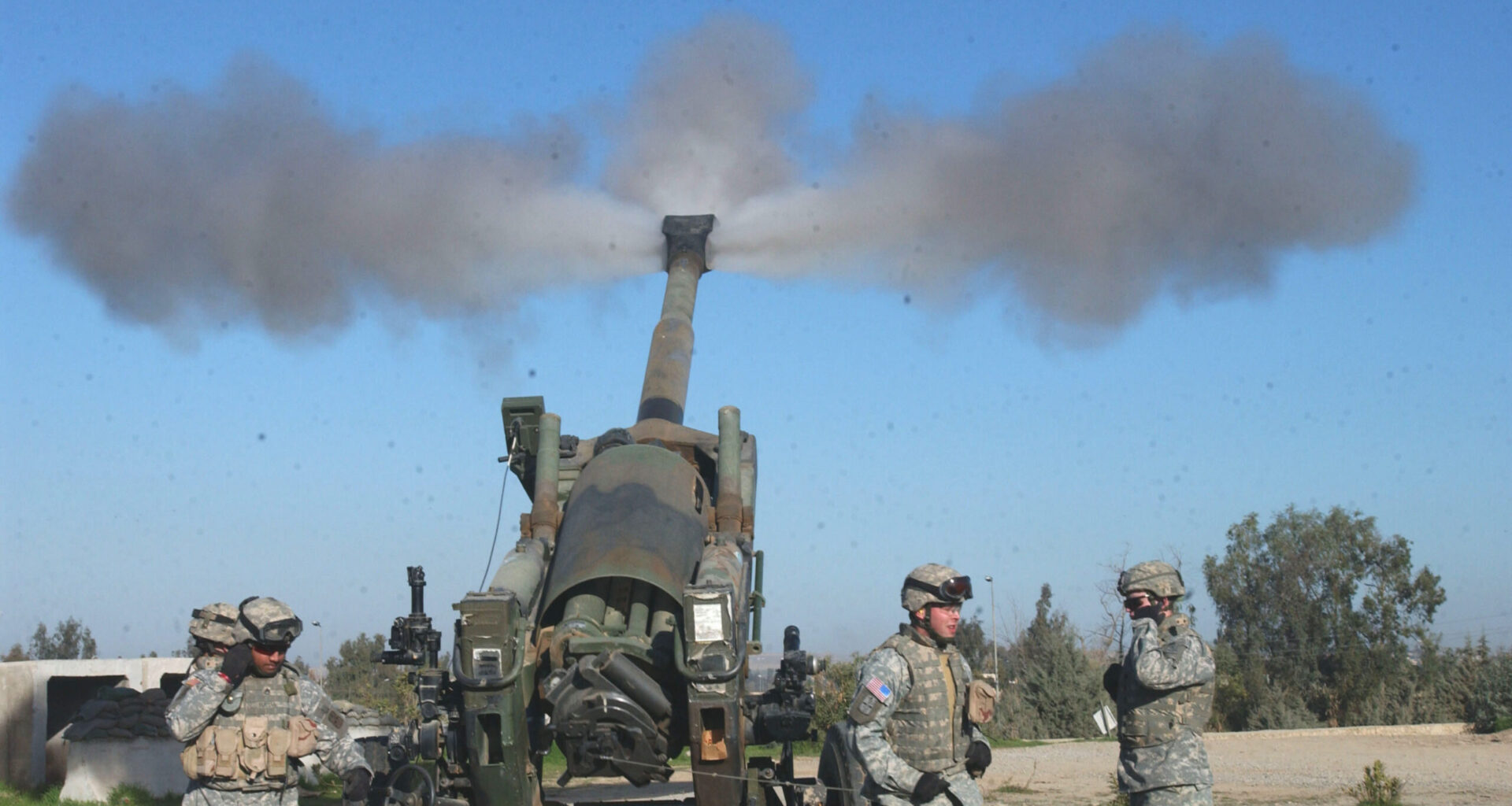
South Korea’s Hanwha is making a play to become a bigger player in the US defense industrial base, including plans to invest in an all-new automated munitions plant in the US to manufacture 155mm howitzer modular charge systems.
The company is currently looking at possible sites for the facility, which will feature automated production lines and will be based on its existing plant in Korea, which Breaking Defense visited for this story.
4. Okinawa-based F-15 squadrons responsible for nearly 60 percent of country’s scrambles
In September I visited Naha Airbase on Japan’s southern island of Okinawa, a unique spot in that it is the sole airbase to be used by all three services of Japan’s Self-Defense Forces.
These include two Japan Air Self-Defense Force (JASDF) F-15 interceptor squadrons, who I learnt were heavily engaged in monitoring Chinese military activity in the East China Sea, including being responsible for almost 60 percent of service’s more than 700 scrambles over the last Japanese fiscal year.
5. In Singapore, UK Carrier Strike Group commanders talk upcoming exercises, with key F-35 role
The UK-led Royal Navy Carrier Strike Group undertook a three-month deployment to the Indo-Pacific where they engaged with regional militaries and took part in several training exercises and activities, including a high-end training exercise involving 19 countries in and around Australia. This is all part of the UK’s efforts to reach Full Operational Capability (FOC) for both its carrier strike group concept as well as the country’s F-35B capability.