
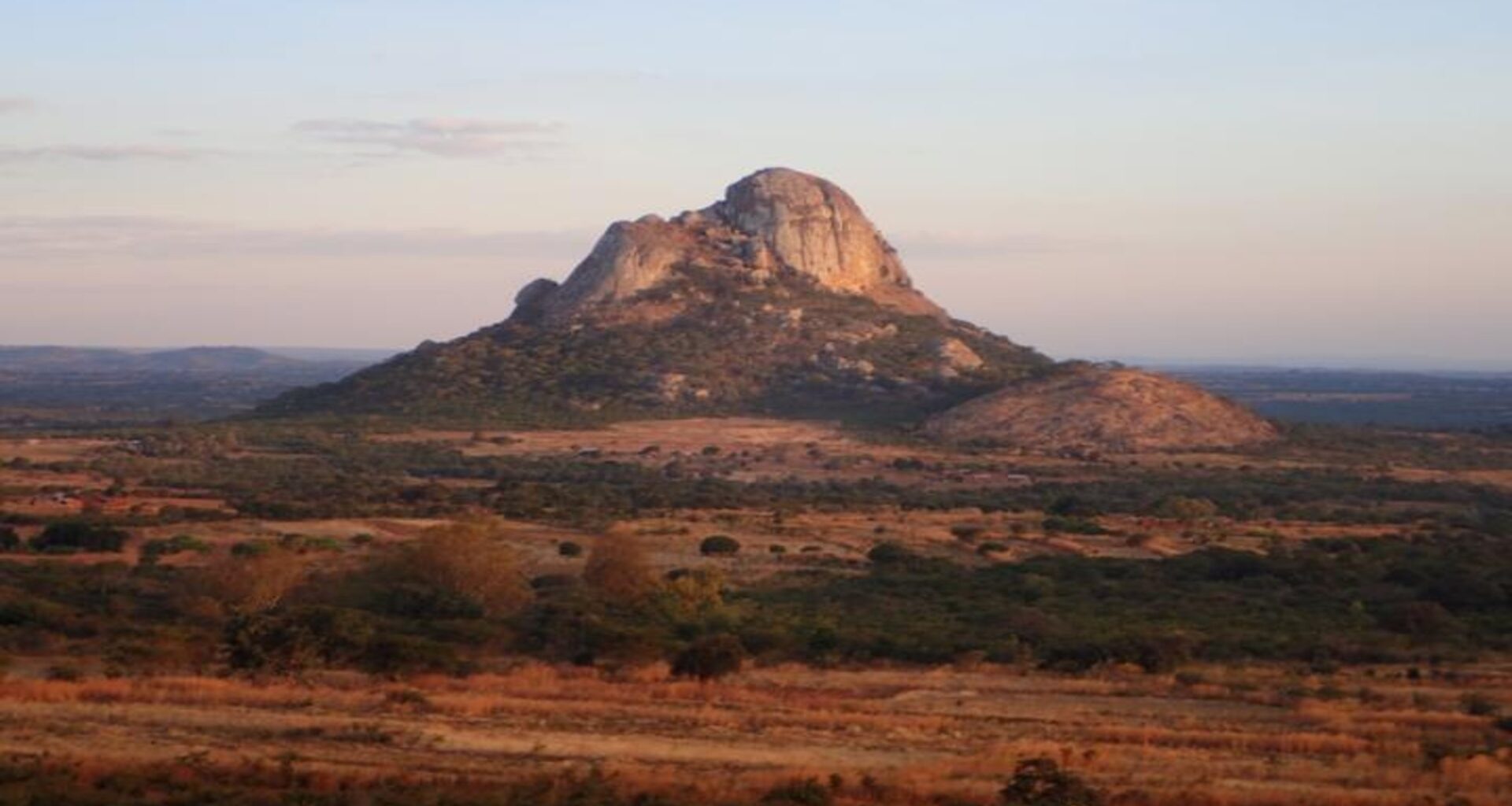
At Mount Hora, archaeologists discovered the oldest human cremation in Africa and the oldest in situ adult pyre in the world.
As stated in a study recently published in Science Advances, “globally, there is scant evidence of intentional cremation before the mid-Holocene. The practice is especially rare amongst hunter-gatherers.”
Although the oldest burned human remains date back to 40,000 years old at Lake Mungo, Australia, it lacks any signs of a pyre, which makes the recent discovery of “an intact hunter-gatherer cremation pyre” at Mount Hora a groundbreaking first.
It is the oldest intentionally built pyre in the world, challenging previously held assumptions about these early communities in Africa, showing them to have participated in complex social and mortuary rituals.
“A community invested substantial time and energy into the construction and performance of a funeral and the post-burning treatment of a body,” the study continues.
A groundbreaking woman at the heart of the pyre
Beneath a rock shelter located at the foot of a remarkable, isolated rock hill that emerges abruptly from a surrounding plain, called a granitic inselberg, an international team of archaeologists discovered the cremation pyre about “the size of a mattress,” according to The Guardian.
According to Archaeology News, the occupation of the area extended back 21,000 years, and the location was used as a burial ground between 16,000 and 8,000 years ago. This cremated body marked a shift in funerary practice.
The body belonged to a small adult, most likely a woman between 18 and 60 years old, just under 5 feet tall, according to Archaeology News. A total of 170 bone fragments were identified with layers of ash, charcoal, and sediment, The Guardian reports.
The analysis of the body indicated that it had been placed upon the pyre shortly after she died. A preparation followed, as cut marks on the limb bones indicated. She was dismembered, de-fleshed, and even beheaded before being burned.
“[This] supports our hypothesis that some of the missing bones from the cremated woman may have been deliberately removed and taken as tokens for curation or reburial elsewhere,” said Dr Ebeth Sawchuk, a co-author of the study, to The Guardian.
The removal of the skull, according to study authors, signifies an act of remembrance, social memory, and ancestral veneration. Skull removal and bone relics have been documented in various groups in Africa, though not this early. But a continuum seems to exist.
Hunter-gatherers were complex
The pyre, as an established structure, would have “taken a village” to construct. Why this woman received this treatment remains a mystery, but 66 pounds of deadwood and grass had to be collected for the fuel, as per the study, so it wasn’t a casual undertaking.
Studying the pyre microscopically, they maintained a temperature of 500 degrees Celsius. The presence of stone tools in the pyre led archaeologists to question whether they were “thrown into the fire” as part of the ritual, or were used to prepare the body for cremation, as said in The Guardian.
The authors of the new, groundbreaking study noted that the discovery changed their perspective on these early hunter-gatherers in Africa, as a group that demonstrated cohesion, as the site appeared to hold significance as a permanent location where individuals were laid to rest.
“They clearly had advanced belief systems and a high level of social complexity at this early date,” study authors concluded in The Guardian.