
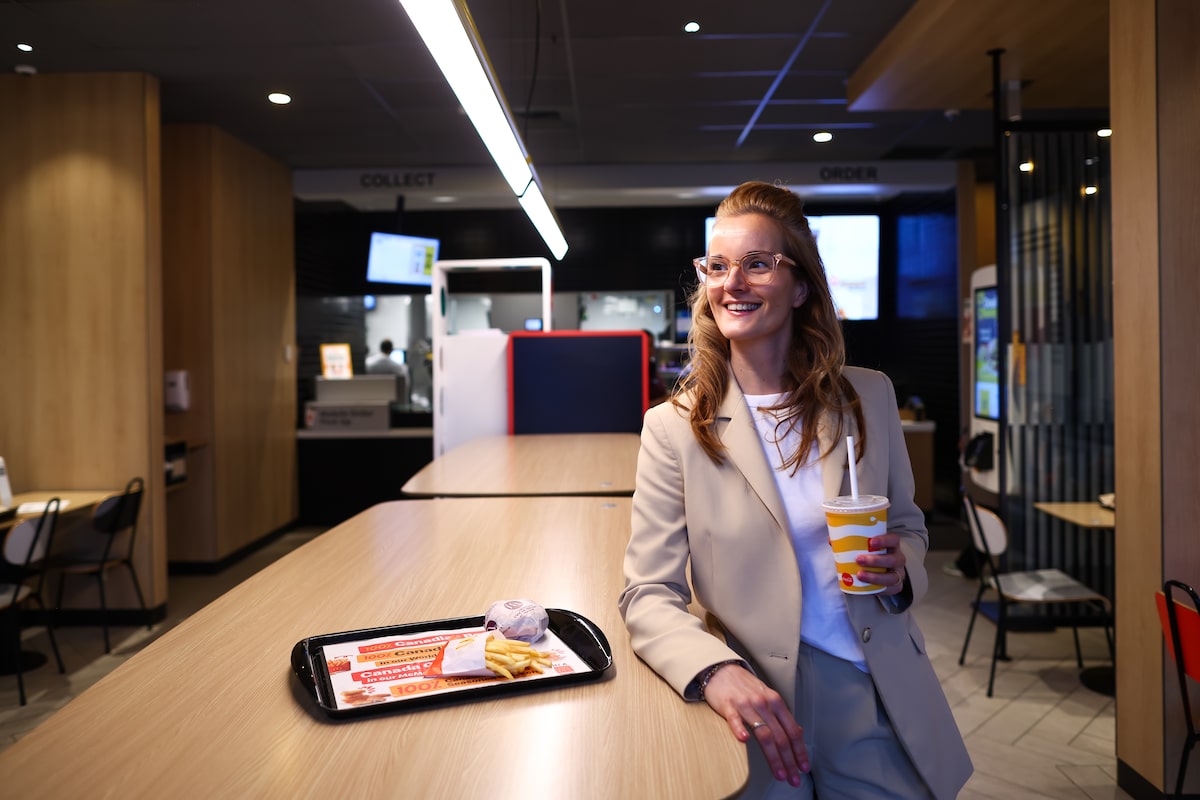
McDonald’s Canada CEO Annemarie Swijtink, shown at a Toronto restaurant, said the company is lowering its value-meal prices to respond to consumers’ affordability concerns.Cole Burston/The Globe and Mail
McDonald’s Canada is dropping the price of its value menu, and expanding the number of discounted items it offers, as consumers struggling with the higher cost of living are cutting back on even the cheapest restaurant visits.
The fast-food giant is announcing its McValue Meal bundles will now cost $5 before tax, down from $5.99 previously – a price that the company has committed to freeze for a year. The discount menu will also now include four breakfast combos during morning hours.
Restaurants under pressure as Canadians dine out less to save money, report says
The pricing decision was prompted by financially stressed Canadians who are dining out less, which is affecting the entire restaurant industry, McDonald’s Canada chief executive officer Annemarie Swijtink said in an interview.
“Running a business right now is challenging,” Ms. Swijtink said, adding that customers across the country “are having insecurity about their financial position because of rising costs. That is impacting everyone.”
And when people try to reduce their non-essential spending, restaurant visits are often the first place they cut back. In a November survey of 1,511 Canadians, industry group Restaurants Canada found that 75 per cent of Canadians had begun dining out less often to combat the higher cost of living. That includes cutting back on fast food (known in the industry as quick-service restaurants).
“I’ve been with the association for 26 years, so I’ve seen my fair share of declines and recessions,” said Chris Elliott, Restaurants Canada’s chief economist and vice-president of research. “The pattern was, as you’d see an economic slowdown happening, high-end restaurants would feel the impact; followed by medium table-service restaurants; and then quick-service restaurants would generally be immune from it. Now, we’re seeing all segments of the food service industry being impacted.”
While same-store sales – an important metric that tracks sales trends at restaurants open for more than a year – trended upward in the first three quarters of 2025, the group began to see sales decline in October.
“That’s not normal to see,” Mr. Elliott said. “Because typically you see that shift from full-service to quick-service. But now we’re seeing that shift from quick-service right out to grocery.
“People are just not going out as much.”
While the rising cost of living is nothing new, Canadians have not had much relief. After food inflation numbers hit record highs in 2022, the price of feeding Canadian families remains much costlier than it was before the pandemic. According to Statistics Canada, grocery prices rose 4.7 per cent in November, 2025, compared with the same month the prior year – the biggest increase recorded since December, 2023.
McDonald’s in the U.S. launched Extra Value Meals in September.Gene J. Puskar/The Associated Press
That affects not just restaurant customers, but owners as well who have to balance rising food costs with keeping their menu prices attractive.
And broader economic uncertainty could keep consumers on the sidelines in the year ahead, as the U.S. continues its punishing global trade war and renegotiation of the Canada-U.S.- Mexico Trade Agreement looms. Last week, Deloitte Canada released its economic outlook, predicting slowing growth in 2026, with gross domestic product forecast to grow 1.5 per cent, down from 1.7 per cent in 2025.
“People on the way to work, who normally would pick up a coffee, they’re just not sure, ‘am I going to have a job in six months?’” Mr. Elliott said. “Until this really gets resolved, in terms of the trade war, I think going into 2026 this is still going to be a major factor that’s going to impact food service sales.”
With customers proving significantly more price-sensitive, McDonald’s and other fast-food restaurants can lose people when they are no longer seen as offering good value for money.
McDonald’s beats sales estimates as value meals draw price-conscious diners
In the United States, McDonald’s has been seeing visits from lower-income consumers drop off. In September, the chain launched Extra Value Meals for American customers. The previous month, U.S. CEO Chris Kempczinski said that combo-meal prices that had edged up over US$10 had negatively affected people’s “value perceptions” of the brand.
Here in Canada, since July of 2024 when McDonald’s dropped the price of a small coffee to $1, the chain has seen sales volumes increase by roughly 2.5-million additional orders per month.
As part of Tuesday’s announcement, the company is also making the $1 coffee part of its one-year price freeze.
“People are going out less. That is in general the case, and especially if you have less money –the lower-income household consumers,” Ms. Swijtink said. “And that’s really fuelled our approach with value, because that is what we want to give them.”