
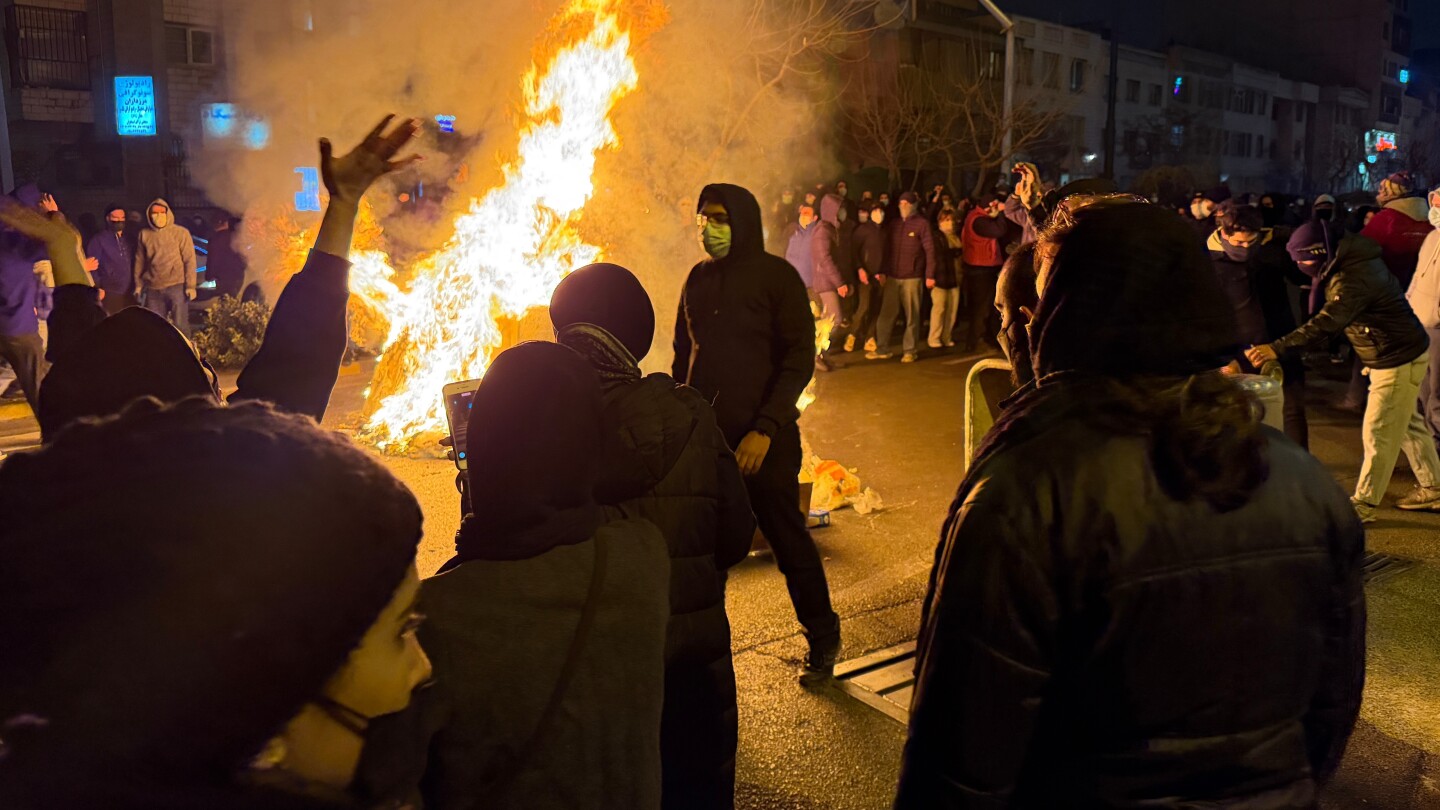
The death toll from nationwide protests in Iran spiked Tuesday to at least 2,000 people killed, activists said, as Iranians made phone calls abroad for the first time in days after authorities severed communications during a crackdown on demonstrators.
The U.S.-based Human Rights Activists News Agency, which has been accurate in previous unrest in recent years, gave the latest toll. It relies on supporters in Iran cross-checking information.
That figure dwarfs the death toll from any other round of protest or unrest in Iran in decades and recalls the chaos surrounding the country’s 1979 Islamic Revolution. The demonstrations began a little over two weeks ago in anger over Iran’s ailing economy and soon targeted the theocracy, particularly 86-year-old Supreme Leader Ayatollah Ali Khamenei.
Iranian state television offered the first official acknowledgment of the high death toll, saying the country had “a lot of martyrs.” The anchor read a statement that said “armed and terrorist groups” led the country “to present a lot of martyrs to God.”
What to know:
The scope of the protests: More than 600 protests have taken place across all of Iran’s 31 provinces, the Human Rights Activists News Agency reported Tuesday. Understanding the scale of the protests has been difficult. Iranian state media has provided little information about the demonstrations. Online videos offer only brief, shaky glimpses of people in the streets or the sound of gunfire.Iran’s communication with Washington: Iran’s foreign minister, speaking to Al Jazeera, said that while he has continued to communicate with U.S. envoy Steve Witkoff throughout the protests, “Washington’s proposed ideas and threats against our country are incompatible.”How AP reports on the death toll from Iran’s protests: The difficulty of tracking the death toll has been compounded by the government’s decision to cut off the internet and international calling to the country, but some information has still been getting out. AP reporting has relied on some videos, which likely have made it out of the country via Starlink satellite dishes. The AP authenticates such footage by checking it against known locations and events, as well as talking to regional experts. The AP also ensures the substance of the video is consistent with its own reporting.