
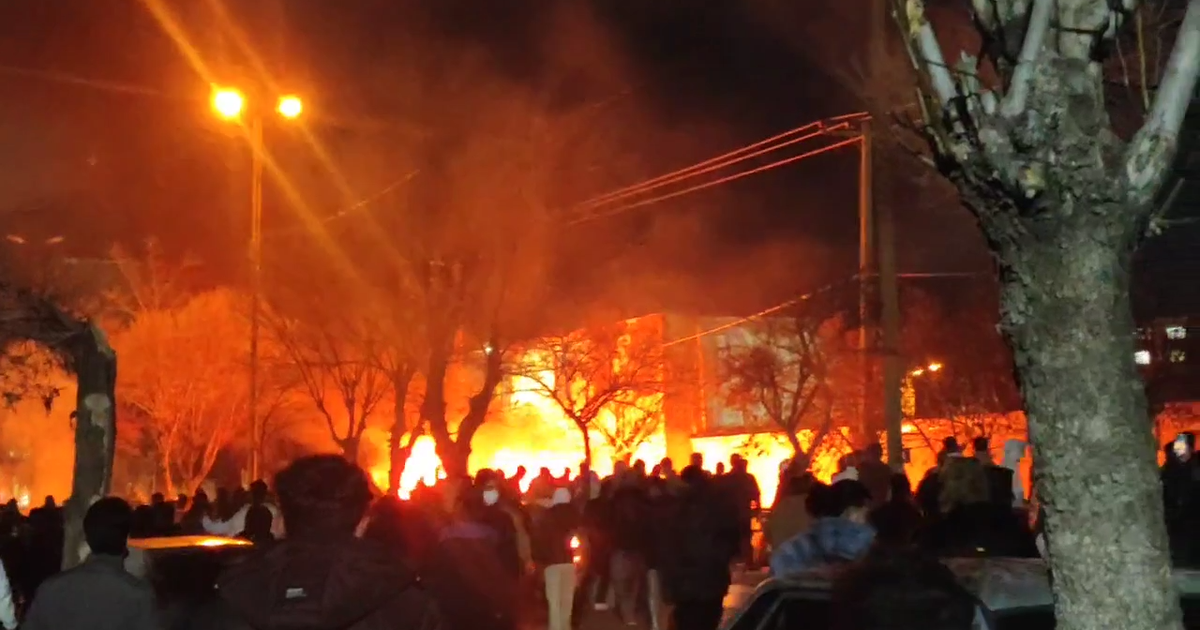
The killings in Kuhdasht, Azna and Lordegan came before the government shut down internet access, cutting off communication with the outside world and plunging Iran into silence. The area home to Iran’s marginalized Lur ethnic minority.
In those early hours, shock and horror spread through hushed calls and voice notes, as brief videos surfaced of blood-stained children of Iran — someone’s son, someone’s brother, someone’s loved one — all killed by security forces.
Sources who spoke to Iran International requested anonymity, fearing reprisals from authorities for speaking to the media.
Hessam Khodayarifard: a life snuffed out on New Year’s Eve
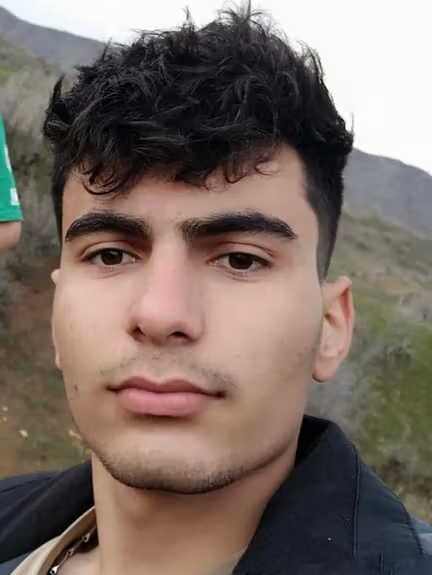 Hessam Khodayarifard
Hessam Khodayarifard was shot dead in the western Iranian city of Kuhdasht on the evening of New Year’s eve. The 22-year-old was killed on Wednesday night, December 31, 2025, during a crackdown on protests, two family sources told Iran International.
Authorities initially refused to hand over his body and pressured the family to present him as a member of the Revolutionary Guard’s Basij militia, relatives said. The claim was later publicly rejected by Hessam’s father, who spoke at his son’s funeral after the body was eventually returned.
But his burial brought no peace. Mourners gathered in large numbers, chanting anti-government slogans. Confrontations erupted as security personnel moved in, turning the funeral into another site of repression where grief and anger were met with force.
Shayan Asadollahi: the family’s only provider
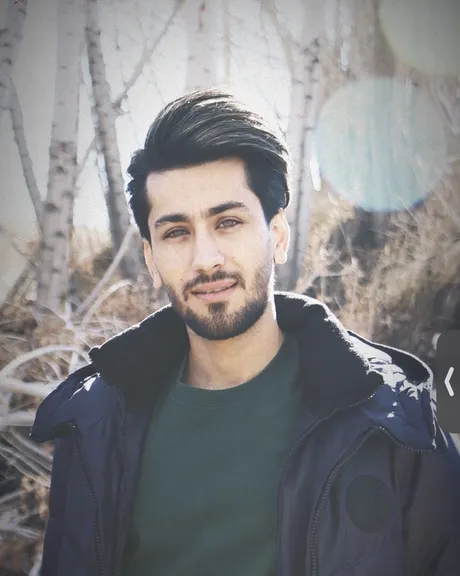 Shayan Asadollahi
On New Year’s Day, gunfire cut through the night in Azna in Iran’s western Lorestan province, where Shayan Asadollahi was shot dead. He was 28.
A relative told Iran International that Shayan was killed as he and a group of other protesters were returning home from a demonstration. Several military pickup trucks belonging to the Revolutionary Guard attacked the group, the source said, and security forces opened fire using military-grade weapons.
A live round struck Shayan in the abdomen according to photographs verified by Iran International. At least two other protesters were also killed during the same crackdown, the source added. Revolutionary Guards-affiliated Fars News later reported that three protesters had been killed in Azna.
Shayan was a barber, known in his community for working long hours to support his family. About a year earlier, his father and uncle had both died in an accident, the source said, leaving Shayan as the family’s sole breadwinner.
Reza Moradi: a child killed in the protests
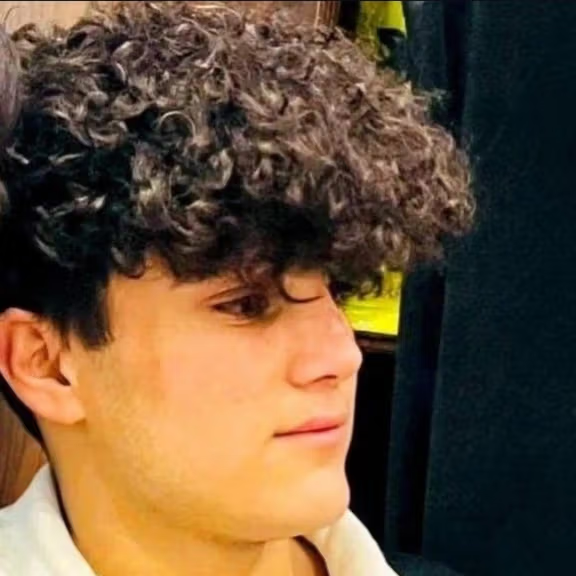 Reza Moradi
Another victim from Azna was still a child.
Reza Moradi was 17 — the eldest child in his family which hails from the Abdolvand tribe, part of Iran’s Lur minority. He was shot on Thursday, January 1 during protests outside Azna’s central police station.
Security forces shot him twice, a source close to the family said: once in the head and once in the lower torso.
Video analyzed and verified by Iran International from that evening shows Reza unconscious on the ground, blood visible along the side of his head. Bystanders carried him to Valian Hospital in the nearby city of Aligudarz.
The hospital was placed under heavy security, the source said. Visits were banned. Only once — after repeated insistence — was Reza’s mother allowed to see her son briefly.
Reza died in hospital on the following Monday morning.
Authorities initially refused to hand over his body. When Reza was eventually returned and buried, a video at his grave site showed his younger brother clinging to the fresh earth in tears.
Reza had dropped out of school to help support his family, working as an apprentice in auto body repair and paint. His father is a laborer, and the family’s financial situation was dire, the source said.
Sajjad Valamanesh: grief and coercion
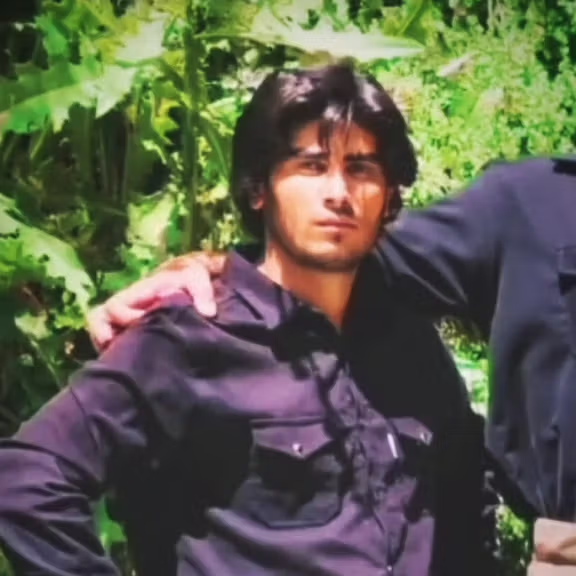 Sajjad Valamanesh
In neighboring Chaharmahal and Bakhtiari province, home to Bakhtiari Lur communities and about a three-hour drive southeast of Azna, authorities followed up another deadly shooting with further crackdowns.
In the city of Lordegan, Sajjad Valamanesh, a 20-year-old protester, was killed after being shot by security forces during demonstrations on Thursday, January 1, sources close to the family told Iran International.
The violence did not end with his death. Authorities repeatedly contacted Sajjad’s relatives in the days that followed, including calls from the Revolutionary Guard’s Intelligence Organization, a source close to the family said.
His father was pressured into giving an interview aired by state media in which he called for an official crackdown on “rioters,” but the source said he did so only to secure the release of Sajjad’s body for burial.
Sajjad was not a member of the Basij and was a monarchy supporter, the source said.
He was buried on Friday with a large crowd attending his funeral.
Witness to the fate of the boy in a blue T-shirt
A 20-year-old witness who was present at the protests in Azna said he saw security forces shoot a teenager who looked “no more than 15 years old” on a road near the city’s main police station, where protesters had gathered on January 1.
“I saw them with my own eyes,” he said. “Security forces shot the boy, and he fell into a roadside drainage ditch.”
A group of protesters rushed to help him, he said. “But he was not moving anymore.”
The witness said the scene stayed with him.
“After seeing what I saw, I just could not take it anymore,” he said. “So I went back to the protests the next day as well.”
In messages sent shortly before the internet was shut down, the witness said he feared the world would never know what was happening in his hometown.
“Maybe it does not matter to the world,” he said, “because Azna is so small.”
“But the truth is that Lurs and Bakhtiaris have been deeply harmed by this wretched regime, even though this land is rich and full of resources,” he added.
“For us, it is already over,” he said. “I only wish that the lives of the next generation will be more beautiful.”
Before contact was cut, he made a final plea: “Please tell our stories,” he said. “Please tell the world what they did to my people.”
Four names, countless others remain unknown
These four names represent only a fraction of what unfolded in those days. They are among the few cases Iran International was able to document in detail.
Eyewitnesses and medics told Iran International the preliminary death tolls since protests began on Dec. 28 had ramped up in recent days to up to 2,000 people.
As an internet shutdown entered its fifth day, cutting off Iranians from the world and silencing independent reporting, the scale of the violence and suffering remained unknown.