

 Photo courtesy: Bob Butrym/RFB Sport Photography
When the CFL announced significant rule changes in September, the league’s head coaches and general managers were not consulted. Now, they are getting their say at the offseason winter meetings in Calgary, and it appears some have brought receipts.
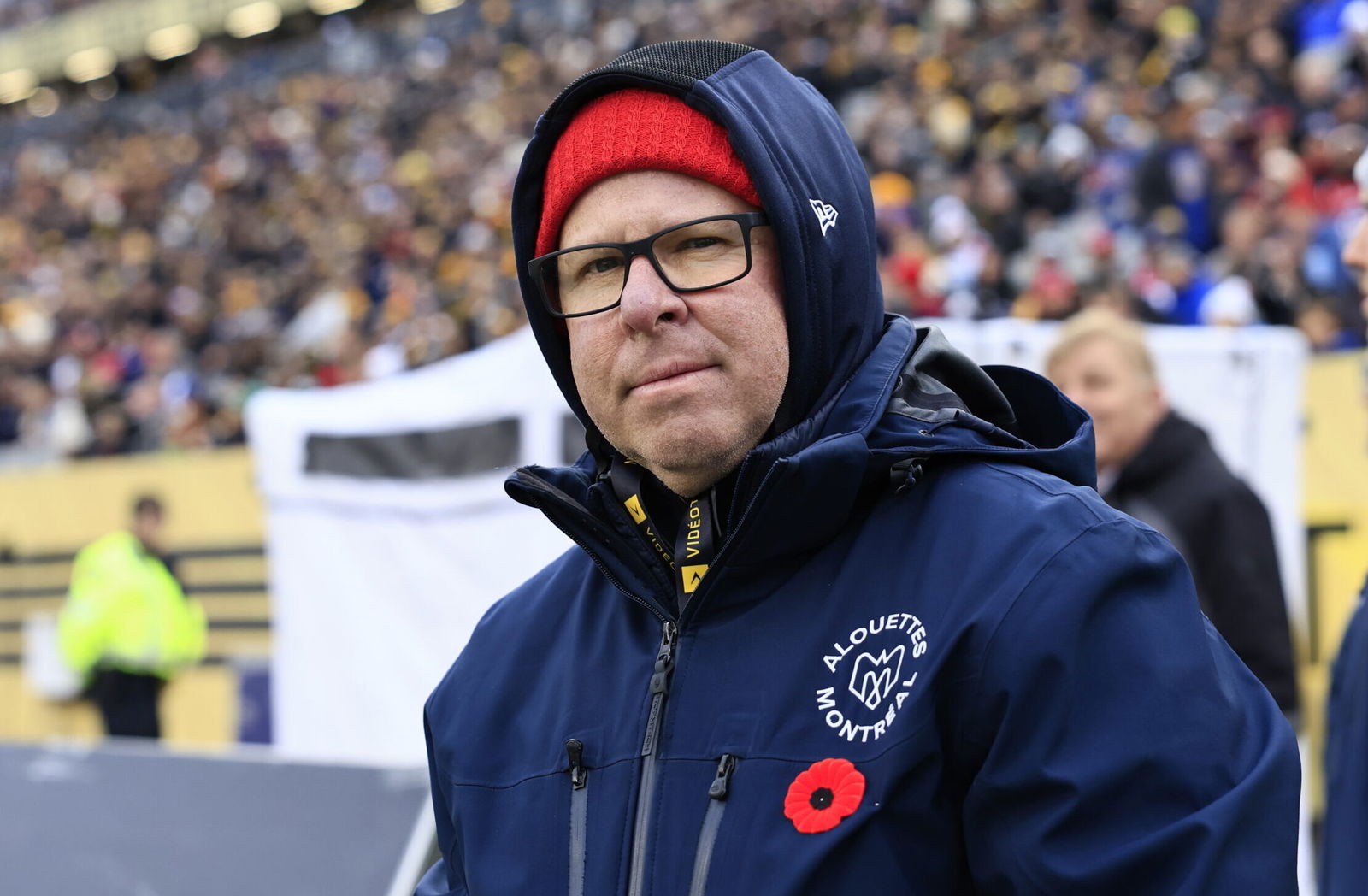
“We’ve done our research. I can tell you we’ve done our research in detail,” Montreal Alouettes’ general manager Danny Maciocia told 3DownNation ahead of the first rules committee meeting.
“I’ve taken the required time to make sure that whatever arguments I’m going to present, I’m going to present them with some data. I can tell you that I will be ready for these discussions, but at the same time, I’m curious to see other general managers and other head coaches’ (opinions). I’m sure they’ve done some research along the way, and I want to see what they’re going to present. I want there to be some common ground with this, and I’m all about making this league better.”
Maciocia declined to share the nature of his presentation on Monday, stating only that he hopes people will hear about it in the next few days. He wasn’t the only one playing things close to the vest, as Winnipeg Blue Bombers’ head coach Mike O’Shea elected to keep his opinions private after previously expressing concern about the proposed changes.
“I think the raw emotion is gone. It might be sparked again here momentarily … when we start our meetings,” he said. “I’m certainly in the mindset to listen, and if I believe I have something valuable to add, just like any other year, I’ll try and add it.”
CFL commissioner Stewart Johnston made a splash in his first year on the job, garnering unanimous approval from the league’s board of governors to impose several substantial alterations to the Canadian game without input from other stakeholders.
Beginning in 2026, the rouge will be modified to eliminate points for missed field goals, and the play clock will be changed to 35 seconds of running time. In 2027, goal posts will be moved to the back of the end zone, the end zone will be shortened to 15 yards, and the field itself will shrink to 100 yards, eliminating the iconic 55-yard line.
The league opted not to run these changes through the rules committee prior to their announcement, believing that such substantial proposals would become bogged down in debate. Johnston believed aggressive action was justified, with the league’s data suggesting that these changes could result in 10 percent more end zone completions and 60 more touchdowns per season.
Those numbers have been met with skepticism by some on the rules committee, including Calgary Stampeders’ head coach and general manager Dave Dickenson.
“They talk about 60 touchdowns. Where are they getting that from? I have no idea. I don’t think you can actually predict that, to be honest,” he remarked to 3DownNation. “But at least I’m going to listen. I’m going to do more listening than talking, which is hard for me. I’m definitely going to listen and see what they present and where these thoughts came from. I’m in the business of making this league better, I am, so I’m going to try to do my best to make it better, and we’ll see how many stick and how many don’t.”
The CFL has made their agenda for the winter meetings public for the first time, with the rules committee slated to address the “cascading tactical rules required to implement structural changes announced in September.” This is expected to focus primarily on the effect of the new play clock on the final three minutes.
It remains unclear if the structural changes themselves could be reversed. While Toronto Argonauts’ general manager Pinball Clemons told the media that he believes everything is on the table, O’Shea appeared more resigned to his fate.
“As far as I am concerned, I wouldn’t be on any voting panel for a major change. I think that’s the governors. The governors have already approved these, and my understanding is we have to sort of work out how to implement them right now,” he explained.
Even if the league holds firm in the face of criticism and elects to proceed with its new vision for the game, that won’t stop Canadian football lifers like Maciocia and O’Shea from speaking up amongst their peers.
“I feel an obligation to the CFL and to the future of the CFL. There will be decisions; I don’t know that they’ll be based on how I feel,” O’Shea said. “I hope they won’t be decisions made on emotion. I think it’s whether or not the quality of the game and the integrity of the game will continue at a high level. I think that’s how we should be making our decisions.”
“I want this Canadian game to take the next step, and I don’t know what the next step is. It’s going to be interesting here to hear some of the arguments,” Maciocia said, stressing that his research won’t stop him from being open-minded.
“I’m always intrigued to know what other people think around the table, and that may affect the way I see things. Maybe I’ve overlooked some things along the way when the announcement was made, and we were contemplating going in a particular direction with this new resolution. I’m intrigued to know what everybody else thinks about it, but at the end of the day, I want what’s best for the CFL and for the Canadian game, because I think you know everybody can reap the benefits from it.”