
Unlock the White House Watch newsletter for free
Your guide to what Trump’s second term means for Washington, business and the world
A Pentagon contractor has been arrested for allegedly leaking classified information to a Washington Post journalist whose home had been raided by the FBI as part of their investigation.
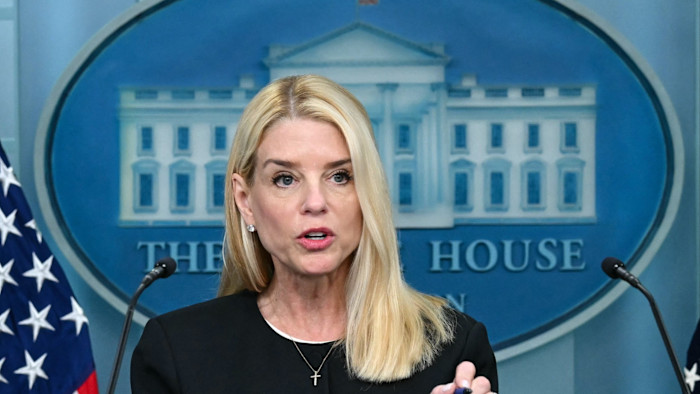
The FBI searched the reporter’s home at the request of the Pentagon, US attorney-general Pam Bondi said on Wednesday.
“The Department of Justice and FBI executed a search warrant at the home of a Washington Post journalist who was obtaining and reporting classified and illegally leaked information from a Pentagon contractor,” Bondi wrote in a post on X. “The leaker is currently behind bars.”
Searching a journalist’s home is a rare and aggressive move by federal law enforcement authorities — although it occasionally occurs at the state and local level — and comes at a time of heightened tensions between the Trump administration and the news media.
“Any search targeting a journalist warrants intense scrutiny because these kinds of searches can deter and impede reporting that is vital to our democracy,” said Jameel Jaffer, executive director of the Knight First Amendment Institute at Columbia University.
“Searches of newsrooms and journalists are hallmarks of illiberal regimes, and we must ensure that these practices are not normalised here.”
Last year, the Pentagon revoked the credentials of reporters covering the defence department who would not agree to sweeping restrictions on what they could publish.
Donald Trump told reporters on Wednesday that the contractor had shared information about Venezuela, describing the individual as “a very bad leaker” who would “probably be in jail for a long time”.
The US president added that “some others” could be jailed for sharing classified information. “We’re hot on their trail,” he said.
The Pentagon referred questions to the FBI. A spokesperson for the Washington Post said it was reviewing and monitoring the situation.
The arrest comes after Bondi weakened protections for journalists last year that were established by the DoJ under former president Joe Biden. In April, she rescinded policies that blocked the department from seeking records and compelling testimony from journalists to identify and punish sources of “improper leaks”, according to a memo written by Bondi.
“Safeguarding classified, privileged and other sensitive information is essential to effective governance and law enforcement,” she wrote. “Federal government employees intentionally leaking sensitive information to the media undermines the ability of the Department of Justice to uphold the rule of law, protect civil rights and keep America safe.”
The Washington Post reported that the home of reporter Hannah Natanson was raided as part of an investigation into Aurelio Perez-Lugones, a Pentagon contractor with a top-secret clearance who has been accused of taking home classified material.
A former member of the US Navy, Perez-Lugones allegedly printed out a classified intelligence report linked to a foreign country and took notes on other sensitive material, according to an FBI affidavit. Investigators found a lunchbox containing a document marked “secret” during a search of Perez-Lugones’ car.
Perez-Lugones was charged earlier this month with unlawful retention of national defence information. Lawyers representing the contractor did not immediately respond to a request for comment.
Natanson, who covers the federal workforce, was told she was not the focus of the probe, the newspaper reported. The DoJ did not immediately respond to a request for comment.
Last fall, the Pentagon told its press corps that journalists who had been given credentials had to agree not to publish any information, even if unclassified, that had not first been given official approval by the defence department, among other restrictive rules.
Almost all credentialed reporters — including from outlets such as the New York Times, Washington Post, Fox News and the Financial Times — declined to sign and were forced to turn in their press badges.
Recommended

Seth Stern, chief of advocacy at the Freedom of the Press Foundation, warned this was “an alarming escalation in the Trump administration’s multipronged war on press freedom” that is “either ignoring or distorting the Privacy Protection Act, which bars law enforcement from raiding newsrooms and reporters to search for evidence of alleged crimes by others with very few inapplicable exceptions”. The act was passed by Congress in 1980.
Stern said Bondi acknowledged probes of this kind should not be used frequently, with her memo stating: “investigative techniques relating to newsgathering are an extraordinary measure to be deployed as a last resort”.
The DoJ did not immediately respond to a request for comment.