
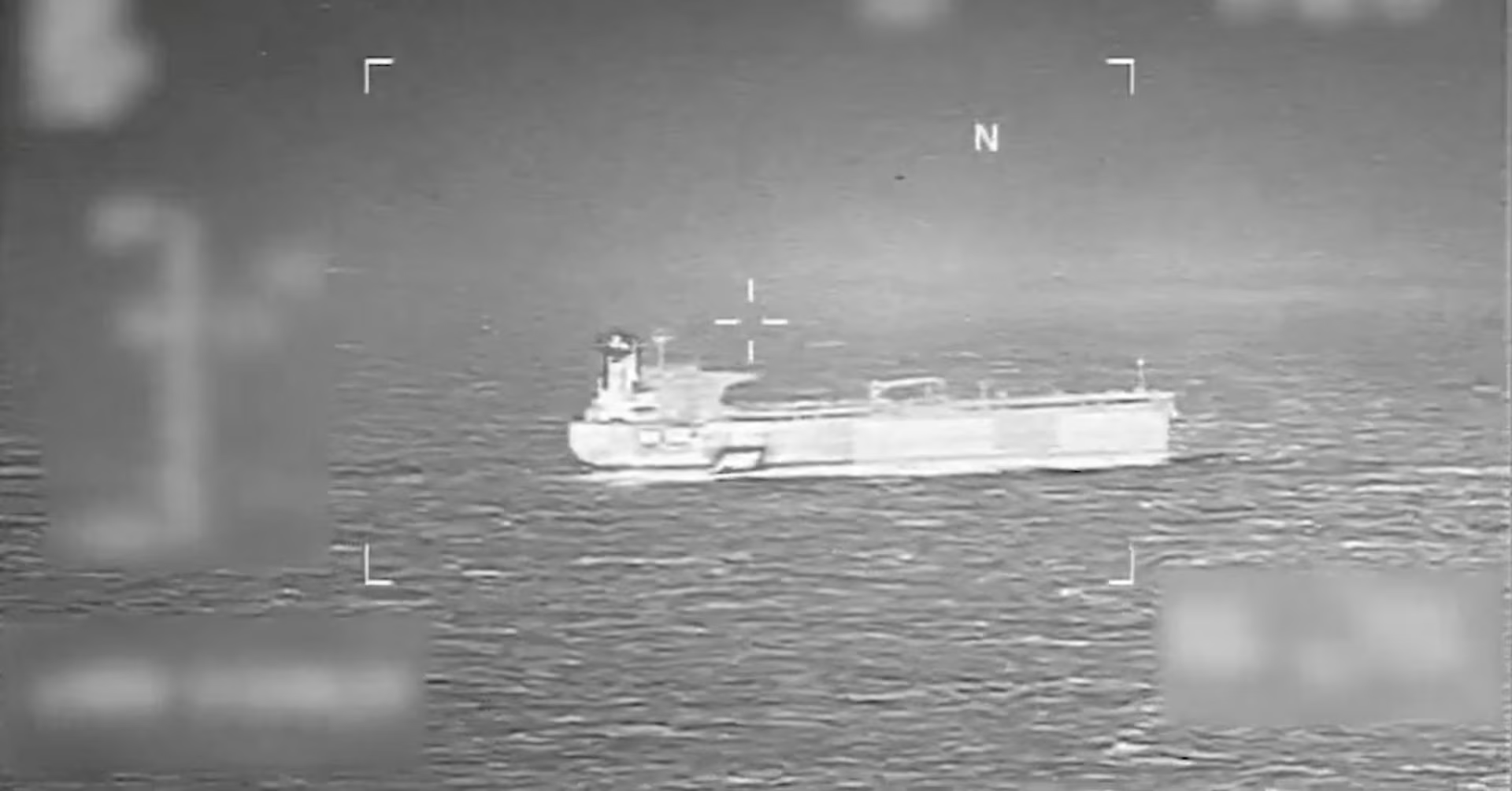
Item 1 of 2 Footage from a video released by US Southern Command shows the Venezuela-linked tanker Veronica at sea, in this screen grab taken from a handout video released on January 15, 2026. US SOUTHERN COMMAND/Handout via REUTERS.
[1/2]Footage from a video released by US Southern Command shows the Venezuela-linked tanker Veronica at sea, in this screen grab taken from a handout video released on January 15, 2026. US SOUTHERN COMMAND/Handout via REUTERS. Purchase Licensing Rights, opens new tabTanker Veronica had departed from Venezuelan waters in early January emptyThe US has filed for court warrants to seize dozens more tankers linked to Venezuela’s oil tradeMost Venezuela-linked ships seized were flying fake flags or had their registrations cancelled
WASHINGTON, Jan 15 (Reuters) – The United States has seized another Venezuela-linked tanker, U.S. officials told Reuters on Thursday, ahead of a meeting between U.S. President Donald Trump and Venezuelan opposition leader Maria Corina Machado.
The seizure marks the sixth vessel targeted since mid-December that was either carrying Venezuelan oil or had done so in the past. The officials, speaking on the condition of anonymity, said the seizure took place in the Caribbean.
Sign up here.
The U.S. military’s Southern Command confirmed the pre-dawn operation, saying U.S. forces apprehended Motor/Tanker Veronica “without incident.” It said the Veronica was “operating in defiance of President Trump’s established quarantine of sanctioned vessels in the Caribbean.”
“The only oil leaving Venezuela will be oil that is coordinated properly and lawfully,” Southern Command said in a statement.
Guyana-flagged Aframax tanker Veronica departed empty from Venezuelan waters in early January, according to shipping documents from state company PDVSA and monitoring service TankerTrackers.com. The vessel had not returned to Venezuela as other ships have done in recent days.
The seizures began as part of Trump’s campaign to force Venezuelan President Nicolas Maduro out of power, which culminated in U.S. forces swooping into the country to grab him and his wife on January 3.
Since then, Trump has said the U.S. plans to control Venezuela’s oil resources indefinitely as it seeks to rebuild the country’s dilapidated oil industry in a $100 billion plan.
U.S. TARGETS MORE VESSELS FOR SEIZUREThe U.S. government has filed for court warrants to seize dozens more tankers linked to the Venezuelan oil trade, four sources told Reuters on Wednesday, as Washington consolidates control of oil shipments in and out of the South American country.
The vessels intercepted so far have been either under U.S. sanctions or part of a “shadow fleet” of ships that disguise their origins to move oil from major sanctioned producers — Iran, Russia or Venezuela.
Most of the Venezuela-linked vessels seized so far were flying fake flags or their flag registrations had been cancelled before the interceptions, the maritime authorities of Panama, Cook Islands and Guyana have told Reuters.
Last week, the U.S. seized a Russian-flagged oil tanker that was being shadowed by a Russian submarine after pursuing it for more than two weeks across the Atlantic.
The move was condemned by Moscow.
The latest seizure came ahead of Thursday’s meeting between Trump and Machado, in their first face-to-face meeting since the U.S. ousted her long-time foe, Maduro.
Trump has previously called her a “freedom fighter” but dismissed the idea of installing her to lead Venezuela after ousting Maduro, saying she did not have enough domestic support.
A classified CIA assessment presented to Trump concluded that Maduro loyalists, including Rodriguez, were best positioned to maintain stability.
Reporting by Idrees Ali and Phil Stewart in Washington, and Marianna Parraga in Houston; Editing by Alex Richardson, Aidan Lewis and Louise Heavens
Our Standards: The Thomson Reuters Trust Principles., opens new tab