
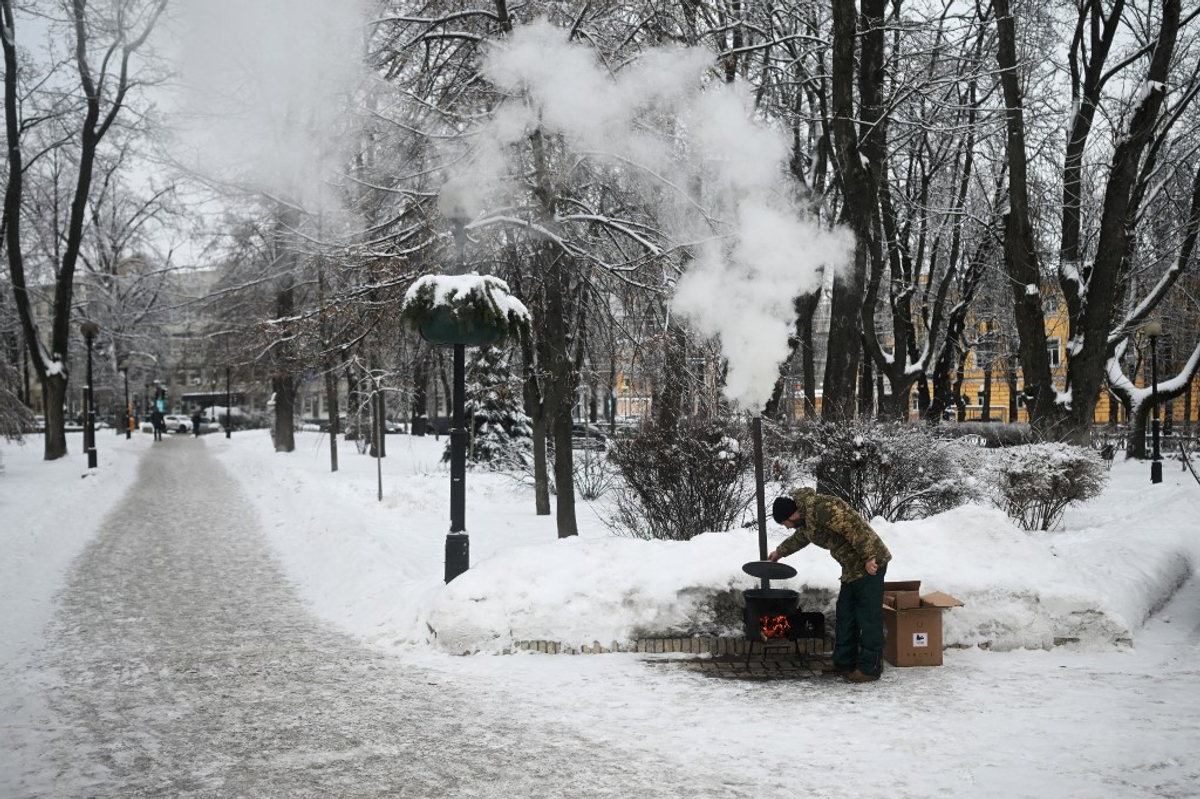
Inside Kyiv homes, every exhale turns to mist as indoor temperatures hit single digits.
As winter storms sweep across Ukraine, millions brace for the coldest months yet – without heat, without electricity, and with little respite in sight as Russia continues its strikes on Ukraine’s energy and heating networks, prompting President Volodymyr Zelensky to declare a state of emergency in the energy sector on Wednesday.
JOIN US ON TELEGRAM
Follow our coverage of the war on the @Kyivpost_official.
“Struggling to keep the pipes from bursting”
At -18°C (-4°F) in Kyiv, electricity and heating are not just nice to have.
Nataliya, a 55-year-old self-employed woman who resides on the capital’s left bank, told Kyiv Post she’s had reduced heating and no hot water since Monday. She has to rely on water bottles filled with warm water to sleep through the night.
Kyiv Mayor Vitaly Klitschko said that as of Wednesday, heating remained cut off to about 400 residential buildings – mostly on the left bank – down from roughly 6,000 affected after Monday’s attack.
“Z.,” a 33-year-old web designer, told Kyiv Post that her brother barely has heating and is struggling to keep the pipes from bursting in his house, which is still under construction.
“My brother is building his first home now. Since everything is still under construction, they weren’t really ready for this cold. Now they are kinda day by day struggling to keep the pipes alive,” she said.
Other Topics of Interest
Ukraine’s Energy System Strained as Russian Attacks Hit Every Power Plant – Shmyhal
Over the past year, Russia has carried out 612 deliberate attacks on the energy sector, and the bombardment shows no sign of slowing, the minister said.
In Friday’s early hours, a Russian combined missile and drone strike knocked out a thermal plant in the Kyiv region just ahead of the cold spell, prompting authorities to drain hot water to prevent a catastrophic malfunction. Days later, just when authorities announced a gradual return to regular blackouts, another strike knocked out the power once again.
But some on the left and right bank are a bit luckier with heating.
“I had heating all the time with reduced intensity. Additional clothes and warm duvet keep me in comfortable conditions,” Ivan, a 27-year-old engineer who lives on the right bank’s Sviatoshyn district, told Kyiv Post.
Mariia, a 24-year-old advertising specialist on the left bank, shared similar experiences.
“There’s heating, it doesn’t seem to have disappeared. [I use] warm things, blankets, [to stay warm],” she said.
Extensive blackouts
The power situation, Klitschko said, remains dire in Kyiv, giving no timelines for restoration. Since Monday, most residents have spent their entire days in the dark, with electricity returning only briefly for a few hours around midnight.
With heating ranging from unavailable to unreliable, some have to resort to electrical heaters – but the blackouts are now depriving them of that option.
“My heating is not very dependable here; it can’t warm my house, so I usually need electricity to make it warm. I have batteries that light up most of my apartment, but they can’t handle heating,” “Z.” said.
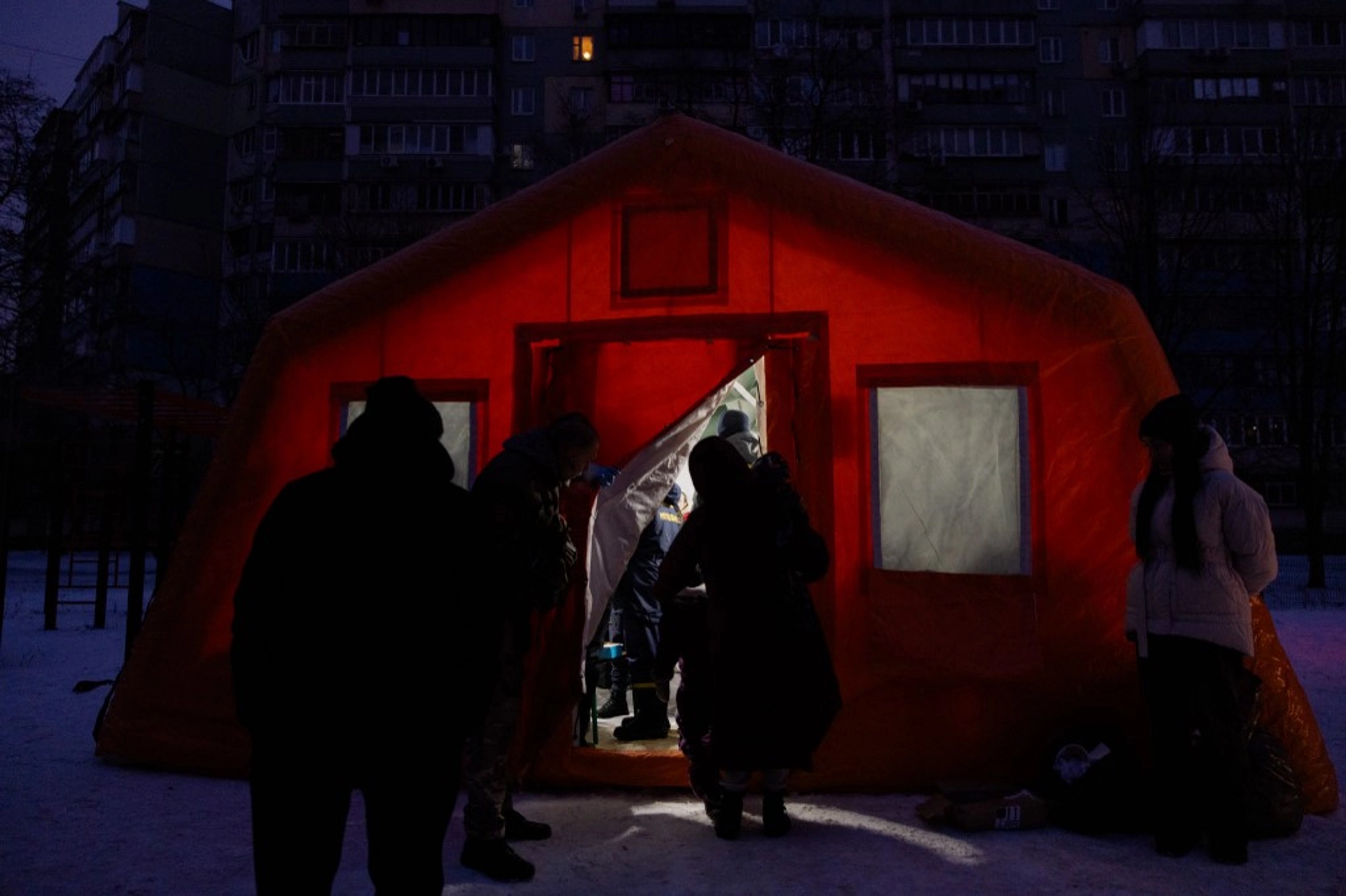 People come and go at a tent of Point of Invincibility in Kyiv on Jan. 11, 2026, where they can charge devices and warm themself, following Russian missile and drone attacks on Ukrainian energy infrastructure amid the Russian invasion in Ukraine. (Photo by Tetiana DZHAFAROVA / AFP)
Following the summer blackouts of 2024, many households in Ukraine now have some kind of backup power systems – varying widely in capacity and endurance.
For Viktoriia, a 32-year-old copywriter, whose city, Lviv, was the target of Russia’s recent Oreshnik missile strike, heating and electricity prove to be more stable, though backup sources are still needed.
“As many apartments in Lviv, I have an autonomous heating system (it’s a gas heater but still needs electricity to run). For that, this year I bought my second and more powerful charging station (EcoFlow Delta 3 plus) which helps run the heater,” she told Kyiv Post.
“I also use it to power my fridge. It’s a bit old and doesn’t preserve temperature very well.”
“A.,” a US national who has lived in Kyiv since 2019, said he is among the lucky few to have had stable power and water supplies, though blackouts have disrupted remote work for many of his acquaintances.
“I’m one of the lucky ones who hasn’t had their electricity or water cut off. Friends of mine, upon hearing this, have contacted me to use my apartment so they can continue their remote work,” he said. “Since I’m fortunate enough not to have power outages during the day, I’m opening my doors to friends and colleagues so they can come and work their shifts.”
Supermarkets closed
As the country plunged into darkness, so did the supermarkets.
On Tuesday, major chains announced partial closures. Extreme cold caused some equipment to fail, while constant blackouts placed unprecedented strain on backup systems – strain unseen since the first year of Russia’s full-scale invasion.
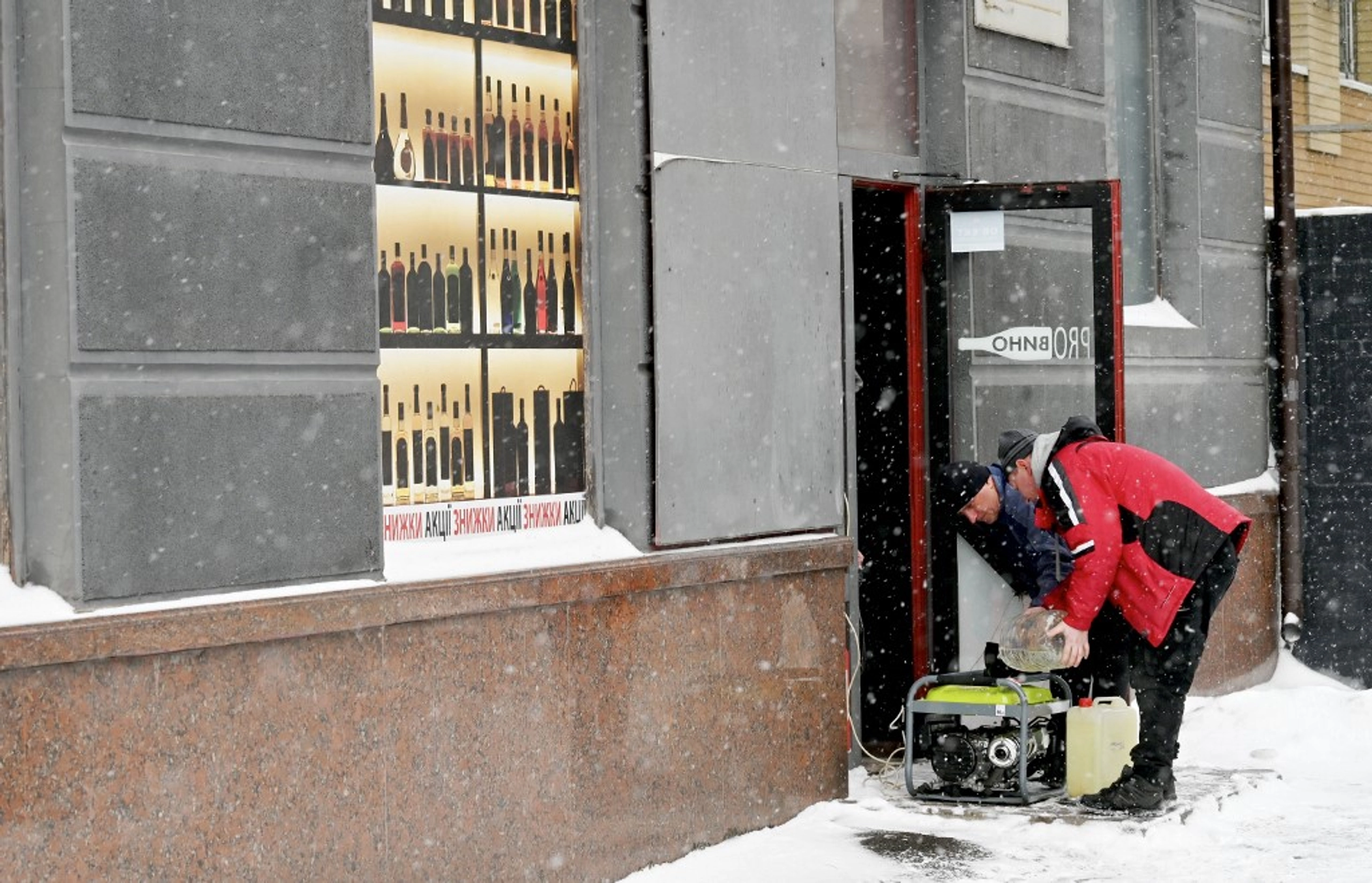 Employees refuel a power generator outside a shop during the blackout following Russian drones and missiles attacks in Kyiv on Jan. 9, 2026, amid Russian invasion in Ukraine. (Photo by Sergei SUPINSKY / AFP)
“Due to low temperatures and partial blackouts, equipment in some supermarkets sometimes fails. In such cases, the supermarket may be closed for a short time,” supermarket chain Silpo wrote in a Facebook update.
NOVUS, another supermarket chain, issued a similar warning.
“Due to the outage, not all stores can operate as usual, so we ask you to check the current opening hours in advance,” it wrote.
The blackouts have also forced residents to adapt their cooking.
Nataliya, in Kyiv, told Kyiv Post that she makes broth, eggs, and other quick dishes that don’t draw too much gas, relying on a camping stove while her electric stovetop is unusable during blackouts.
For some, instant noodles have become the food of choice during blackouts.
“We have a gas stove – we heat food there, cook during the period when the electricity is on. Something quick, like pasta, fried/baked meat. When there’s no electricity, we can boil instant noodles,” Mariia said.
Across Ukraine, residents are adapting in similar ways. In Lviv, Viktoriia uses a gas stove during blackouts – though she said cooking and laundry are generally not an issue with the available power.
“Cooking is no problem. Laundry has not been a problem so far with power cuts not being longer than six hours usually,” she said. “ [I] can cook anything really, but still mostly [rely] on canned tuna,” she joked.
To stay or not to stay
In the twilight hours between day and night, roads are lit not by street lights, but by the high beams of moving cars scattered by the misty snow – a scene that persists in areas where street lights are out.
But for some, simply getting into the car is a challenge.
“I haven’t been driving since I can’t seem to de-ice my car no matter how much I try. I felt like a savage archaeologist trying to dig it out but hammering the blocks of ice,” “Z.” told Kyiv Post.
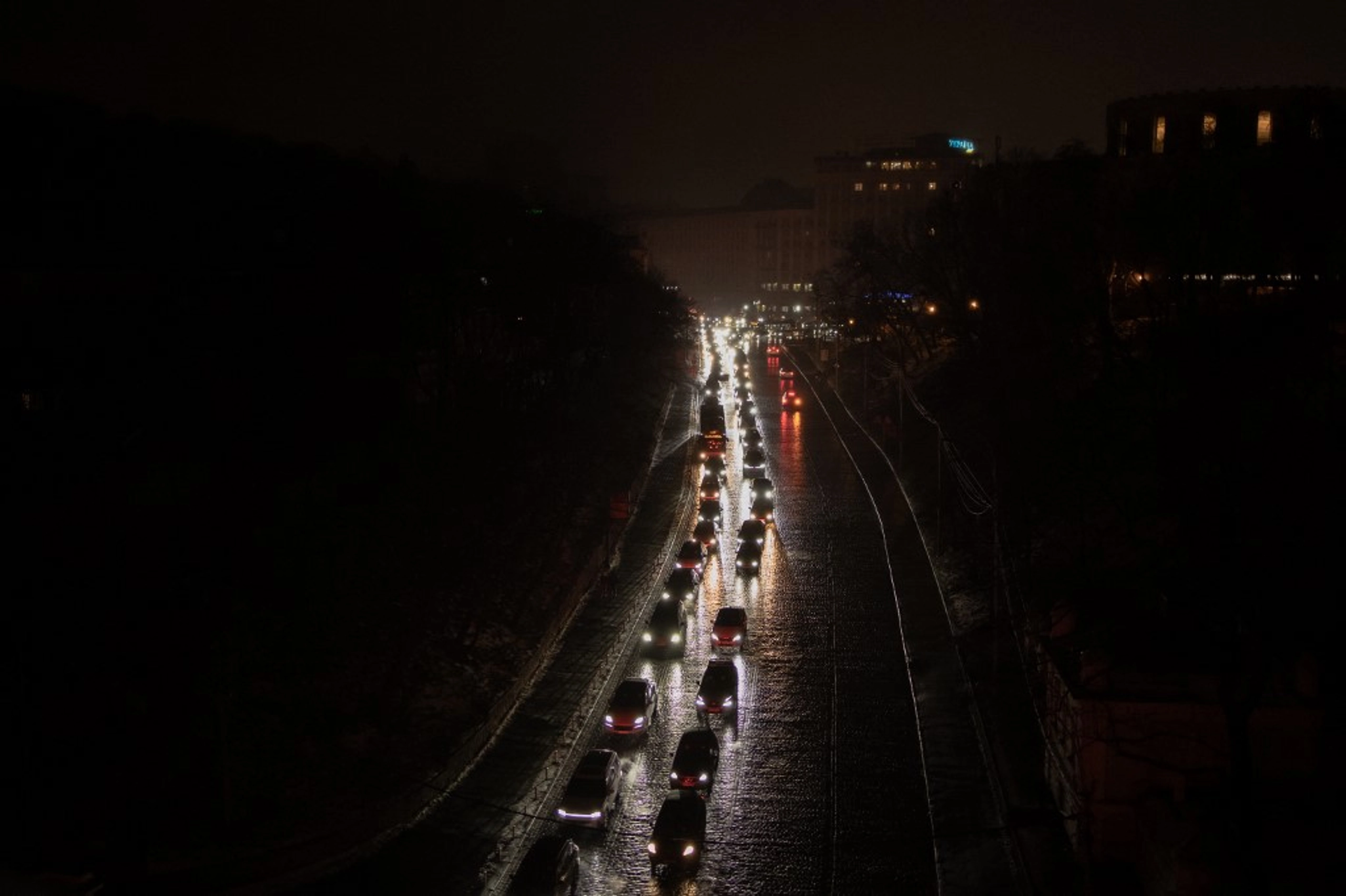 This photograph shows vehicles with headlights driving down a non-illuminated road during a power outage in Kyiv on Dec. 27, 2025, following Russian missile and drone attacks on Ukrainian energy infrastructure amid the Russian invasion of Ukraine. (Photo by Roman PILIPEY / AFP)
In Kyiv, trams and trolleybuses – both reliant on electricity – either stopped working or were replaced with buses as power became scarce.
At the UN, Russia’s permanent representative said it would continue this way until Zelensky “comes to his senses.”
“I think it might stay kinda manageable here in the western part, but they will still try to bomb the gas storage in the Lviv region here in Stryi,” Viktoriia said. “Kyiv is surely suffering more; they might do it on purpose to divide people from the inside.”
But east or west, Ukraine is Ukraine – and nowhere is safe from Russian attacks.
“I’m in Lviv so can’t really complain much, but I suspect the next attack will be aimed at this part of the country,” Viktoriia added.