
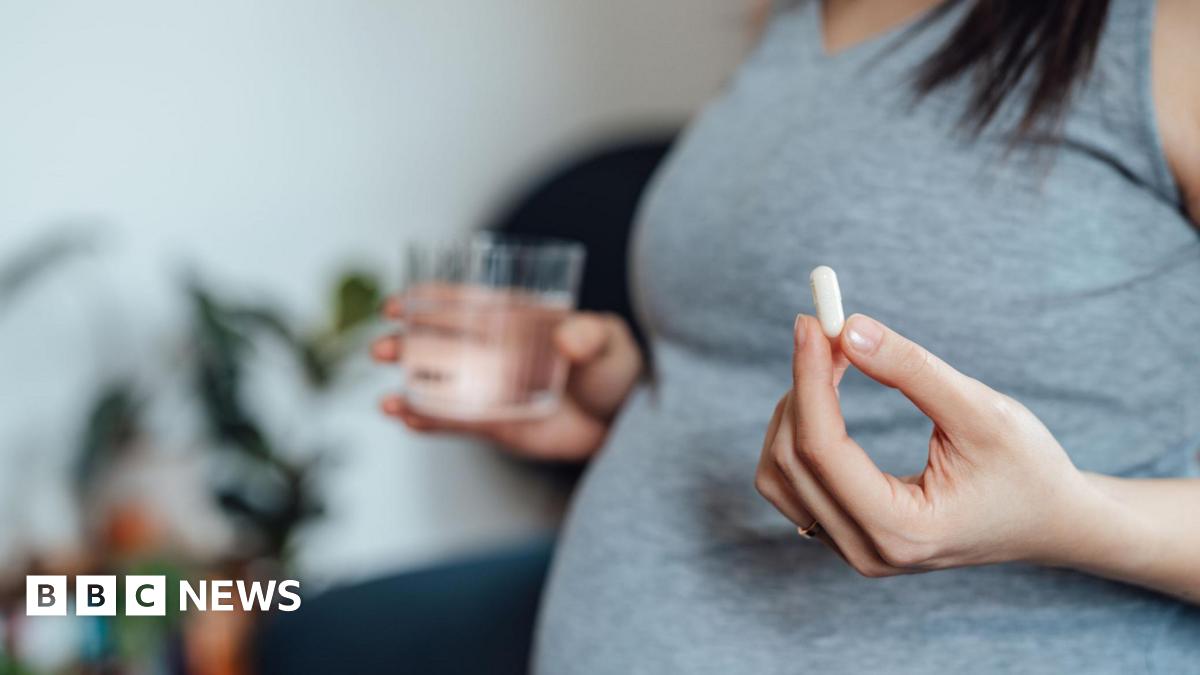
The US President shocked many doctors worldwide when he and his administration claimed paracetamol or a branded version called Tylenol – which is seen as the go-to painkiller for pregnant women – could be linked to autism in children, if taken during pregnancy.
Those claims led to confusion among women and concern among health experts, and prompted this new research.
Published in The Lancet Obstetrics, Gynaecology & Women’s Health, external, it looked at 43 of the most robust studies into paracetamol use during pregnancy, involving hundreds of thousands of women, particularly those comparing pregnancies where the mother had taken the drug to pregnancies where she hadn’t.
The researchers say using these high-quality studies of siblings means they can dismiss other factors such as different genes and family environments, which makes their review “gold-standard”.
The research also looked at studies with a low risk of bias and those that followed children for more than five years to check for any link.
“When we did this analysis, we found no links, there was no association, there’s no evidence that paracetamol increases the risk of autism,” lead study author and consultant obstetrician Professor Asma Khalil, told the BBC.
“The message is clear – paracetamol remains a safe option during pregnancy when taken as guided,” she added.
This reinforces guidance from major medical organisations in the UK, US and Europe on the safety of the common painkiller.
Any previously-reported links between the drug and an increased risk of autism are likely to be explained by other factors, rather than a direct effect of the paracetamol itself, the review says.
“This is important as paracetamol is the first-line medication we recommend for pregnant women in pain or with a fever,” said Prof Khalil, professor of maternal fetal medicine at City St George’s, University of London.
Health advice warns that women can run the risk of harming their baby if they don’t take paracetamol to bring down a high temperature or relieve pain when pregnant. This can increase the risk of miscarriage, premature birth or developmental problems in babies.