
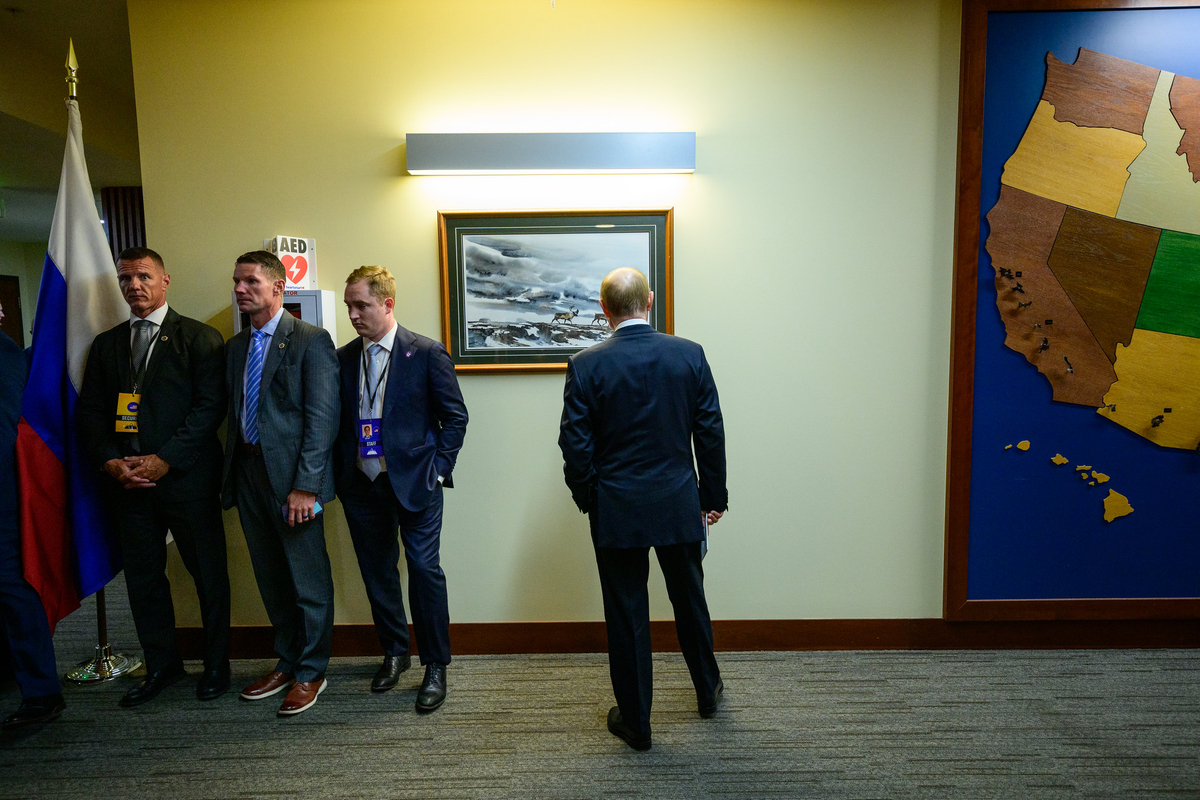
WASHINGTON, DC – Vladimir Putin might believe he is winning a war of attrition in Ukraine, but according to Washington experts, he is losing influence everywhere else.
While Moscow remains fixated on the trenches of Eastern Europe, its global network is shrinking, and the partners who remain are increasingly scrutinizing the fine print.
JOIN US ON TELEGRAM
Follow our coverage of the war on the @Kyivpost_official.
At a Thursday Atlantic Council panel, experts on the Middle East, Latin America, Africa, and Russia’s broader foreign strategy analyzed the Kremlin’s declining sway.
Their verdict was unambiguous: Russia is overstretched and, in many cases, failing to fulfill its promises.
From the fall of the Assad dynasty to Moscow’s tepid response to crises in Tehran, Russia’s global brand is losing clout, trading long-term strategic alliances for a series of one-sided, opportunistic transactions.
From Latin America to the Sahel, the Kremlin’s “Great Power” image and the so-called “Russian security guarantee” – long marketed as a credible alternative to Western intervention – are confronting a hard reality: Russia is increasingly overextended, under-delivering, and often leaving allies to fend for themselves.
Middle East: allies at arm’s length
Mark Katz, a veteran Middle East specialist, highlighted Russia’s muted responses to regional crises.
“Putin has been remarkably silent on Iran’s protests,” Katz noted, referencing reports of Russian attack helicopters in the country, whose purpose remains unclear.
Other Topics of Interest
Zelensky Is Not the Last Word in Ukraine on a Peace Deal
Western leaders may near a Ukraine peace deal, but Ukrainians will decide. Polls show they want peace with security, reject territorial concessions, and distrust Putin to honor any deal.
“They aren’t doing much to protect their ally in Iran,” he added, framing it as part of a broader pattern in Moscow’s global behavior.
While Russia has retained a foothold in Syria, even after the fall of Bashar al-Assad’s regime in 2024, Katz cautioned that such pragmatism may erode confidence among allies.
“It signals that Russia prioritizes its own interests; if leadership changes, Moscow will work with whoever is in power. That’s concerning for partners expecting protection,” he said.
Anna Borshchevskaya of the Washington Institute offered a nuanced perspective: Russia’s hands-off approach may unsettle allies, but it still maintains relationships where alternatives are limited.
“Iran continues to deepen cooperation with Russia, despite Moscow not coming to its rescue,” she said, emphasizing that engagement often reflects necessity rather than loyalty.
Venezuela, Cuba, Nicaragua question Russia’s reach
In Venezuela, experts highlighted symbolic support that lacks practical follow-through.
Geoff Ramsey of the Atlantic Council’s Latin America Center described Moscow’s reaction to US operations against Russian-linked oil tankers as “primarily diplomatic, with calls for dialogue but no substantial action.”
He added, “The gap between Russia’s rhetoric and its limited response is being read by allies in Cuba and Nicaragua as a sign that Moscow cannot protect them while preoccupied in Ukraine.”
Russia retains economic leverage, particularly through its dominance in fertilizer exports, which underpin agricultural production across Brazil, Colombia, Mexico, and Argentina.
“Brazil sees Russia as a useful BRICS partner and a counterweight to Washington, and the fertilizer trade reinforces that relationship,” Ramsey explained, noting that economic dependence complicates the narrative of decline in the region.
Africa: Broken promises, tarnished credibility
The most dramatic erosion of influence, experts argued, is in Africa.
Moussa Kondo, Executive Director of the Sahel Institute for Democracy and Governance, painted a stark picture of disappointment.
“Russia has been losing credibility across the continent because of unmet promises,” he said, pointing to Wagner-linked operations that led to massacres in villages across Mali and other Sahel states.
Kondo also highlighted failed recruitment efforts of African youth for Russia’s war in Ukraine. “Families have realized the reality: young people are promised jobs or education but end up on the frontlines without protection.”
He added that the post-Wagner Africa Corps, though formally government-backed, continues many of the same practices, leaving local populations skeptical.
Economic commitments have also gone unfulfilled. “Russia promised food, oil, and trade opportunities that never materialized,” Kondo said.
“Local authorities and civil society are tracking these failures and adjusting their expectations accordingly,” he added.
China: Strategic enabler, not a friend
On Russia’s relationship with Beijing, Borshchevskaya stressed its transactional nature.
“China has been the biggest enabler of Russia’s war in Ukraine,” she said, “but that doesn’t make it a loyal friend. Moscow’s isolation is still mitigated by pragmatic partnerships.”
She noted that engagement by Global South partners reflects limited alternatives and tangible benefits rather than ideological alignment.
Cynical, resilient strategy
Despite setbacks, Russia retains some influence in Latin America, Africa, and parts of the Middle East, sustaining its military operations in Ukraine and projecting power selectively.
“Russia may need to keep a low profile, but it is not out of the game,” Borshchevskaya concluded.
Still, the consensus among experts is that the Kremlin’s credibility has suffered. Allies increasingly view Russian support as symbolic at best, transactional at worst.
Katz likened Moscow’s approach to colonial-era pragmatism: “Russia benefits from its partners’ dependencies without committing to their security or stability.”
For policymakers in Washington and Kyiv, this moment presents an opportunity: where Russia fails to deliver, alternative partnerships can emerge, potentially reshaping the postwar global balance.
The critical question is whether other actors – states or civil society – can seize that opening before Moscow recalibrates.
Ultimately, Russia’s global image is at a crossroads. From Tehran to Caracas, Bamako to Damascus, allies are weighing Moscow’s promises against reality – and the calculus rarely favors the Kremlin.
As one panelist summarized: “Russia may not be out, but it is steadily losing friends, credibility, and the trust it once took for granted.”
The era of Russia as the “anti-Western savior” is colliding with a ceiling of broken commitments and transactional betrayals.
As Moscow’s footprint shifts from strategic to extractive, its allies are learning a hard truth: in Putin’s world order, you are not a partner – you are a bargaining chip.