
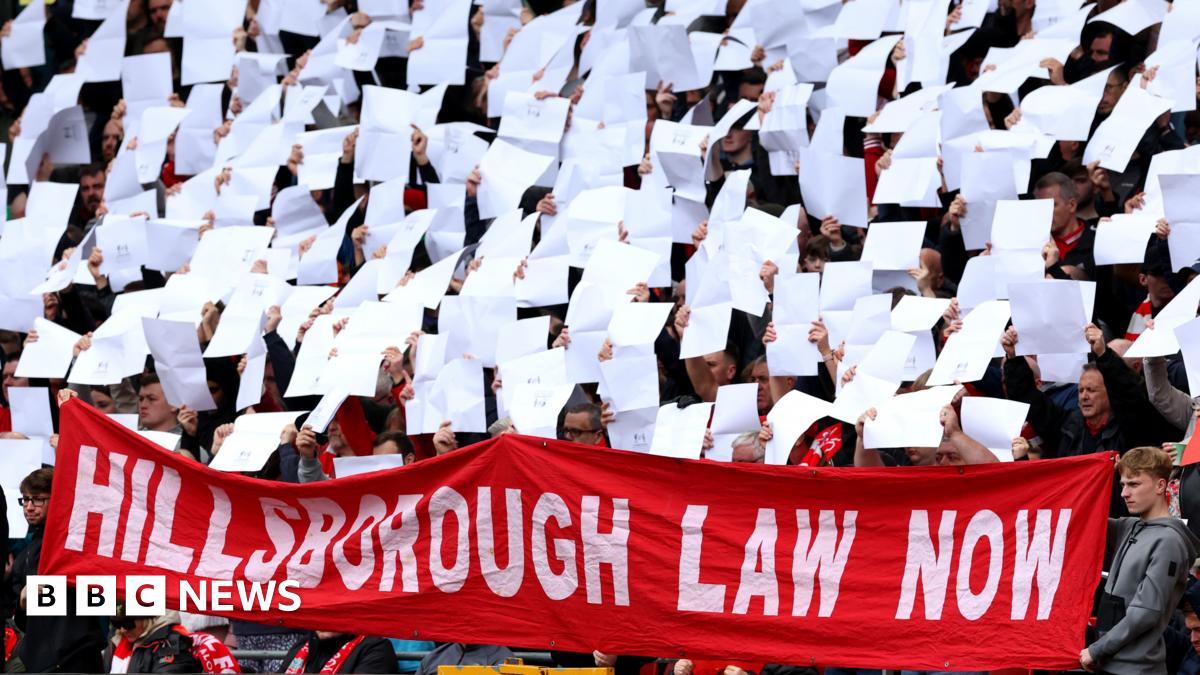
The government had originally pulled just the amendment from a vote, due to be held on Monday, before it scrapped the entire third reading of the bill – when a draft law is tidied up before going to the Lords.
A government spokesperson said it would continue to work with all parties to strengthen the bill “without compromising national security”.
Removing the amendment was earlier welcomed by the Hillsborough Law Now campaign group, which said it would “engage further with government to ensure the bill fully applies to the security services whilst not jeopardising national security”.
The proposed law – named after the football stadium in Sheffield where a deadly crush occurred in 1989 – aims to make public authorities and officials more accountable for failings.
The government argued that its amendments on the intelligence services sought to balance the law’s new duties with protecting national security.
Ministers were facing a potential rebellion from Labour MPs, with around 30 backing a proposal by Liverpool Labour MP Ian Byrne that would ensure the legislation applied in a fuller way to intelligence officers.
The government could still bring forward revised amendments when it reaches the House of Lords.
Byrne – a long-standing campaigner for the law – told the BBC after the amendment was shelved: “I think there’s been an acknowledgement that their amendment was heading for defeat, and thank God they’ve withdrawn it.”
However, he added: “I won’t vote for any law to leave the Commons until myself and the families are happy with what it contains…
“I have spoken to some families, and they are absolutely firm that it has to be the full Hillsborough Law before it leaves the Commons.”
It is understood that Parliament’s Intelligence and Security Committee did not support the government’s proposed amendment, posing an additional problem for ministers, because their amendment had proposed an oversight role for the ISC.
It is also understood that, amid increasing government concern about a rebellion, the head of MI5 Sir Ken McCallum was personally involved in speaking to some MPs.