
The lights could be visible further south than usual, weather permitting
12:56, 19 Jan 2026Updated 13:03, 19 Jan 2026
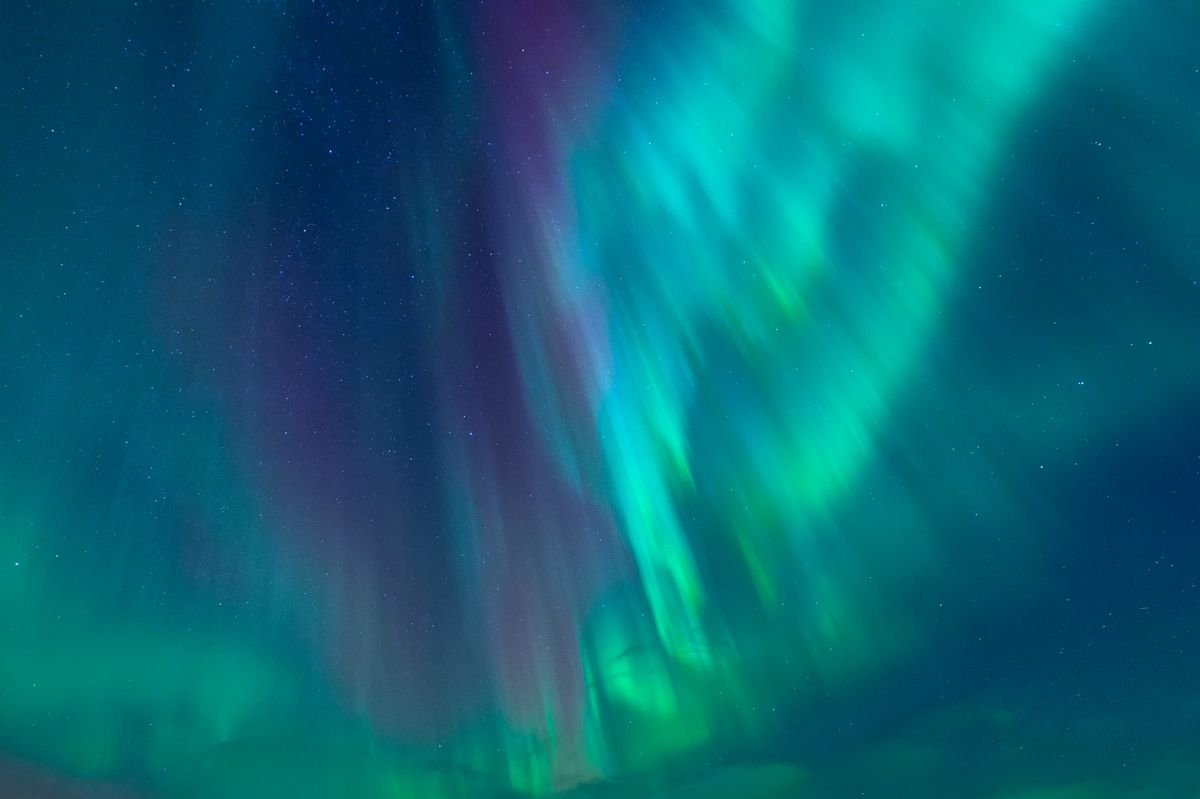
The Northern Lights(Image: )
The Northern Lights could be visible across parts of the UK on Tuesday – showing up much further south than usual. A coronal mass ejection (CME), a large eruption of charged matter from the Sun, left the Sun yesterday and is expected to arrive at Earth early on Tuesday.
This could bring the chance to see the Northern Lights, particularly across Scotland, Northern Ireland, northern England, and potentially further south, though visibility will depend on the timing of its arrival.
Krista Hammond, Met Office Space Weather Manager, said: “The CME is likely to result in geomagnetic storming, giving the potential to view the aurora. However, sightings are dependent on the CME arriving during hours of darkness and clear skies. Unfortunately, cloud and rain on Tuesday evening may make viewing difficult, even if the timing is favourable.”
Storms of this size are common during this stage of the Sun’s solar cycle and can create opportunities to see the Northern Lights, weather permitting.
The Northern Lights, or Aurora Borealis, are the result of a high-stakes “collision” between the Sun’s energy and Earth’s protective magnetic shield. Essentially, the Sun is constantly blowing a “solar wind” of charged particles (electrons and protons) toward Earth. When these particles hit our planet’s magnetic field, most are deflected, but some get trapped and funneled toward the North and South Poles.
The process begins at the Sun. Its surface is a turbulent furnace that releases a steady stream of plasma called the solar wind. Occasionally, larger eruptions like Solar Flares or Coronal Mass Ejections (CMEs) send even bigger clouds of charged particles hurtling through space.
As these particles reach Earth, they encounter the Magnetosphere—our planet’s magnetic field. This field acts like a giant invisible shield, deflecting the majority of the solar wind around the planet. Because of the shape of Earth’s magnetic field, it is weakest at the North and South Poles. The charged particles “slide” along the magnetic field lines and are funneled down into the upper atmosphere (the Auroral Ovals) near the poles.
Once these particles enter the atmosphere, they slam into gas molecules—mostly oxygen and nitrogen. The collision transfers energy to the gas atoms, “exciting” them to a higher energy state. When these atoms calm back down to their normal state, they release that extra energy as a tiny burst of light called a photon. When billions of these collisions happen at once, we see the glowing, shifting curtains of light we call the aurora.
For this Tuesday, January 20, 2026, there is a strong possibility of seeing the Northern Lights in the UK due to a major solar event.
A massive X-class solar flare occurred on Monday, sending a Coronal Mass Ejection (CME) toward Earth. Current space weather models suggest this storm could arrive as early as Tuesday night, potentially bringing a significant auroral display to UK skies.
Where to see them this Tuesday
If the solar storm arrives as predicted, visibility will depend on your latitude and local cloud cover:
Scotland (Highest Probability): Residents in the Highlands, Shetland, and Orkney have the best chance. With a predicted Kp index of 3.7 to 4.0, the aurora should be visible to the naked eye here.Northern England & Northern Ireland: Areas like Northumberland (Kielder Forest), the Lake District, and the Antrim Coast may see a glow on the northern horizon if activity spikes as expected.Wales & Central/Southern England: Visibility this far south is less certain but possible if the storm intensity increases upon arrival. You will likely need a camera with a long exposure to capture the light unless the storm reaches G2 or G3 levels.Best Viewing Conditions for Jan 20Timing: The best window is typically between 10PM and 2AM.Moonlight: The moon sets around 10PM, providing a “dark sky window” that is perfect for aurora hunting.Weather: Forecasts suggest some intermittent low-level clouds across the UK. You’ll need to find a “break” in the clouds to see anything.Direction: Always look toward the Northern horizon.Recommended Locations
If you are planning to head out, these are the top spots for clear northern views:
Scotland: Durness, Isle of Skye (Neist Point), or the Cairngorms.England: Bamburgh Beach (Northumberland) or the North York Moors.Northern Ireland: Giant’s Causeway or Malin Head.