
What does U.S. President Donald Trump actually want from Canada?
While Trump says the U.S. doesn’t need Canadian products, he has also repeatedly expressed a desire to turn Canada into a “cherished” state. Before leaving office, former prime minister Justin Trudeau suggested the Trump administration was really after Canada’s natural wealth. Trump and U.S. officials are also pressuring Ottawa on a range of issues like dairy supply management, border security, drug trafficking and defence spending.
Trade negotiations between the U.S. and Canada have, meanwhile, ground to a halt. When asked earlier this week about renewing the Canada-U.S.-Mexico Trade Agreement (CUSMA) he championed during his first term, Trump said it was “irrelevant to me.”
“There’s no real advantage to it,” Trump told reporters. “Canada would love it. Canada wants it, they need it, because we don’t need Canada product.”
Asa McKercher, research chair of Canada-U.S. relations at St. Francis Xavier University in Nova Scotia, characterizes Trump’s recent comments as a negotiation tactic.
“I think he wants a position in which the United States gets a lot from Canada and doesn’t have to give up a lot in return,” McKercher said. “I think the United States does need Canadian natural resources, obviously it needs thirsty Canadians to drink its liquor and it needs cold Canadians to visit its beaches and other tourist spots.”
Aaron Ettinger, a political science associate professor at Carleton University, says Trump’s interest in Canada goes beyond any single issue.
“Trump’s foreign policy is about asserting domination over everyone he can and subordinating all other interests to his own, which he perceives as synonymous with the American national interests,” Ettinger told CTVNews.ca. “Nothing Canada can do on any individual file will satisfy Trump.”
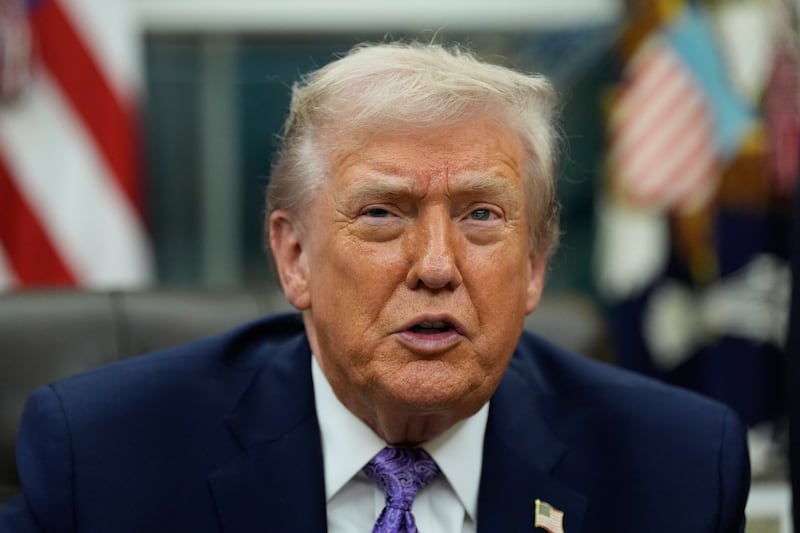 President Donald Trump speaks during a signing ceremony in the Oval Office of the White House, Dec. 11, 2025, in Washington. (AP Photo/Alex Brandon, File) U.S. President Donald Trump speaks during a signing ceremony in the Oval Office of the White House, Dec. 11, 2025, in Washington. (AP Photo/Alex Brandon) Canada’s natural resources and critical minerals
Speaking to business and trade leaders at a closed-door meeting in February 2025, Trudeau reportedly said Trump’s 51st state threats are a “real thing,” driven in part by Canada’s abundance of critical minerals and natural resources.
“I suggest that, not only does the Trump administration know how many critical minerals we have, but that may even be why they keep talking about absorbing us and making us the 51st state,” Trudeau reportedly said at the event. “They’re very aware of our resources, of what we have, and they very much want to be able to benefit from those.”
Those could include Canada’s large deposits of oil, natural gas, timber, gold, copper, potash, uranium, nickel, iron ore and more. Earlier this week, Trump downplayed the importance of such imports on the American economy.
“We have a lot of our own raw materials,” Trump told reporters.
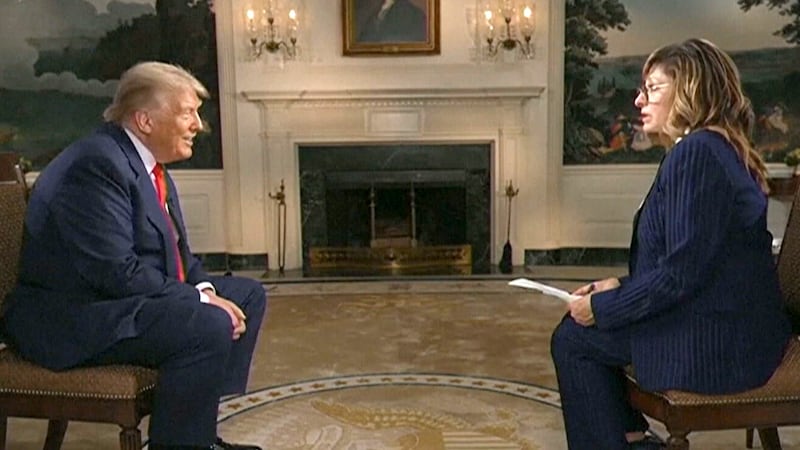 Trump continues with comments about Canada being 51st state Trump continues with comments about Canada being 51st state with Fox News’ Maria Bartiromo, June, 2025. Defence spending and border enforcement
When the U.S. announced it was imposing tariffs on Canada last year, one of the main justifications was to bolster border security to stop illegal migration and the flow of drugs like fentanyl.
Canadian officials were quick to point out that less than one per cent of illegal entries into the U.S. come from Canada, while just 0.2 per cent of U.S. border fentanyl seizures are made at the Canadian border. At the same time, Canada announced a new $1.3-billion plan to boost border security, as well as the appointment of a “fentanyl czar” to oversee efforts to halt drug trafficking to the U.S.
“Canadians have not been serious about stopping the drug trade,” U.S. Vice-President JD Vance said at the time. “It’s not a defence to say more has come from Mexico.”
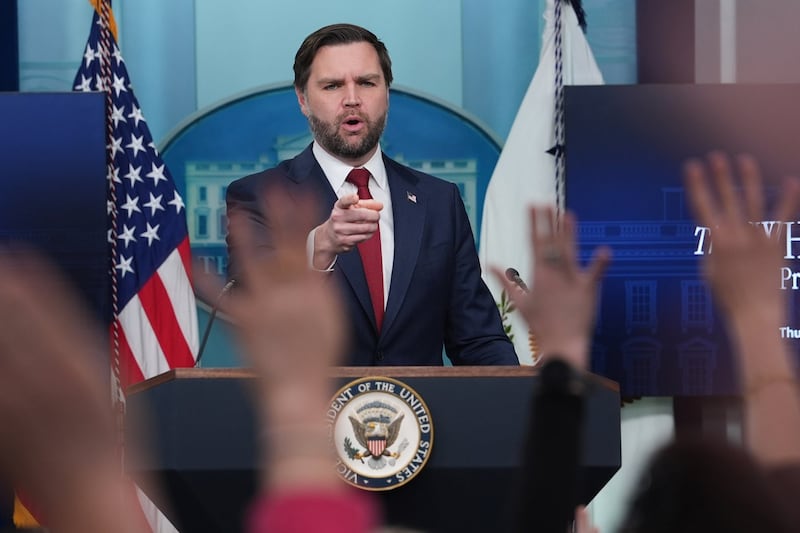 Vice President JD Vance speaks during a briefing at the White House U.S. Vice President JD Vance speaks during a briefing at the White House, Thursday, Jan. 8, 2026, in Washington. (AP Photo/Evan Vucci)
Trump and his administration have also been highly critical of Canada’s longstanding failure to meet NATO’s defence spending target. But under Prime Minister Mark Carney, Canada has committed to bolster defence spending to reach that target of two per cent of its GDP by the end of the 2025-2026 fiscal year.
Carney’s government has also promised to continue boosting defence spending in order to reach NATO’s new five per cent target by 2035.
In a speech to senior U.S. military leaders in late September, Trump doubled down on his 51st state rhetoric when discussing Canada and his multi-billion-dollar “Golden Dome” missile defence plan.
“Canada called me a couple of weeks ago, they want to be part of it, to which I said, ‘Well, why don’t you just join our country. You become 51 – become the 51st state – and you get it for free,” Trump said.
Dairy, alcohol and digital markets
Speaking to members of U.S. Congress during a closed-door meeting in December, U.S. Trade Representative Jamieson Greer outlined key policy concessions Canada would need to make if it wanted to continue with the USMCA trade agreement.
Those include opening Canada’s protected dairy market to more U.S. products, reversing provincial bans on U.S. alcohol sales, and revising Canada’s Online Streaming Act and Online News Act, which are separate laws that require foreign tech and streaming companies to financially support Canadian news and media content. Such laws and policies, Greer argued, discriminate against U.S. companies and their products.
In a written version of his opening statement, Trump’s trade ambassador said, “I don’t think we can say that USMCA is an unqualified success.”
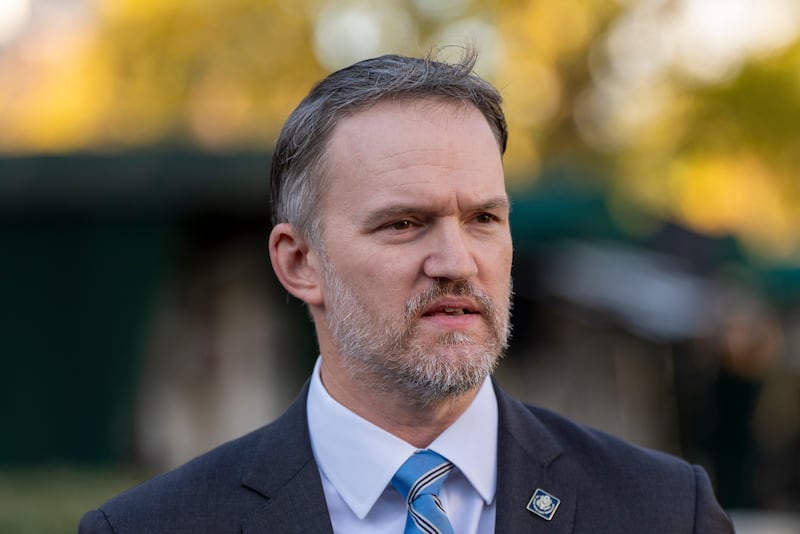 Jamieson Greer U.S. Trade Representative Jamieson Greer speaks with reporters at the White House, Thursday, Oct. 30, 2025, in Washington.
“For its part, Canada insists on maintaining its Online Streaming Act, a law that discriminates against U.S. tech and media firms, as well as a number of other measures that restrict digital services trade,” he added. “Canada also maintains policies that unfairly restrict market access for U.S. dairy products.”
Dominating the hemisphere
Ettinger says the issues and “trade irritants” brought up by the U.S. are “incidental to Trump’s overarching need to dominate Canada.”
“Look at the past year: Canada increased funding to address fentanyl trafficking, but it didn’t buy Canada any tariff relief. Canada pledged to increase defence spending, but it hasn’t put to rest threats about annexation,” Ettinger explained.
“Trump’s appetite for Greenland can only lead Canadians to think that we are next. Nothing we’ve seen in Trump’s five years as president should tell us that policy concessions to Trump will make Canada safe,” he continued.
Michael Williams, professor of public and international affairs at the University of Ottawa, says Trump’s foreign policy is ultimately focused on solidifying the United States’ position as the hemisphere’s dominant power.
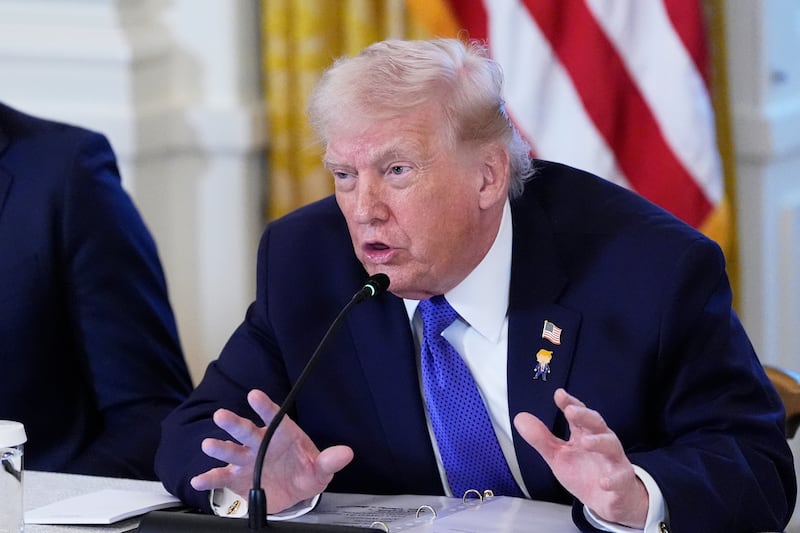 ‘We are going to do something on Greenland whether they like it or not’ U.S. President Donald Trump answers reporter questions during a meeting with oil executives in the East Room of the White House, Friday, Jan. 9, 2026, in Washington. (AP Photo/Alex Brandon)
“Unlike U.S. policy that saw your closest continental states as friends and allies, the Trumpian vision sees the geographic proximity of these states (Canada, Mexico, Greenland/Denmark) and their close economic and military ties to the U.S., as signs of weakness and sources of leverage to be exploited by the U.S. in building the continental core of it’s hemispheric hegemony,” Williams said in an email to CTVNews.ca.
McKercher points to the Trump administration’s new U.S. National Security Strategy, which seeks to “restore American pre-eminence in the Western Hemisphere.”
“The U.S. National Security Strategy has talked about the desire of the United States to control the natural resources and mineral wealth of the hemisphere for their benefit,” McKercher said. “And that includes Canada.”
With files from The Associated Press