
Trump administration opposed ICE body camera expansion, cut oversight staffingBody cameras viewed as central to police reform, Trump slowed ICE programDemocrats oppose DHS funding bill over immigration enforcement concerns
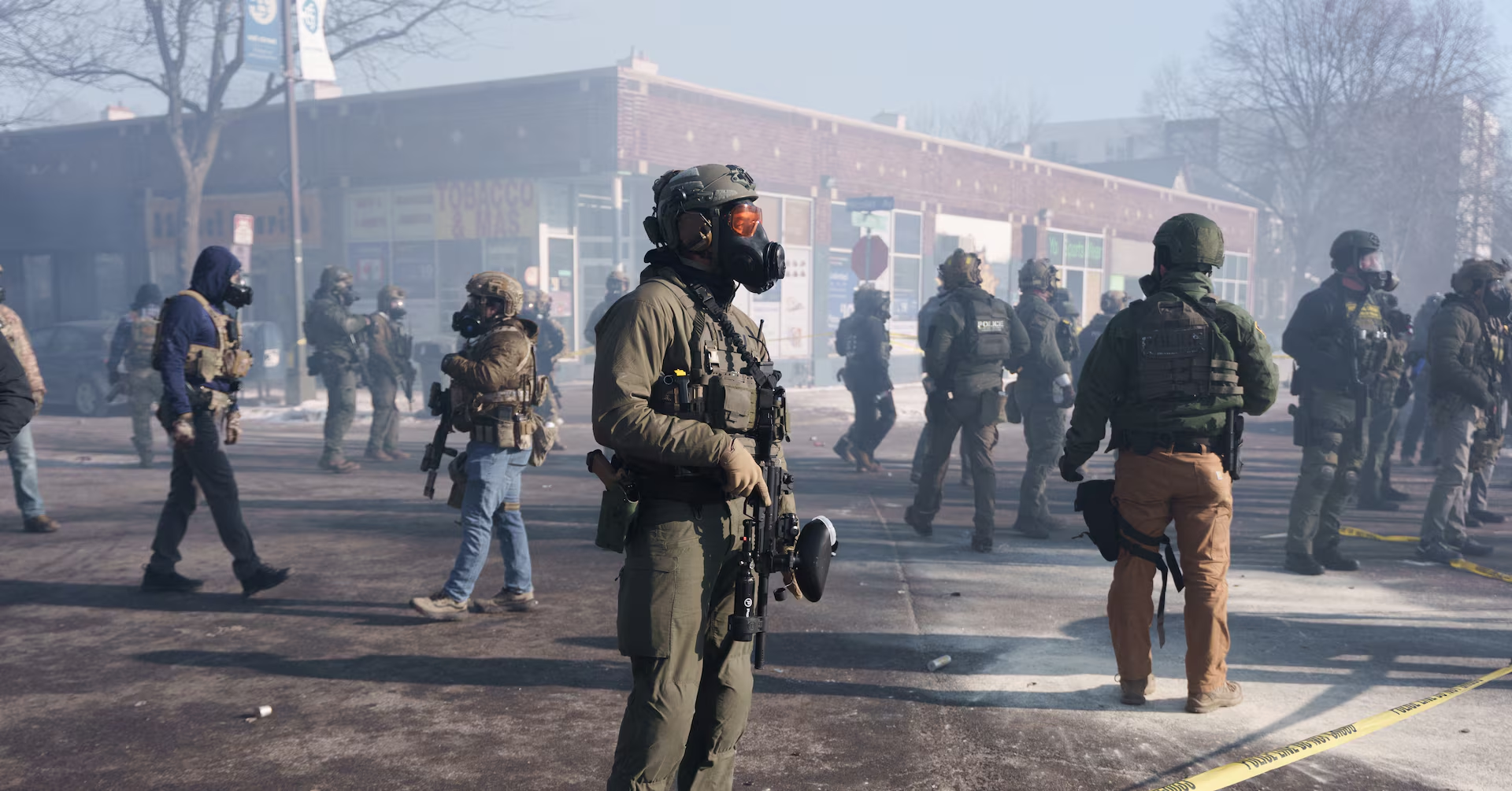
WASHINGTON, Jan 25 (Reuters) – President Donald Trump’s administration opposed efforts to expand the use of body cameras by immigration officers and sharply cut oversight staffing as it surged officers into Minneapolis and other cities, leading to a series of violent clashes.
Footage from bystanders of two fatal shootings of U.S. citizen protesters, including Saturday’s incident that left an ICU nurse dead, has underscored the power of video in checking official statements that have portrayed people who have been shot as provoking violent encounters with immigration officers.
Sign up here.
Cameras worn by officers long have been central to police reform efforts for this reason. The Trump administration, however, moved last year to slow-walk a pilot program to give ICE officers body cameras, urging Congress in June to cut the funding by 75% and bucking a nationwide trend of cameras for law enforcement.
Officials last year also placed on paid leave nearly all staffers working for three internal watchdogs conducting oversight of immigration agencies, undermining their capacity to investigate abuses.
Darius Reeves, who was the director of ICE’s Baltimore field office until August, said a body camera pilot program rollout had been slow in 2024 under President Biden, a Democrat, and “died on the vine” under Trump, a Republican.
In response to a request for comment, White House spokeswoman Abigail Jackson said ICE officers “act heroically to enforce the law and protect American communities.”
“Anyone pointing the finger at law enforcement officers instead of the criminals is simply doing the bidding of criminal illegal aliens,” she said.
At least three of the eight or more Border Patrol agents at the scene of Saturday’s shooting were wearing body cameras, a Reuters view of verified video showed. Reuters could not determine if the cameras were activated or if any agents involved in the physical encounter were wearing them.
EFFORTS TO SLASH ICE BODY-CAM FUNDINGWhen ICE or Border Patrol have engaged in acts of violence – including the fatal shootings of U.S. citizens Renee Good and Alex Pretti in Minneapolis – top Trump officials have been quick to label the deceased as aggressors rather than call for thorough investigations.Trump has started ramping up immigration enforcement this year after Republicans in Congress passed a bill last year that provides $170 billion for the crackdown, a major funding surge expected to transform the way ICE and Border Patrol operate.
White House Deputy Chief of Staff Stephen Miller, the architect of Trump’s immigration agenda, called Pretti a “domestic terrorist” and “would-be assassin” in social media posts hours after he was fatally shot by a Border Patrol agent.
The shooting has galvanized some Democratic senators who say they will oppose a spending bill to fund the U.S. Department of Homeland Security unless it reins in immigration enforcement.
U.S. Customs and Border Protection – Border Patrol’s parent agency – had 13,400 cameras for some 45,000 officers as of June, according to a congressional aide.
ICE launched a body-camera pilot program in 2024 and deployed cameras to officers in five cities: Baltimore, Buffalo, Detroit, Philadelphia, and Washington, D.C.
While the Trump administration kept the program, it called on Congress to freeze its expansion and slash funds to run it in its budget request for fiscal year 2026.
The proposal called for maintaining ICE’s 4,200 body-worn cameras but cutting the 22-person staff to three employees and running the program in a more “streamlined” approach.
DHS says there are some 22,000 ICE officers but a federal workforce database suggests the figure is lower.
A homeland security spending bill passed in the Republican-controlled House of Representatives last week rejected that proposal, instead providing $20 million for ICE and Border Patrol cameras.
Still, the bill – which now faces a challenging route to passage in the U.S. Senate – did not require either agency to use the devices.
Scott Shuchart, a top ICE official under Biden, said officers do not bring the cameras with them when detailed to other locations outside their normal operating area, an issue that has been more relevant as officers have been surged to cities around the country.
DHS did not immediately respond to requests for comment.
COMPLAINTS UNANSWERED AS OVERSIGHT STAFF CUT
The Trump administration placed some 300 workers in three separate DHS oversight offices on paid leave in early 2025 as it redirected thousands of federal agents from across government to assist its crackdown, a move that drew criticism from Democrats and civil rights groups.
A lawsuit over the reductions argues the Trump administration effectively eliminated the offices, something only Congress would be authorized to do, and left no way to address abuses.
In May, a career federal employee, Ronald Sartini, was tasked with top roles at three of the oversight offices, including the one that handled allegations of abuse in immigration detention.
As of December, there were only a few employees per office. The Office of the Immigration Detention Ombudsman had three full-time employees and two detailees, compared to more than a hundred in March.
In 2023, OIDO received more than 11,000 complaints in person and received 282 complaints via its web portal, court documents show. Between March and December of 2025, OIDO received 285 complaints in total, court documents show.
Reporting by Ted Hesson in Washington and Kristina Cooke in San Francisco; Additional reporting by Fernando Robles in Mexico City; Editing by Craig Timberg and Nick Zieminski
Our Standards: The Thomson Reuters Trust Principles., opens new tab