
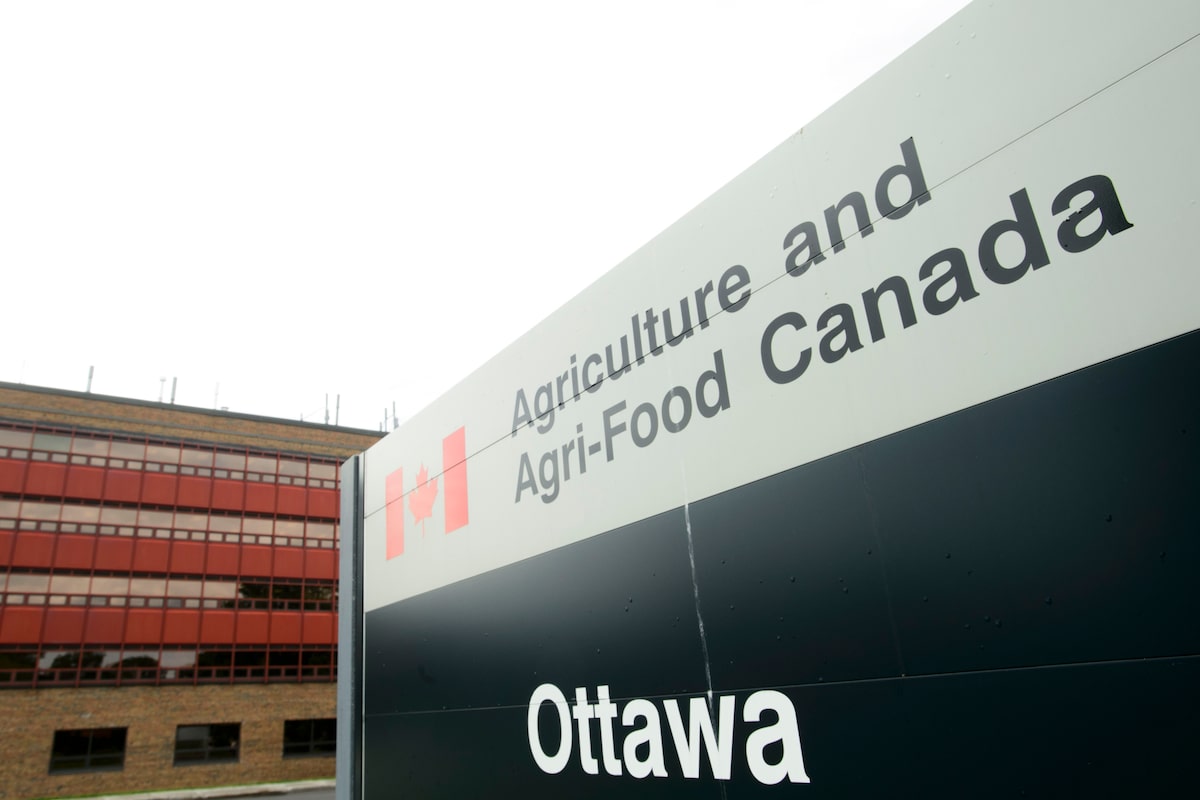
Agriculture and Agri-Food Canada Headquarters in Ottawa on June 26, 2019. The organization confirmed that it would be shuttering seven federal research sites across Canada.Sean Kilpatrick/The Canadian Press
The closing of a major federal government research centre in Guelph, Ont., is a “big blow” to food science and outbreak prevention in Canada, increasing the risk of food-borne illnesses at a precarious time for the North American food-safety system, a Canadian expert in the field is warning.
Agriculture and Agri-Food Canada confirmed last week that it would be shuttering seven federal research sites across the country, including the Guelph Research and Development Centre in southwestern Ontario.
The Guelph centre focuses on studying food safety and “value added food attributes,” its website says, researching threats such as drug-resistant bacteria and collaborating with food producers to develop healthier products.
It’s also home to a biosecure facility that works with industry partners to prevent food-borne disease outbreaks, ensuring their processes meet safety standards both at home and in export markets.
The centre’s closing comes as a shock to the research community, especially given recent cuts in the United States that have frayed its own food-safety system and prompted Canadian regulators to strike a task force aimed at re-evaluating the safety of American food imports, according to Lawrence Goodridge, director of the Canadian Research Institute for Food Safety at the University of Guelph.
“The closure of this centre signals the retreat of the federal government from a critical domain of public health, food security and food production,” said Dr. Goodridge, who has collaborated on research projects with scientists from the Guelph facility.
“What we’re essentially doing is increasing the likelihood of outbreaks at a time when other agencies — whether in Canada or the U.S. — are being reduced. So the long and short of it is that, from my point of view, we can expect to see more incidences of contaminated food, illnesses and deaths in Canada.”
The closing of the Guelph facility, along with the other six sites, is part of the federal government’s effort to shrink its work force.
The other research centres being closed include facilities in Quebec City and Lacombe, Alta., where scientists study everything from beef production to honeybee health and management. Four satellite research farms are also being closed — two of which were among the first research stations created by Agriculture Canada in 1887, according to Milton Dyck, president of the Agriculture Union of the Public Service of Canada.
In an e-mailed statement, Agriculture and Agri-Food Canada said its work force will be reduced by about 665 positions.
“AAFC will remain Canada’s largest agricultural research organization, with 17 research centres nationwide and research farmland in every province,” the statement said, adding that “any wind-down of scientific operations would follow a careful decision process that could take up to 12 months.”
Ottawa has said that it wants to cut the number of public service jobs by about 40,000 from a peak in 2024. But AAFC’s work force has already shrunk in the past decade by about 14 per cent, according to Mr. Dyck.
Opinion: An impatient Mark Carney would rather bypass the public service than reform it
Mr. Dyck said he is particularly concerned about the Guelph centre closing because his union is soon expecting cuts at the Canadian Food Inspection Agency as well. Together the implications for food safety in Canada are “very concerning,” he said.
Since being established in 1997, the Guelph research centre has played an important role in turning the city into a global hub for food-safety research, Dr. Goodridge said.
“The city of Guelph, in my opinion, is one of a few cities globally — and perhaps the top city globally — that has such a concentration of food-safety facilities and research at the academic, provincial and federal levels,” he said. “So we have this huge concentration and now they’re closing a centre that has played a central role in that work.”
Dr. Goodridge added that part of what makes the Guelph facility so valuable as a research centre is its connections to both the federal government and industry.
As a federal research facility, it ultimately reports to the minister of agriculture, meaning its scientific output has great potential to shape public policy, he said.
It’s also rare among government research facilities in that it works closely with industry to improve health and safety, he said. According to a video on the centre’s website, its biosecure facility works directly with food manufacturers and suppliers, which share their proprietary processes with scientists at the laboratory to be evaluated and improved upon.
For Dr. Goodridge, the closing of the Guelph research centre could not be more ill timed. In the U.S., cuts to disease surveillance systems, public service and research programs have prompted experts in that country to warn of a potential breakdown in its food safety system, which is closely intertwined with Canada’s.
“We import a lot of our food from the U.S., so if they’re pulling back on food-safety measures, we better step ours up,” he said. “We have a responsibility globally, as a developed country with what is widely regarded as one of the best food safety ecosystems around the world.
“This is precisely the time to actually invest in food safety and public health initiatives.”