
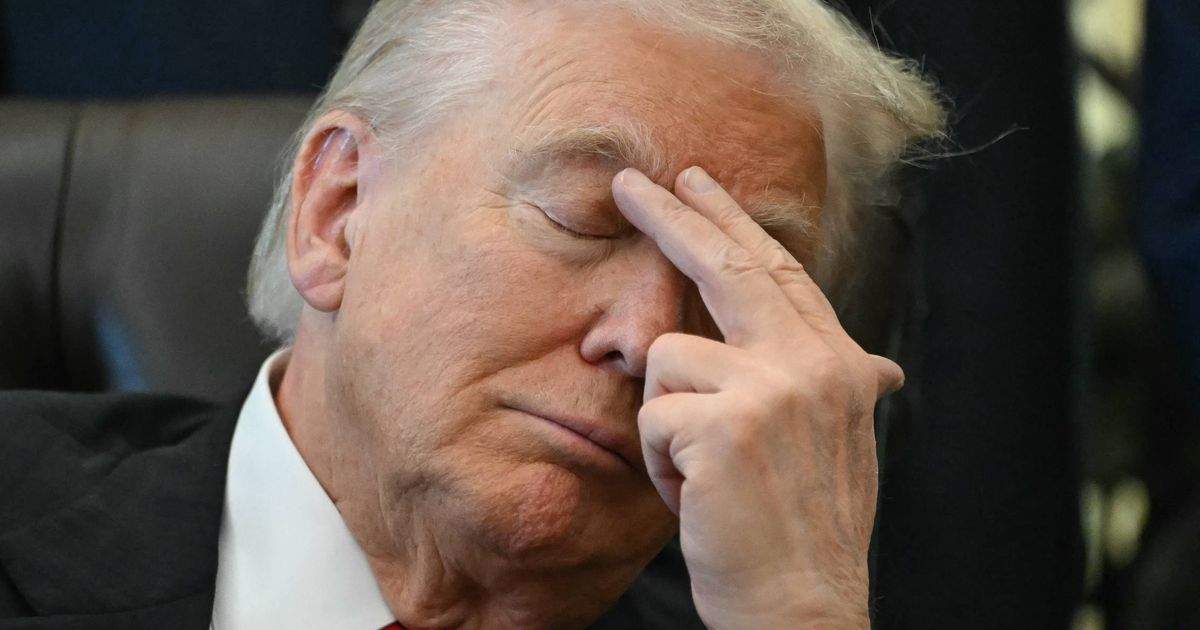
Donald Trump’s second term is rapidly unravelling, with dissent spreading beyond his critics to senior Republicans and furious MAGA voters – a collapse laid bare when he was heckled by his own supporters
10:38, 28 Jan 2026Updated 17:06, 28 Jan 2026
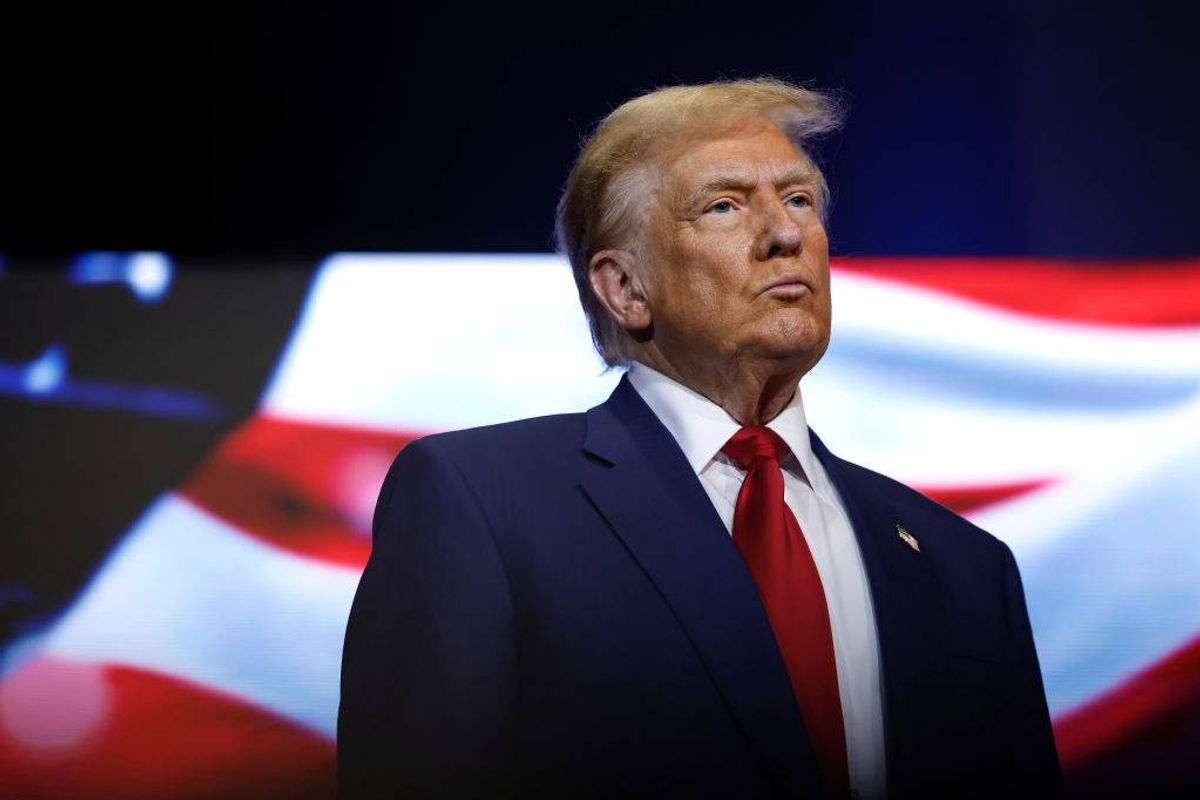
Donald Trump’s second term is coming apart fast and the fractures are now ripping through his own side, not just his opponents(Image: Getty)
Donald Trump’s second term is sliding into trouble at speed, and the cracks are no longer confined to his enemies.
A year on from sweeping back into the White House, the president is facing open dissent from senior Republicans, growing anger among core MAGA voters and mounting pressure over policies that are failing to deliver. That strain was laid bare last night when Trump was heckled at a rally in Iowa, a heartland state and long-time stronghold, by his own supporters angry over rising prices, broken economic promises and the killing of US citizens by his immigration goon squads.
The coalition that once looked unbreakable is starting to fray. The fallout from militarised immigration enforcement in Minneapolis, an embarrassing climbdown over Greenland after weeks of bombast, and growing anger over the cost of living are all taking their toll. Trump’s economic message – that powered him back to the White House – is now being openly challenged by voters he once counted on, a warning sign with midterm elections looming.
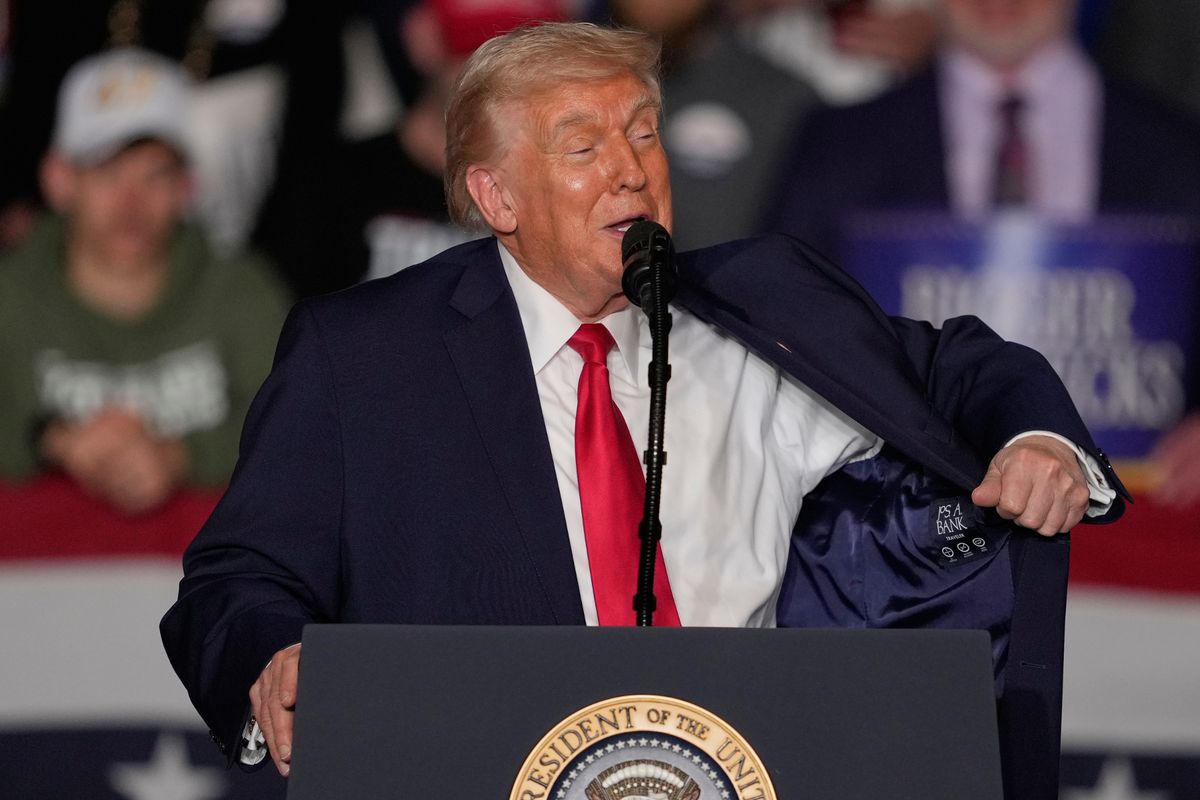
Donald Trump was drowned out by repeated heckling during a speech in Iowa, a stark sign of the swelling anger now turning against his administration(Image: AP)
Abroad, Trump’s much-trumpeted “Board of Peace” has been greeted with derision rather than respect, while at home the unresolved scandal of the Jeffrey Epstein files continues to cast a long and damaging shadow. Together, these flashpoints are reshaping the political landscape and, for the first time in his presidency, raising serious questions about Trump’s authority, credibility and grip on power.
Here, the Mirror lays bare how the self-styled “greatest deal-maker on the planet” is increasingly being seen by millions not as a master negotiator but as a snake-oil salesman.
Minneapolis Backlash: ICE, shootings and MAGA Revolt
The fatal shooting of ICU nurse Alex Pretti by immigration agents in Minneapolis has become one of the most explosive flashpoints in Trump’s presidency and a powerful symbol of the widening divide between the president and his own supporters. What has inflamed the backlash is not only the killing itself but the administration’s response.
Senior figures in the White House, from Homeland Security Secretary Kristi ‘ICE Barbie’ Noem to adviser far-right Stephen Miller, rushed to defend the operation and cast Pretti as a violent threat, smearing him in ways that have since been contradicted by video evidence and eyewitness accounts. That effort to justify the killing, the second US citizen to be killed by ICE, has triggered outrage across the political spectrum and now even within the Republican Party.
At the same time, Trump’s increasingly hostile rhetoric against migrants and his frequent attacks on Representative Ilhan Omar have coincided with a sharp rise in threats and actual violence against politicians. Last night Omar, a vocal critic of Trump’s immigration crackdown, was sprayed with an unknown substance at a Minneapolis town hall – an assault that authorities are treating as politically motivated.
Critics say the president’s repeated targeting of her and other minorities has helped create a climate in which such attacks feel emboldened rather than rebuked. Where once Trump’s hard-line messaging rallied his base, it now risks blowing back on him – fuelling division, sparking unrest and prompting even some Republicans to question the costs of the administration’s confrontational style.
Greenland Gambit: Big Talk, Little Return
In one of the most farcical moments of his presidency, Trump dusted off his long-running fantasy of buying Greenland – a stunt that landed with a thud and was laughed off from Copenhagen to Brussels. Wrapped in trademark bluster and vague talk of “strategic interests”, the plan produced precisely nothing, beyond diplomatic eye-rolling and quiet embarrassment for Washington. Greenland, its leaders and its allies made clear they were not for sale, no matter how loudly Trump talked it up.
The episode became a neat reflection of deeper doubts about Trump’s grasp of foreign policy. What the White House billed as tough, visionary deal-making looked instead like amateur geopolitics, wildly out of step with reality. Allies reacted with cool disdain, while polls at home showed scant public support, underlining how detached the idea was from the concerns of most Americans.
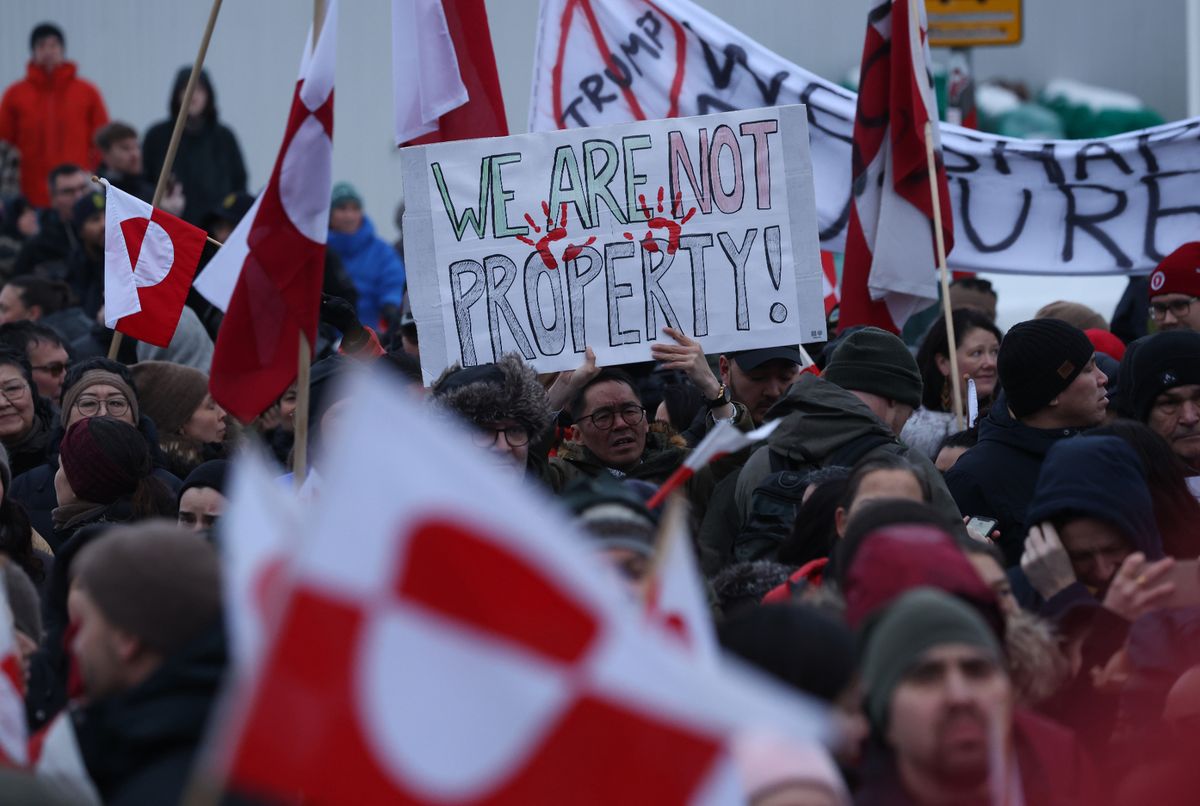
Protestors carry Greenlandic flags and a banner that reads: “We Are Not Property” as they march to protest against Donald Trump and his intent to acquire Greenland(Image: Getty Images)
Worse still, the Greenland sideshow strained already brittle relations with NATO partners and European governments, fuelling fresh rows and diplomatic friction. Instead of projecting strength, Trump weakened America’s standing, turning a supposed power play into another self-inflicted wound on the world stage.
Economic Gripes: Tariffs, Confidence and Eroding Support
For millions of Americans, the economy is no longer an abstract set of numbers; it is a daily grind of trying to keep the lights on. Household budgets are being hammered by soaring grocery bills, rent and fuel costs, while health insurance premiums have jumped sharply under Trump, leaving families paying more for less coverage. The promise that a second Trump term would deliver prosperity has curdled into a cost-of-living crisis felt most sharply at the checkout and the kitchen table.
Consumer confidence had slumped to its lowest level in more than a decade, driven by stubborn inflation, rising tariffs and an economy that is failing to create secure, well-paid jobs. Polls reflect that pain. Trump’s approval ratings are sinking, with especially grim numbers on the economy – his supposed strong suit. Surveys put his overall approval in the 30s, with barely a third of Americans backing his economic leadership, a red-flag position for any president.
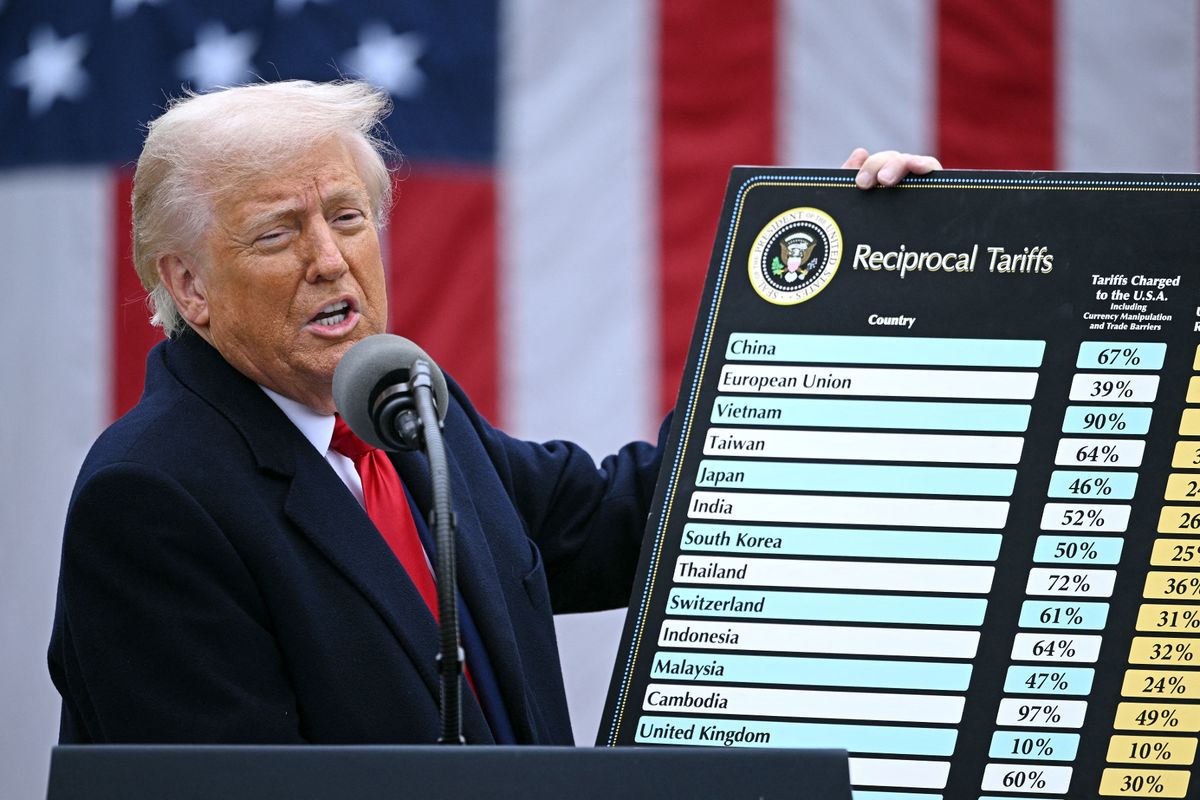
Donald Trump holds a chart as he delivers remarks on hard-hitting foreign tariffs during an event he called “Make America Wealthy Again”(Image: AFP via Getty Images)
Trump’s tariff regime, sold as a show of strength, has instead pushed up the price of everyday goods and tangled supply chains, costs that are being passed directly to consumers. Public opinion has turned sharply against the policy, with growing majorities blaming tariffs for rising prices and shrinking household finances.
And the backlash is no longer confined to cities or Democratic strongholds. In rural America and Republican heartlands such as Iowa, farmers are struggling with weak crop prices, delayed support and mounting uncertainty. The economic squeeze is now biting Trump’s own base, and for voters already stretched to breaking point, patience is wearing thin.
The Epstein Files: The biggest single threat
Strip away the noise, however, and one motive looms over Trump’s presidency: distraction. Critics argue the rolling crises – ICE crackdowns, foreign-policy stunts and culture-war flare-ups – are self-created for a single reason: to drag attention away from the overdue release of the Jeffrey Epstein files.
Those documents pose the greatest threat to Trump. Despite bipartisan legislation mandating disclosure, his administration has been accused of delaying and obstructing the process, with less than one per cent released so far – a drip-feed that has only fuelled claims of a cover-up. At stake are more than a million files and renewed scrutiny of Trump’s past friendship with Epstein, a connection the White House is desperate to keep out of the public domain.
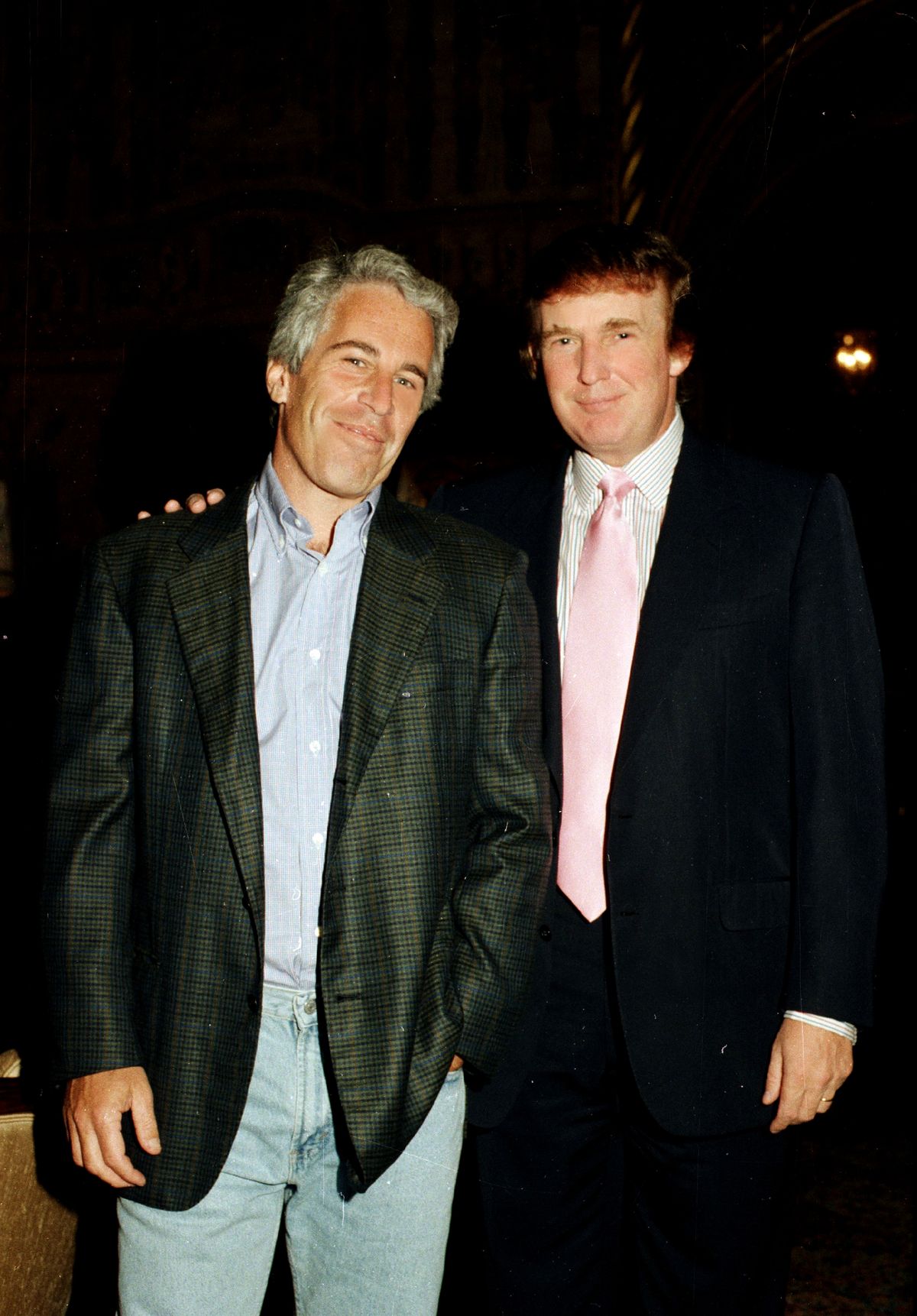
Jeffrey Epstein pictured with his once “best friend” Donald Trump(Image: Getty Images)
Everything else, opponents say, is theatre – a deliberate effort to swamp the news cycle and bury the story that could do the greatest damage. For a president who promised transparency and to “drain the swamp”, the perception of concealment is toxic. More than any policy failure or protest, the Epstein files remain the single biggest threat to Trump, his MAGA support and his presidency.
What this all means
Trump’s presidency is not imploding in a single dramatic moment – it is rotting in plain sight. The coalition that carried him to power is splintering, its cracks widened by infighting over ICE brutality, foreign-policy blunders, a grinding cost-of-living crisis and the toxic shadow of the Epstein files. What once passed for control now looks like chaos colliding from every direction.
This is no longer a presidency shaping events; it is one lurching from crisis to crisis, forever on the back foot. The man who promised strength and dominance is reduced to damage limitation, frantically trying to smother backlash, shore up a shrinking base and spin away scandal. With the November midterms closing in, Trump’s grip on power looks weaker by the day, and the consequences of failure have never been clearer.