
Sign up for the Slatest to get the most insightful analysis, criticism, and advice out there, delivered to your inbox daily.
The second Trump administration entered office with a theory. President Donald Trump, backed by policy architect Stephen Miller, believed that in a battle of political imagery between camouflaged he-men against leftist protesters, their guys would always win. Law and order would defeat chaos. Those trying to deport immigrants would defeat those trying to protect them.
In Minnesota, that theory didn’t just hit its limit, it exceeded it. Now Trump and his team are scrambling to cushion their fall as public opinion has turned on them.
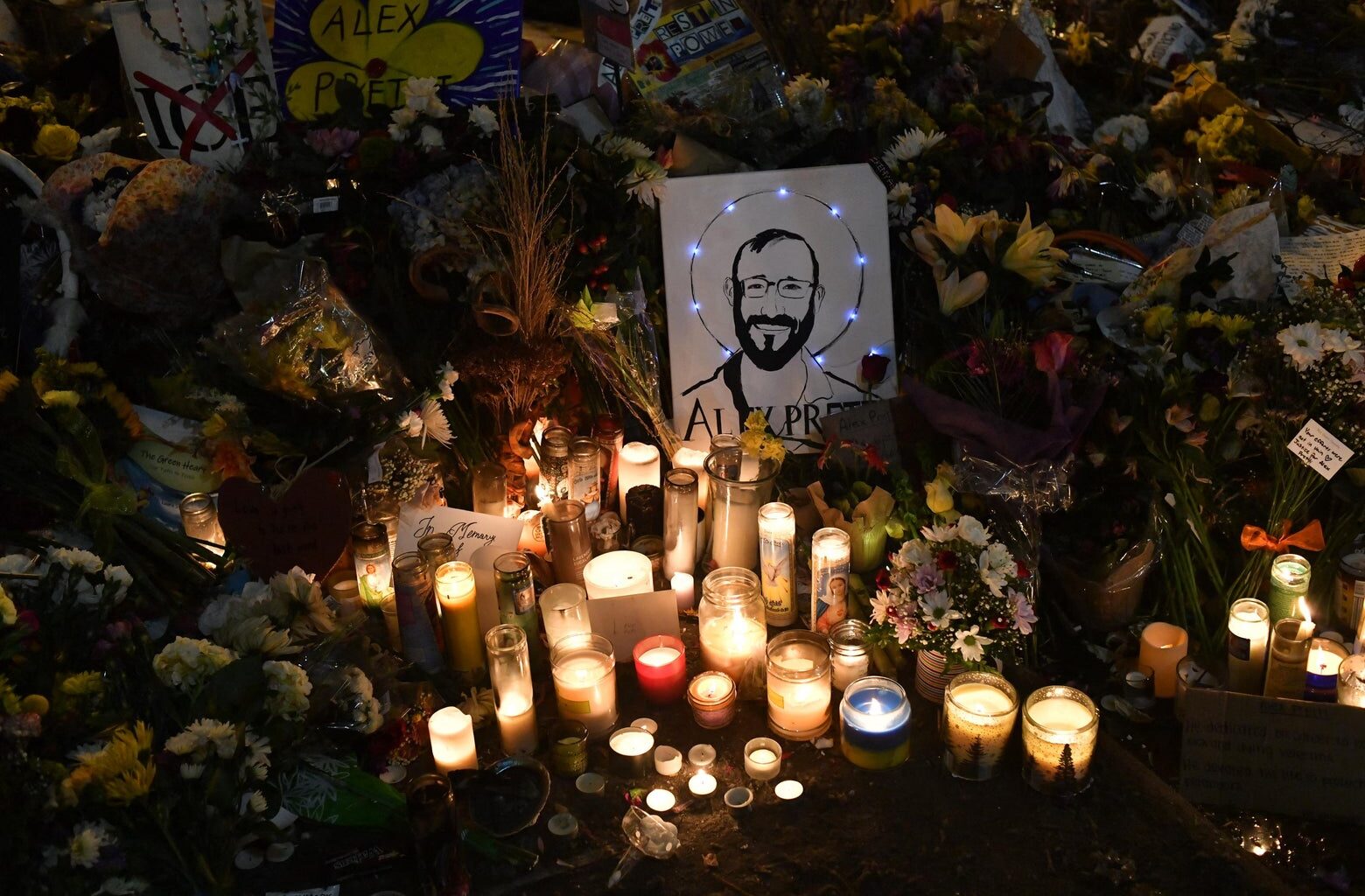
The reaction of elected Republican officials, up to and including Trump, following the Border Patrol killing of Alex Pretti over the weekend has been markedly different from that following the killing of Renee Good, or any other scandalous episode involving immigration enforcement officials thus far. A broad swath of Republican members of Congress have joined Democrats in calling for an investigation into Pretti’s killing. Trump has removed Border Patrol wannabe-action-star Greg Bovino from his role leading the immigration enforcement operation in Minnesota, while Homeland Security Secretary Kristi Noem appears to be—at best—in administrative time-out. Trump has taken a suddenly conciliatory tone with Minnesota Gov. Tim Walz and Minneapolis Mayor Jacob Frey after weeks of treating them as useful left-wing foils.
It’s important not to overstate what’s happening. The administration isn’t suddenly coming out in support of open borders and abolishing Immigration and Customs Enforcement, and on Tuesday, ICE continued operations in and around Minneapolis.
But all signals sure point to Trump wanting to get the hell out of Minnesota—or at least take pains to change the way the public sees the issue.
For the first time, the administration has taken its foot off the gas in its steroidal deportation agenda. After months of ramping up its interventions into blue cities starting last summer and marketing them with an almost trollish devotion meant to please the base, the antics devolved into killings, unaccountability, and lies about what people are seeing with their own eyes. With this devolution has come a turn in public opinion, with Trump’s numbers on his once best issue—immigration—tanking. The party finally found a level of public disapproval it couldn’t tolerate, and midterms are coming closer than you think.
The first memorable time that the administration flexed unnecessary muscle the way they did in Minneapolis was last June. A series of clashes between protesters and immigration agents performing raids around Los Angeles prompted the administration to federalize the California National Guard and send in hundreds of Marines. The administration liked the visual and sent Noem there for a photo op and press briefings. During a press briefing, California Sen. Alex Padilla was thrown to the ground by Noem’s security.
The administration did not offer Padilla an apology. Instead, as the California deployment and divisiveness it caused was underway, Miller was posting about how “California used to be a paradise” but that “mass migration has brought us to where we are now.” Miller at the same time was trying to rally energy beyond the lagging One Big Beautiful Bill in Congress, arguing grandiosely that its avalanche of fresh money for DHS made the bill “the most essential piece of legislation currently under consideration in the entire Western World, in generations.”
After the Los Angeles operation, the administration federalized the Washington, D.C., police department and deployed National Guard members there, too, giving DHS agents room to ramp up their enforcement in the nation’s capital. (A man who hurled a sandwich at a federal officer was eventually taken under arrest by a swarm of 20 officers.) Elsewhere around the country, a raid on a Chicago apartment building in the middle of the night—featuring agents rappelling down the building from a Black Hawk helicopter—earned the administration plenty of controversy, but no apologies. When Trump was asked on 60 Minutes in early November about whether some ICE operations, such as those in Chicago, had gone too far, Trump said he believed “they hadn’t gone far enough.”
As the videos of over-the-top DHS tactics during raids continued to pile up, the administration stayed remorseless and itched for more fights. The Minnesota social services fraud scandals and the invective they directed at Minneapolis’ Somali population provided an impetus for “Operation Metro Storm.”
But even when an ICE agent killed Renee Good as part of the operation, the White House, the administration, and Republican elected officials showed no wavering from the party line. Good was accused by Miller and Noem of “domestic terrorism.” Rather than investigate the incident, the Department of Justice wanted to investigate Good’s widow. Vice President J.D. Vance, in an appearance in the White House briefing room, chastised the media for its coverage of the incident and described Good’s death as “a tragedy of her own making.”
Full speed ahead. As always.

Brandon Sigüenza
ICE Agents Detained Me for Eight Hours for Legally Observing Them. I Saw Exactly What They’re Up To.
Read More
But under the hood, the Renee Good killing—which a majority of Americans felt was unjustified—caused real political damage. Support for ICE’s tactics is in the tank, while support for abolishing ICE is growing. Beyond that, the high-profile nature of the Good incident and the administration’s outrageous responses to it made the president’s immigration policies not just something that a majority passively disapproved of; it raised the salience of the issue. And if there is one political issue which Republicans, already heading into a terrible midterm environment due to the cost of living, can’t afford to have as a top motivating issue working against them, it’s immigration. That is supposed to be their bread and butter.
This Content is Available for Slate Plus members only
A Seat on Trump’s “Board of Peace” Costs $1 Billion. Guess Who Gets the Money.
This Content is Available for Slate Plus members only
Stephen Miller Had a Dream. It’s Dying in Minnesota.
This Content is Available for Slate Plus members only
One Supreme Court Case Is Most Responsible for Our Oligarchy. It’s Not the One You Think.
The MAGA Faithful Who Criticized Trump for His Gun Comments Are Already Backing Down
So this time, when Alex Pretti was repeatedly shot after trying to help someone, and Noem, Bovino, and Miller tried to portray him as a would-be “assassin” or “domestic terrorist,” they were isolated in their approach. Trump fielded calls from senators and members of Congress over the weekend pleading with him to tone it down and pivot away from the Minnesota operation. The swaggering paramilitary incursions into overwhelmingly Democratic communities had at last succumbed to public opinion. Trump and a host of senators and Republican congressmen, surely with coordination, signaled deescalation in their statements and social media on Monday.
Ultimately, are they just going to tweak the Minneapolis model and try it somewhere else—maybe after a breather? Or is this the beginning of a meaningful retreat from the administration’s attempt to snatch every immigrant it can?
The calendar may dictate what comes next, at least in the medium term. The midterms are more front-of-mind now than they were in Trump’s first year, and we wouldn’t be surprised to see deportation operations select less hostile turf going forward. The Republican Party needs less widespread coverage of immigration raids gone awry, and the best way to have that would be to select fewer immigration targets likely to go awry. The more such incidents take place, the more the future of Trump’s mass deportation agenda—and Republicans’ hopes for holding congressional power going forward—dissipates.

Sign up for Slate’s evening newsletter.