
What to know
Disabled Torontonians say uneven snow removal has left sidewalks, curb cuts, and transit stops inaccessible days after a historic storm.
Accessibility advocates argue the city prioritizes roads over sidewalks, effectively cutting off wheelchair users and others with mobility needs.
The City of Toronto says sidewalk plowing follows road clearing, but repeated snowfall has re-buried previously cleared areas.
Advocates are calling for an accessibility-first snow removal approach to prevent disabled residents from being stranded after future storms.
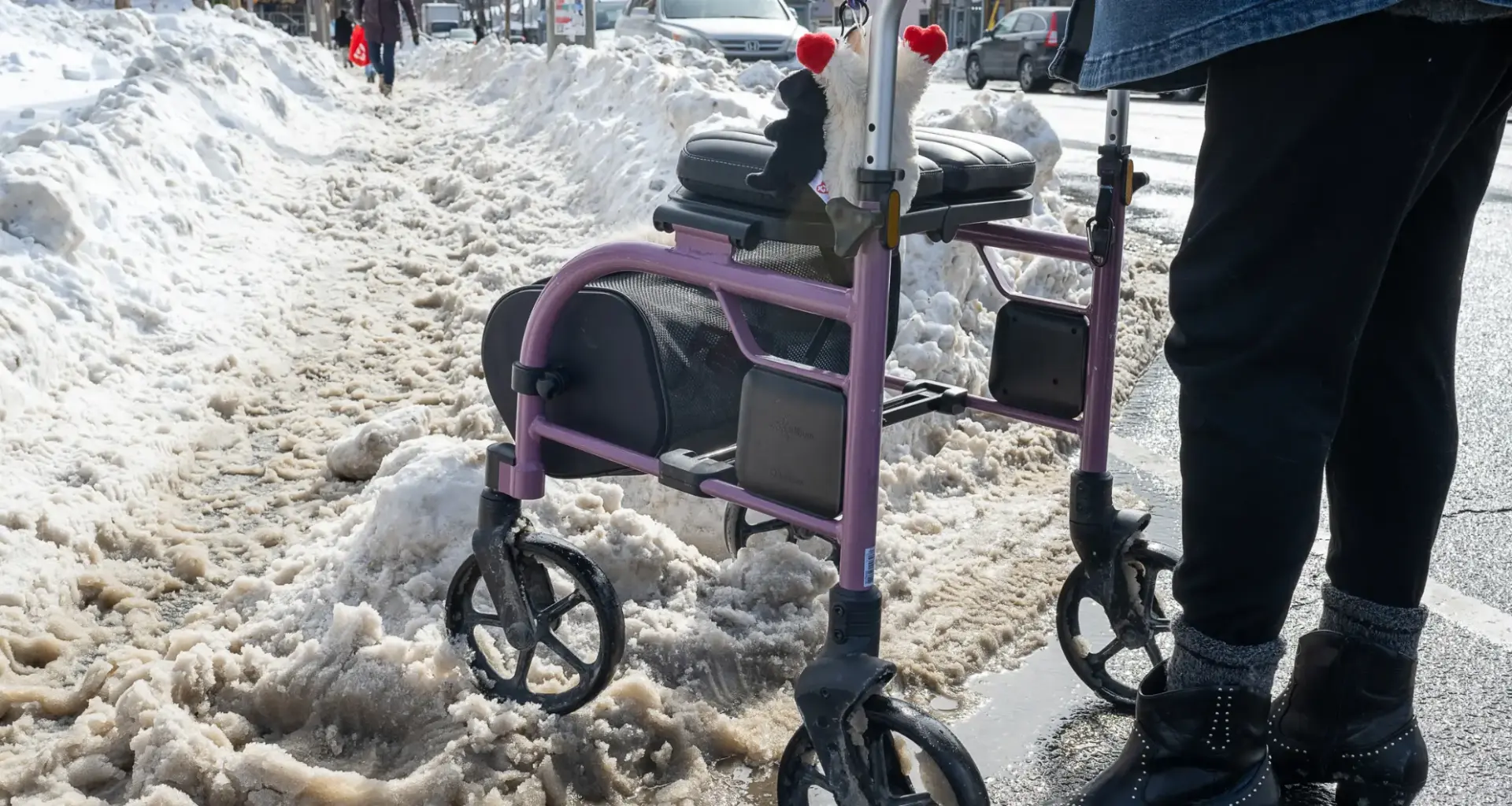
Nearly a week after Toronto was hit by a historic snowstorm, many residents have resumed their day-to-day routines. But for some Torontonians, the city’s slow and uneven snow removal has created an ongoing accessibility crisis — one that has left disabled residents trapped in their homes.
Two Toronto disability advocates say the city’s approach to snow clearing continues to prioritize cars over people, with dangerous consequences for those who rely on accessible sidewalks, curb cuts, and transit stops to move safely through the city.
Vanessa Leu, a North York-based wheelchair user living with multiple chronic illnesses, says snowstorms make daily life not just inconvenient, but unsafe.
“When the snow banks are piled up to the sides of the streets, we lose our ability to get to where we need to go,” she explained to Now Toronto on Friday. “It’s just not really a way to live your life.”
Besides visibility-blocking snowbanks, Leu stresses that uncleared sidewalks disproportionately affect wheelchair users and people with mobility aids. While roads are often plowed quickly, sidewalks can be left buried for days, cutting off disabled residents from essential services, medical appointments, and overall, everyday life.
“I genuinely don’t understand why roads get priority over sidewalks when sidewalks are disabled people’s roads,” Leu said. “When [the city] says that roads are the main priority, they’re saying that able-bodied people and drivers are their main priority.”
Read More
She argues that snow removal on sidewalks should happen at the same time as road clearing for equal access for all users.
“As the snow is falling, they should be actively removing it from the sidewalks as well… There should be just as many plows on the sidewalks as there are on the roads.”
City of Toronto responds
The City of Toronto tells Now Toronto that it coordinates road and sidewalk plowing so that sidewalks are cleared after the road plow has passed by an area, to prevent sidewalks from being re‑buried by snow piles left behind by plows.
But due to the massive storm on Sunday that brought 60 centimeters of snow to some parts of Toronto, the city says that multiple rounds of plowing have occurred, and in some cases, sidewalks that were once cleared were covered all over again.
Read More
“We are still plowing sidewalks as we simultaneously remove the street snow. This removal of snow from streets will ultimately create capacity for snow that is plowed off sidewalks,” a city spokesperson said in an email statement.
Taylor Lindsay-Noel, a quadriplegic accessibility advocate, echoed Leu’s concerns, sharing that she was trapped inside her home for four days following the snowfall, and much of the residential streets in her Midtown neighbourhood are still unclear.
She shares that many friends in the Toronto disabled community — especially those relying on transit services — still remain stranded.
“Some of them are still stuck today because they use public transportation, and sidewalks from either their apartments or homes to the public transportation are still blocked off,” Lindsay-Noel explained. “And the worst part is, after it’s left for so long, the snow becomes kind of frozen, so it makes it even more difficult to remove it.“
Feelings of being “forgotten” and “dismissed” are what Lindsay-Noel describes, adding that it seems like the city has these operational mishaps each year, despite being a place that gets snow.
“Winter happens every single year. I am sick and tired of the city pretending like winter just magically springs upon us and we don’t see it coming. We are a snowy city, so this is something they should be preparing better for, and something that continually leaves all of its residents disappointed with the cleanup,” she said.
Lindsay-Noel also emphasized that the fight for better accessibility is not just for people with mobility issues. Its seniors, parents with strollers, and generally anyone afraid to trip and fall when sidewalks, curbs and ramps are left inaccessible.
“It affects everybody,” she stressed. “I see people who are able-bodied climb over the snowbanks. And for us, it’s not something that’s possible. I am so sad when I see disabled people take their wheelchairs to the road to try to navigate around areas that are not accessible anymore. It’s so dangerous for everybody involved, but oftentimes the only option we have.”
Both advocates stress that without systemic change, the same problems will resurface with every major snowfall. Leu and Lindsay-Noel are calling on the City of Toronto to adopt an accessibility-first approach to snow removal — one that ensures sidewalks, curb cuts, bus stops, and ramps are cleared promptly so all residents can move through the city safely.
The city says throughout this week, it has received a high number of service requests to 311 reporting impassable sidewalks or challenges for people with accessibility needs, and assured action is being taken based on the calls.
The spokesperson said sidewalk plows are being sent back out to re‑clear these areas, and residents can help out by submitting a service request to 311 when they see sidewalks that need attention.
But Lindsay-Noel says it shouldn’t even have to get to that point.
“It shouldn’t be reliant on us to continue to remind them that we are here and we matter,” Lindsay-Noel said. “But what they say their actions are, and the feeling and reality are two different things.”