
It started at a Washington cocktail party, when an Air Force general listened to a mountaineer describe the view from Mount Everest — and decided the United States should put a surveillance device on a Himalayan summit.
That offhand idea soon became a real-world operation.
Late last year, ahead of the holidays, the New York Times ran a weekend article titled, “How Did the CIA Lose a Nuclear Device?” The story recounted a secret 1965 CIA mission carried out at the height of the Cold War with India’s Intelligence Bureau.
This story’s roots, as with many espionage adventures, lay in a chance encounter at a Washington cocktail party. Here, Gen. Curtis LeMay, chief of staff of the U.S. Air Force, met Barry Bishop, a National Geographic photographer and accomplished mountaineer. LeMay listened as Bishop described his Everest ascent and the panoramic view from the summit, stretching over the Tibetan plateau and into western China. An idea formed: Could a surveillance device on a Himalayan peak allow the United States to observe China’s nuclear sites? LeMay consulted the CIA, which responded encouragingly. The outcome was Operation High Altitude Test.
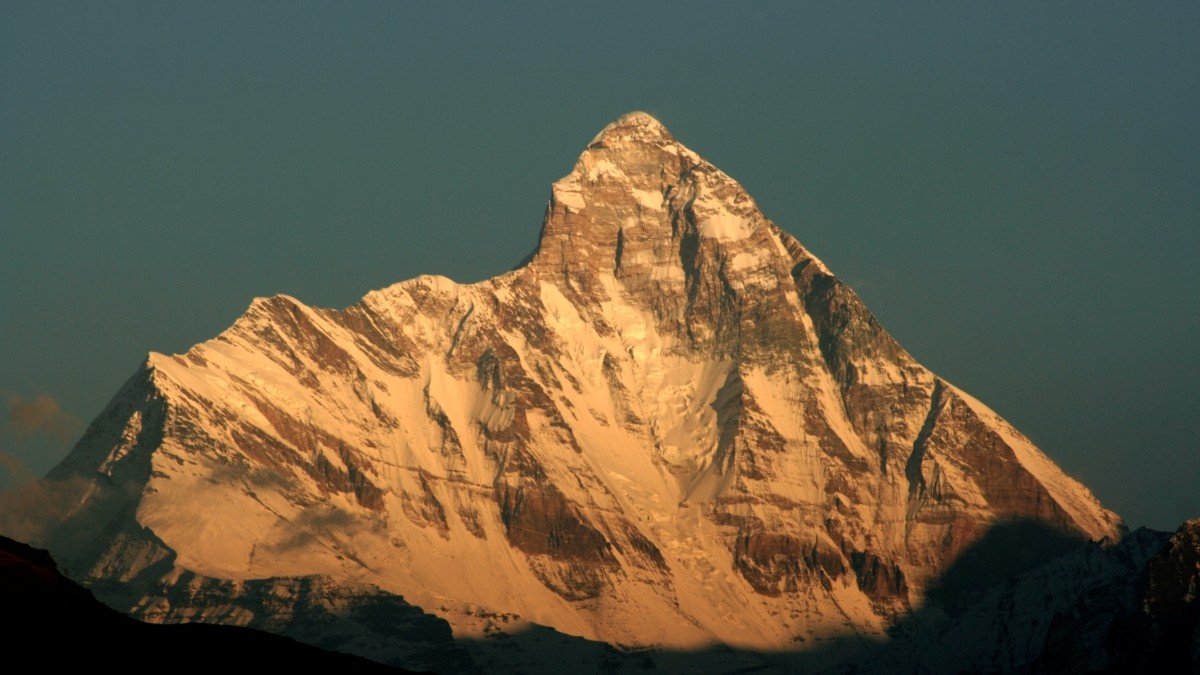
The operation aimed to emplace a 123-lb plutonium-powered SNAP-19C telemetry unit on Nanda Devi, the second-highest mountain in the Indian Himalayas. The mountain rises nearly 26,000 feet above sea level in Uttarakhand’s Chamoli Garhwal district, posing major challenges for elite climbers due to its isolation and treacherous terrain. Considered technically harder to climb than Everest, Nanda Devi offered a vantage point safely inside Indian territory from which the CIA intended to monitor China’s nascent nuclear and missile program following its first atomic test in October 1964.
To conduct the operation inside India, the CIA partnered with India’s Intelligence Bureau. While India was officially non-aligned, its 1962 border war with China led to closer intelligence cooperation with the United States. Prime Minister Jawaharlal Nehru’s administration adjusted its stance, accepting American security and intelligence assistance.
While the Sino-Indian border war facilitated the expansion of cooperation between the two countries’ intelligence services, Indian and American intelligence agencies had worked together before 1962. During the 1950s, the CIA implemented a covert action campaign to destabilize and remove a communist state government in Kerala in southern India. The CIA did so with the knowledge and support of powerbrokers in India’s ruling Congress Party and central government. In addition, New Delhi decided to look away when CIA aircraft violated Indian airspace in support of CIA-sponsored resistance activities in Chinese-controlled Tibet. Still, it was only after India’s war with China that intelligence ties between New Delhi and Washington became broader, deeper, and more formal. Collaboration included forming the Special Frontier Force — modelled on U.S. Army Special Forces — to monitor Chinese movements in Tibet; improving information flow across India’s security establishment; basing American U-2s at Charbatia airfield in Odisha, eastern India, to collect imagery on Tibet and Western China; and conducting offensive disinformation campaigns against China. The United States and India also set up a joint unconventional warfare task force in New Delhi and a joint unconventional warfare operations base at Hasimara, near Bhutan, for Tibetan missions. United by concern over China, India approved Operation High Altitude Test.
In the fall of 1965, the operation was launched, but problems quickly arose. A team of Indian and American mountaineers led by Capt. Manmohan Singh Kohli — an Indian naval officer with Indo-Tibetan border police experience — had trained on Mount McKinley (Denali) in Alaska. They arrived at Nanda Devi by helicopter, aware that summer climbing weather had already ended. With little time to acclimatize, even seasoned climbers suffered altitude sickness. The ascent was brutal: Deep crevasses, crumbling snow bridges, and constant whiteouts driven by blizzards. Near the summit, worsening weather forced Kohli’s team to retreat. They cached the nuclear device before it could be installed.
Several attempts to return to Nanda Devi and recover the device failed. Between 1966 and 1968, at least three efforts to secure the plutonium-powered telemetry unit were fruitless. In 1967, another mission installed a monitoring device near the summit of Nanda Kot, a 22,000-foot peak nine miles southeast of Nanda Devi. That unit returned data for several months before failing. In the summer of 1968, a climbing team recovered this device.
Concerns grew that the lost Nanda Devi device might leak radioactive material into the Himalayan watershed and contaminate the Ganges river. Tens of millions of Hindus seek spiritual purification in the river each year. It provides drinking water to nearly half of India’s population and irrigates agriculture in a basin critical to food production. The Indian government conducted extensive ground and aerial searches of radioactive leaks but found nothing. Water from the Nanda Devi range was tested until 1970, and its quality was monitored for years thereafter. No contamination was found. Officials concluded the lost device was likely buried by an avalanche or lost in a crevasse.

In 1969, the CIA and India’s Intelligence Bureau ran one last joint Himalayan mission. They installed two monitors, one in Ladakh (300 miles northwest of Nanda Devi) and one in Arunachal Pradesh (at the eastern end of the Himalayan range, 1,000 miles away). Both were powered by gas and solar energy instead of plutonium. Codenamed Operation Gemini, it aimed to intercept Chinese communications and yielded useful data on missile tests. By the early 1970s, satellite reconnaissance made such ground sensors obsolete, thereby ending these operations.
It seemed that the details of Operation High Altitude Test and related missions would remain buried in classified files at CIA headquarters and at New Delhi’s Central Secretariat South Block, then home to India’s intelligence services. This changed when Howard Kohn, a journalist who broke the Karen Silkwood story in Rolling Stone in 1975, brought the subject back into the light. In April 1978, Kohn published an article titled “The Nanda Devi Caper” in Outlook magazine. His reporting, leaked by a congressional aide, shocked officials in Washington and New Delhi. The article contained several inaccuracies: It claimed the Central Bureau of Investigation, not the Intelligence Bureau, oversaw Operation High Altitude Test. It also suggested Indian prime ministers were kept in the dark at the CIA’s insistence, giving the CIA full control over the mission.
Although impossible to disprove while the archives of India’s intelligence services remain closed, the notion that the Intelligence Bureau would “go rogue” and conduct a major covert operation in collaboration with the CIA and absent political top cover is fanciful. Such a scenario was directly and explicitly contradicted by India’s premier, Morarji Desai, in a remarkably candid statement he made on the operation to India’s lower house of parliament, the Lok Sabha, on April 17, 1978. Believing that candor was the best way to defuse a media storm that had developed following the publication of Kohn’s article, Desai ignored U.S. government advice not to comment on intelligence matters and came clean with an astonished Indian public. Confirming that the substance — if not all the details of Kohn’s expose — was correct, Desai acknowledged that the Indian government had sanctioned a highly secret joint mission with the CIA to place nuclear-monitoring devices in the Himalayas. He confirmed that one device had been lost on Nanda Devi and that the environmental threat posed by the lost device was uncertain. The Indian people should remember, Desai cautioned, that their leaders had approved Operation High Altitude Test at a time when the nation appeared to face an existential threat from China.
Back in Washington, President Jimmy Carter’s administration came to see Desai’s handling of the Operation High Altitude Test bombshell as essentially correct. Having urged Indian leaders to avoid public comment, Robert Goheen, the U.S. ambassador to India, changed his mind and concluded that, in this case, sunlight had been the best disinfectant. Desai’s transparency — or at least the appearance thereof — defused what risked becoming an increasingly emotional row between an incredulous Indian public and a tight-lipped CIA. By confirming that India was a willing and equal partner in the Nanda Devi operation, Desai sucked the oxygen from left-wing Indian critics eager to vilify the CIA for unwarranted interference in the nation’s domestic affairs. Moreover, by refraining from the temptation to use the CIA as a convenient scapegoat for actions the Indian government itself was responsible for — something his predecessor, Indira Gandhi, had singularly failed to do — Desai secured Carter’s admiration and respect. India’s prime minister, the Carter administration concluded, could be trusted. He was an individual with whom Washington could do business. Under Desai and Carter, U.S.-Indian relations became closer, warmer, and more productive than at any point since the early 1960s. This was reflected in a series of agreements that improved bilateral exchanges in education, business, agriculture, and green technology.
In revisiting Operation High Altitude Test in December 2025, the New York Times faced some criticism from within India. The article, Indian critics suggested, added little new to what was already a very well-known story in the subcontinent. Other fuller and more expansive accounts of the CIA’s collaboration with the Indian Intelligence Bureau were already available, it was noted, including a compelling account, Spies in the Himalayas: Secret Missions and Perilous Climbs, which Capt. Kohli himself had co-authored with the American historian Kenneth Conboy in 2003. While fundamentally correct, if somewhat ungenerous, critics of the Times’ journalism invariably miss an important point about a country’s capacity to overlook its own intelligence history. An incredible tale of Cold War intelligence bravado and, perhaps, hubris, the operation has been extensively debated in India for many decades. Conversely, it is much less familiar to Americans and, more broadly, in the West. Unearthing Operation High Altitude Test is therefore welcome. It retains currency and continues to offer salutary lessons for policymakers and intelligence practitioners.
In his controversial novel, The Satanic Verses, British author Salman Rushdie has the stuttering Indian character Whisky Sisodia articulate a theory of the limitations of the English imagination. “The trouble with the Engenglish,” Sisodia observes wryly, “is that their hiss hiss history happened overseas, so they dodo don’t know what it means.” Whisky Sisodia has a point. In the context of the Nanda Devi caper, perhaps the New York Times deserves some credit for helping Americans avoid a similar trap.
Paul McGarr is a lecturer in intelligence studies at King’s College London. He is the author of two monographs, The Cold War in South Asia: Britain, the United States and the Indian Subcontinent, 1945-1965 (Cambridge University Press, 2013) and Spying in South Asia: Britain, the United States and India’s Secret Cold War (Cambridge University Press, 2024). The latter examines interventions made by the intelligence and security services of Britain and the United States in post-colonial India.
Image: Michael Scalet via Wikimedia Commons