
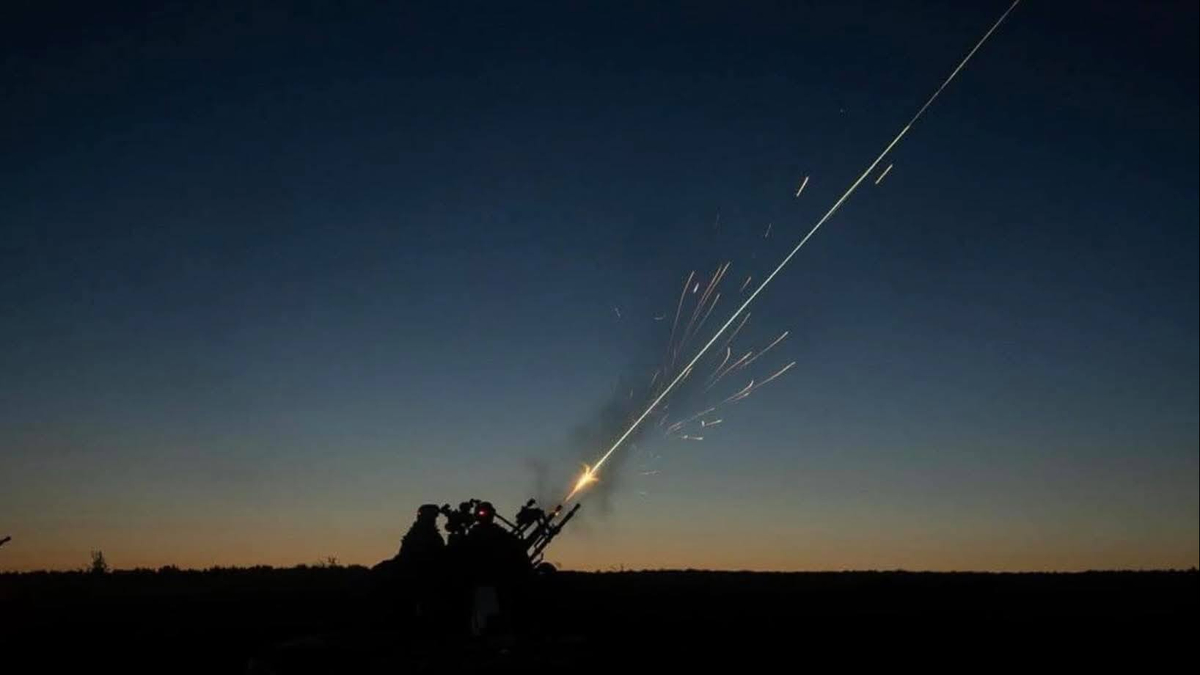
Ukraine has developed a prototype laser air defense system designed to counter Russian drones at significantly lower cost than comparable Western systems, according to a report by The Atlantic published on Tuesday, Feb. 10.
The system, known as Sunray, was demonstrated to The Atlantic during a field test in Ukraine. The portable laser weapon reportedly fits into the trunk of a car and can be mounted on a pickup truck. During a test described in the report, the laser burned through a small drone midair within seconds, causing it to fall.
JOIN US ON TELEGRAM
Follow our coverage of the war on the @Kyivpost_official.
According to the developers cited by The Atlantic, the system was built in approximately two years at a cost of several million dollars and could be sold for several hundred thousand dollars per unit.
The United States Navy operates a comparable system known as HELIOS, developed by Lockheed Martin under a $150 million contract signed in 2018. The first HELIOS unit was installed on a US destroyer in 2022 for defense against unmanned aerial vehicles.
Ukraine’s push to develop domestic air defense systems comes amid continued Russian drone and missile attacks and delays in Western military aid deliveries. President Volodymyr Zelensky has repeatedly emphasized the need for locally produced air defense capabilities.
Ukraine has faced particular challenges in intercepting low-cost Russian Shahed drones using expensive Western-supplied missiles such as the US-made Patriot or Germany’s IRIS-T systems.
Other Topics of Interest
WATCH: HUR Releases Footage of Strikes on Russian Air Defense Systems
Ukraine’s military intelligence published fresh video showing drone strikes targeting multiple Russian radar and air defense systems along the front line.
Mykhailo Fedorov, Ukraine’s defense minister, said in January that the development of an “anti-drone dome” is a matter of immediate necessity.
“It’s about survival today,” Fedorov said.
The laser system is part of a broader domestic effort that includes interceptor drones and other cost-efficient technologies aimed at countering Russia’s war in Ukraine.
According to the report, Ukraine currently has approximately 450 companies producing drones. Some systems, including interceptor drones such as the P1-Sun, cost just over $1,000 and are designed to destroy incoming drones at far lower cost than traditional missile-based systems.
Experts cited in the report noted that while such systems may not be capable of intercepting advanced ballistic missiles, they could significantly reduce the threat posed by mass drone attacks targeting Ukrainian cities and infrastructure.
Russia has intensified aerial attacks during the winter months, frequently targeting Ukraine’s energy infrastructure.
In a February 2025 interview, Vadym Sukharevsky, then commander of Ukraine’s Unmanned Systems Forces, said Ukraine was advancing research into laser weapons designed to counter Russian aerial threats.
He referred to earlier media reports from late 2024, including Interfax-Ukraine and UNITED24, which quoted him as saying that Ukraine had developed the Tryzub (“Trident”) laser system capable of striking aerial targets at altitudes above two kilometers (1.2 miles).
Providing an update, Sukharevsky said his command was conducting multiple research and development projects focused primarily on countering Russian Shahed kamikaze unmanned aerial vehicles. He repeated that Ukraine’s laser technology was already capable of hitting targets at certain altitudes but declined to provide technical details.
In December 2024, he also said Ukraine was likely the fifth country to deploy an operational military laser system, though he did not specify its origin. The name Tryzub – referencing Ukraine’s national trident symbol – suggests the system was developed domestically.