
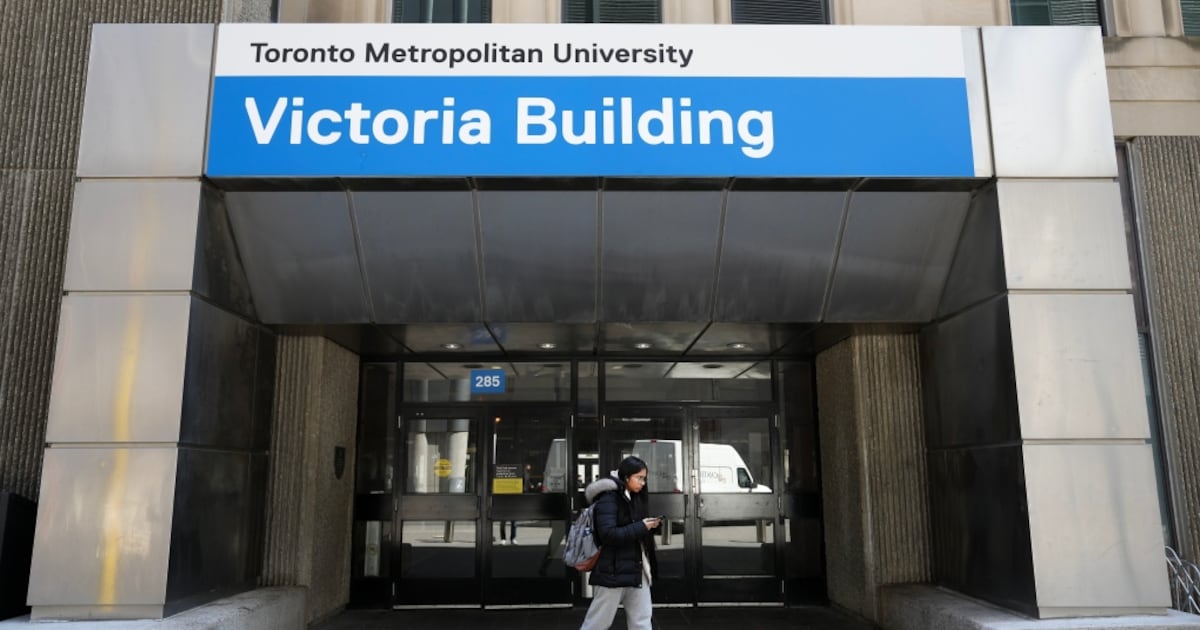
The province has announced sweeping changes to the way Ontario universities and colleges are funded, while lifting a freeze on tuition that had been in effect since 2019.
At an event on Thursday, Colleges and Universities Minister Nolan Quinn unveiled a $6.4 billion-funding model that will be injected into the post-secondary sector over the next four years.
He also announced that a seven-year tuition freeze will be lifted, which will allow schools to raise fees by two per cent for three years. After that, schools can hike tuition up to two per cent, or the three-year average rate of inflation, whichever is less.
The government says that works out to about $0.18 per day in additional costs for the average college student and $0.47 per day for a university student. It said low-income students will have this cost absorbed through an enhanced Student Access Guarantee (SAG).
Maureen Adamson, president and CEO of Colleges Ontario, called the investment a “game changer,” while Steve Orsini, president and CEO of the Council of Ontario Universities, lauded the new funding, saying it comes at a “critical time.”
Ontario universities and colleges have been struggling to stay out of the red following low levels of government funding, the 2019 tuition freeze, and a reduction in the number of international students — who pay higher tuition fees — imposed by Ottawa in 2024.
Colleges Ontario, which represents 24 schools in the province, previously said it had suspended roughly 600 programs and cut more than 8,000 positions to make ends meet.
OSAP overhaul
Also included in the Thursday announcement was a significant shift to the Ontario Student Assistance Program (OSAP). Currently, students can receive about 85 per cent in grants and 15 per cent in loans to pay for their education.
That will all change in September, when OSAP grants will be capped at 25 per cent, and a minimum of 75 per cent of their funding will come through loans.
The government said the move will strengthen the long-term sustainability of OSAP and bring it in line with other provinces.
In a statement to The Canadian Press, the Canadian Federation of Students’ Ontario branch said it welcomed the funding, but warned the changes to OSAP could result in more student debt.
“The changing of the grant program … is a huge disadvantage for students. I think what we’re going to see is we’re going to see a new cohort of students graduating with more student debt than ever before, and this is not fair to students who work really hard.”
Private career colleges, in alignment with changes made by the federal government to its own student support funding, will also no longer offer OSAP grants.
Are you a prospective or current post-secondary student worried about how these changes will affect you studies? Will you have to adjust your living situation or lifestyle to continue your schooling?
CTV News Toronto wants to hear from you.
Email us at torontonews@bellmedia.ca with your name, general location and phone number in case we want to follow up. Your comments may be used in a CTV News story.
With files from The Canadian Press