

Listen to this article
Estimated 4 minutes
The audio version of this article is generated by AI-based technology. Mispronunciations can occur. We are working with our partners to continually review and improve the results.
Russian opposition leader Alexei Navalny was poisoned by the Kremlin with a lethal toxin derived from the skin of poison dart frogs, five European countries said Saturday.
The foreign ministries of the U.K., France, Germany, Sweden and the Netherlands said analysis of samples from Navalny, who died on Feb. 16, 2024, “have conclusively confirmed the presence of epibatidine.” It is a toxin found in poison dart frogs in South America that is not found naturally in Russia, they said.
“Russia had the means, motive and opportunity to administer this poison,” a joint statement said.
The five countries said they were reporting Russia to the Organisation for the Prohibition of Chemical Weapons for a breach of the Chemical Weapons Convention. There was no immediate comment from the organization.
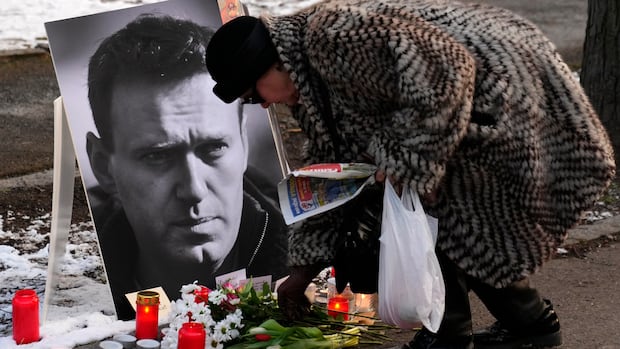
Navalny, who crusaded against official corruption and staged massive anti-Kremlin protests as President Vladimir Putin’s fiercest foe, died in an Arctic penal colony in February 2024. He was serving a 19-year sentence that he believed was politically motivated.
WATCH | Alexei Navalny remembered as fierce critic of Putin: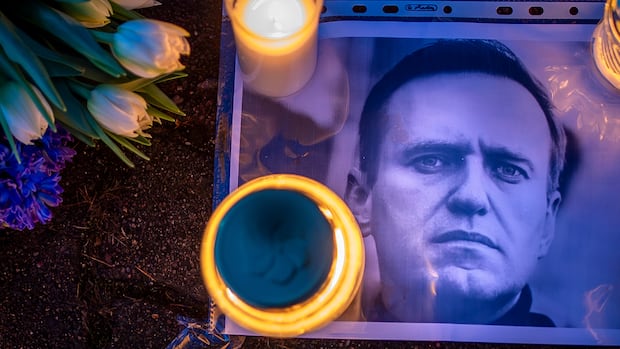
Navalny remembered as crusader against Kremlin corruption
Alexei Navalny, who died in Russian custody in an Arctic penal colony, is being remembered as a fierce critic of President Vladimir Putin, who was a frequent target of Navalny’s blog posts about corruption and the opulent lifestyles of the country’s elites.
“Russia saw Navalny as a threat,” British Foreign Secretary Yvette Cooper said. “By using this form of poison, the Russian state demonstrated the despicable tools it has at its disposal and the overwhelming fear it has of political opposition.”
The poisoning of Navalny shows “that Vladimir Putin is prepared to use biological weapons against his own people in order to remain in power,” French Foreign Affairs Minister Jean-Noël Barrot wrote on social media platform X.
Navalny’s widow, Yulia Navalnaya, said last year that two independent labs had found that her husband was poisoned shortly before he died. Navalnaya has repeatedly blamed Putin for Navalny’s death, a charge Russian officials have vehemently denied.
Navalnaya said on Saturday that she had been “certain from the first day” that her husband had been poisoned, “but now there is proof.”
“Putin killed Alexei with chemical weapon,” she wrote on X, calling Putin “a murderer” who “must be held accountable.”
Russian authorities said the politician became ill after a walk and died from natural causes.
Epibatidine is found naturally in dart frogs in the wild and can also be manufactured in a lab, which European scientists suspect was the case with the substance used on Navalny. It works on the body in a similar way to nerve agents, causing shortness of breath, convulsions, seizures, a slowed heart rate and ultimately death.
Navalny was the target of an earlier poisoning with a nerve agent in 2020 in an attack he blamed on the Kremlin, which always denied involvement. His family and allies fought to have him flown to Germany for treatment and recovery.
Five months later, he returned to Russia, where he was immediately arrested and imprisoned for the last three years of his life.
WATCH | Yulia Navalnaya speaks out in 2024 after her husband’s death: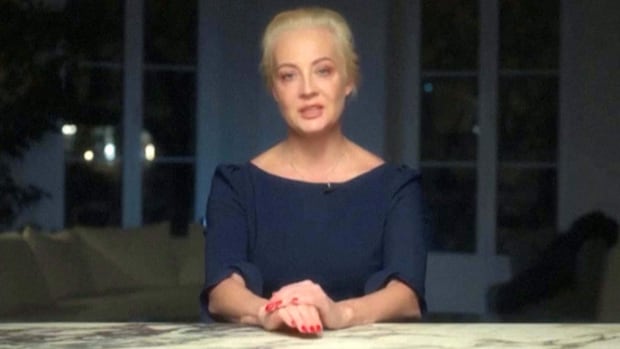
Navalny’s widow vows to keep fighting ‘for a free Russia’
Alexei Navalny’s widow Yulia Navalnaya places the blame for her husband’s death squarely at the feet of Vladimir Putin, as she vows to carry on his fight ‘for a free Russia’ and urges supporters to join her.
The U.K. has accused Russia of repeatedly flouting international bans on chemical and biological weapons. It has accused the Kremlin of carrying out a 2018 attack in the English city of Salisbury that targeted a former Russian intelligence officer, Sergei Skripal, with the nerve agent Novichok.
A British inquiry concluded that the attack “must have been authorized at the highest level, by President Putin.”
The Kremlin has denied involvement.