
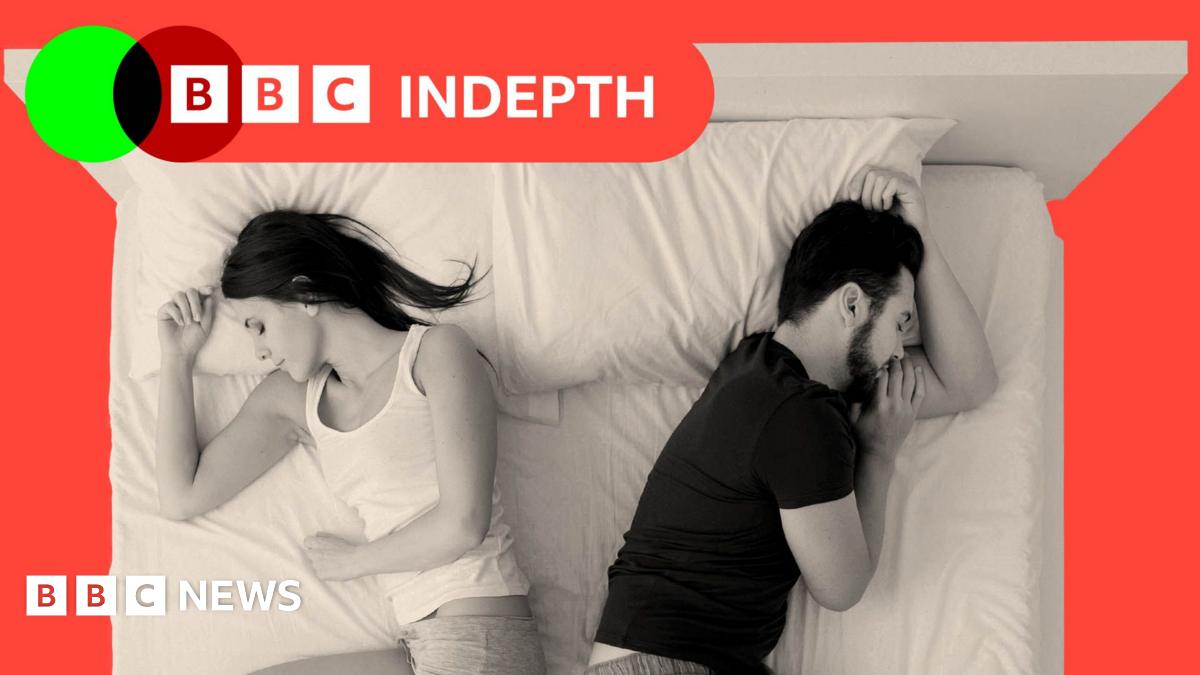
There are several studies which try to understand the reason, highlighting that the digital world could be a major factor, making it harder to switch off, as well as offering more choices of things to do.
Our stress levels are also generally higher than they were 30 years ago, which may be a factor, says Dr Ben Davis, a GP and sex therapist.
“People have so much going on,” he explains, “There’s tech obviously, but there’s also an increase in stress, depression, loneliness […] all of these will add to a reduction in sex drives.”
And there is another possibility that has generated lots of interest online and become big business — that low testosterone levels could be having an impact on sex drive.
“Testosterone levels in men are definitely reducing,” says Prof Geoffrey Hackett, consultant urologist and member of the British Society for Sexual Medicine (BSSM).
“The rise in obesity, type 2 diabetes, the increasing number of people leading more sedentary lives — all of these reduce testosterone levels. And declining testosterone levels will be a factor in why our sex drive is diminishing.”
Several large-scale studies over the past 20 years which have measured levels in men, suggest that testosterone levels have dropped, but Hackett stresses that the picture is nuanced — having low testosterone does increase the likelihood of a low libido, but that does not mean that everyone with low testosterone will have a low sex drive.
Despite this complexity, tube stations, bus stops and social media feeds are now festooned with adverts like: Low libido? Brain fog? Tired? Time to get a testosterone check! Has your man lost his spark? It might be his hormones!
So, can testosterone replacement therapy (TRT) really offer a cure‑all for low libido?