
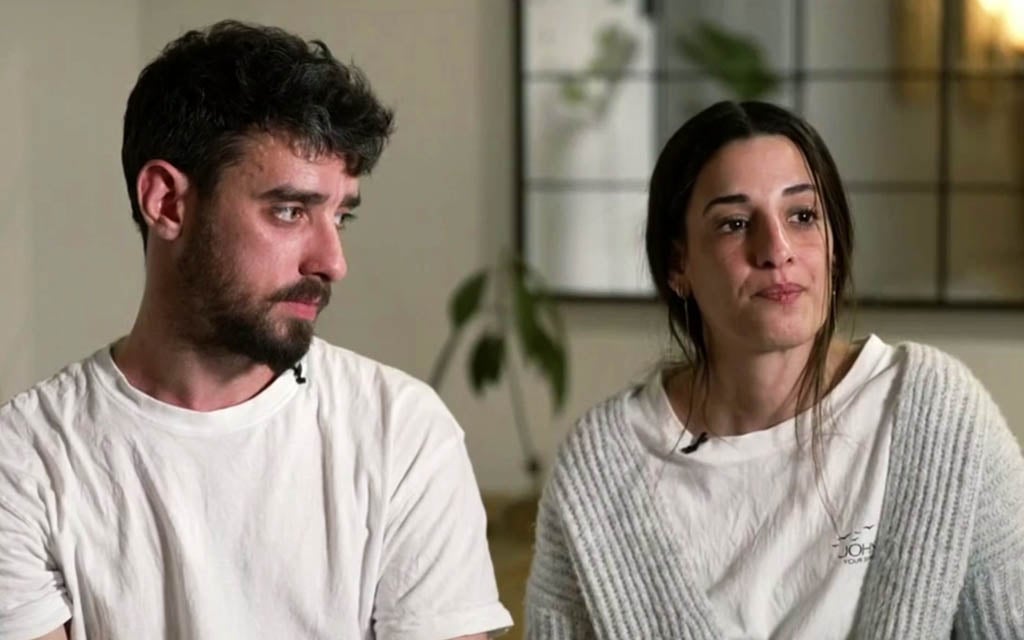
Former hostage Arbel Yehoud revealed in an interview broadcast Friday that she attempted to end her life several times while held captive by Palestinian terrorists in Gaza, but ultimately decided not to after her captors showed her video of a protest in Israel where she saw her face on a poster, and she understood that people were fighting for her.
In a separate interview, Yehoud indicated that she had faced sexual assault on an almost daily basis among widespread abuses she suffered while being held alone.
“One of the times, not long before my release, I saw drone footage from Hostages Square [in Tel Aviv]. I saw people holding signs of people I don’t know, and then suddenly I saw signs of people I knew. I saw a sign for Ariel [Cunio] and a sign for me, signs of people from the kibbutz,” Yehoud told Channel 12 news in an interview alongside Cunio.
“From the moment I saw that, I didn’t try to put an end to my own life there.”
Amid the two-year war, tens of thousands of people staged weekly Saturday night protests in Tel Aviv and around the country, demanding that the government reach a deal to bring the hostages home.
Get The Times of Israel’s Daily Edition
by email and never miss our top stories
By signing up, you agree to the terms
“That was the last time I tried,” she continued, noting she attempted to kill herself at least three times while in captivity. “When I saw the drone footage and understood that people who I don’t know are fighting for me as if I were their sister or daughter, I have a duty to return to Ariel and my family, but also to those fighting for me.”

Thousands attend a protest in Jerusalem calling for an end to the war and the release of all hostages from Hamas captivity on September 6, 2025. (Chaim Goldberg/FLASH90)
Torn apart
Cunio and Yehoud, self-described “high school sweethearts,” were kidnapped together from their shared home at Kibbutz Nir Oz during the October 7, 2023, Hamas-led invasion of southern Israel that sparked the war.
Yehoud was released after 482 days in captivity during a truce in January 2025, while Cunio was returned as part of the Israel-Hamas ceasefire deal reached in October.
Cunio recalled the terror of their abduction and being torn apart once they entered Gaza.
“I told her, ‘The most important thing is that we stay together. As long as they don’t separate us, we’ll be okay.’ Half an hour later, that is what happened,” Cunio said. “It happened so fast, there wasn’t even time to say ‘I love you, be strong.’”
“I didn’t manage to tell him bye, I didn’t get to see his eyes,” Yehoud added.
While many of the 251 hostages were held together in small groups by Hamas, both Yehoud and Cunio were held by the Palestinian Islamic Jihad, which kept them separate and alone.
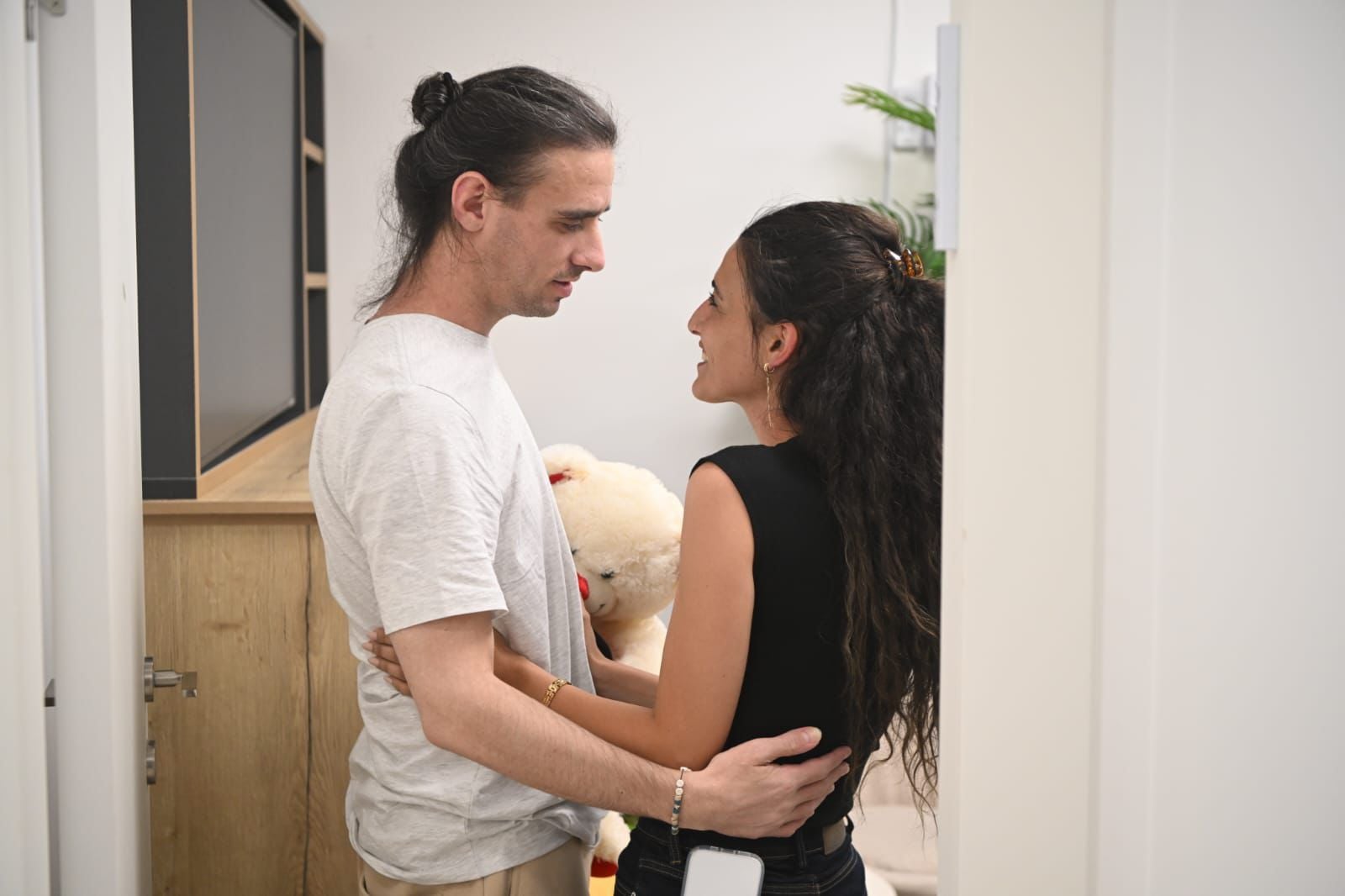
Released hostage Ariel Cunio and former hostage Arbel Yehoud reunited on October 13, 2025 (Courtesy Hostages Forum)
Cunio described the isolation that he felt during his captivity. “I was completely alone for two years, I never saw a single captive,” he said. “Have you ever wondered if you’ll see the sunrise tomorrow?”
He said that after being captured, he was first taken to a residential building, before being transferred and held in a crawlspace above the ceiling of a store.
“I was there for about three and a half months, hunched over all the time, with mice walking around you, cockroaches, and you sitting on a mattress all day. The windows are closed, the door is closed all day,” he said. “Because of the heat, you don’t even have air to breathe. Even though you’re not underground, you don’t have air. You feel suffocated, the heat is so intense that you sweat 24/7 for months. You’re dirty, your skin turns black, a rash on your body, from head to toe.”
Additionally, because he was held above a busy street, he had to remain quiet at all times, otherwise he would be threatened with being handed over to Hamas and being forced into the tunnels.
Letters and notes
Cunio said that after repeatedly pressing his captors for information on Yehoud, they told him to write a letter, which they ended up passing along to her, leading to a period of a few months in which they were able to correspond.
Yehoud said that she was shocked to receive the first letter, and that her captors told her that Cunio “drove them crazy.”
“It was a lot of writing about the love between us, what was going on with us each day, our conditions, trying to get some sort of picture of what is going on outside,” he said in the interview. “She wrote to me in the last letter that she heard there was a massacre at Nir Oz and that we need to stay strong about what we will discover when we get out, because you don’t know anything. You don’t know if your family is living, who is dead, who was kidnapped.”
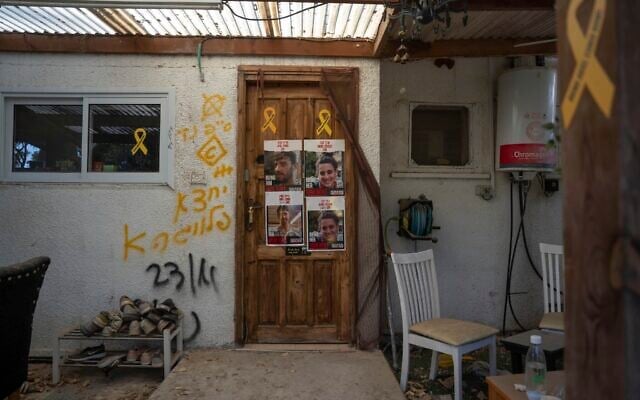
The home of Ariel Cunio and Arbel Yehoud, who were taken captive into Gaza by Hamas terrorists in their October 7, 2023, attack, in Kibbutz Nir Oz, southern Israel, December 5, 2024 (AP/Ohad Zwigenberg)
However, they weren’t able to keep up the communication. Yehoud described how the letters became shorter, “meaning they became a small note like this: ‘I’m fine, I love you.’” She added she wasn’t allowed to write more than that.
“They told me, ‘No more letters, you don’t ask about him anymore,’” Yehoud continued. “‘We will kill you, we will kill him.’ That’s it.”
She added, “We’re not the same people and we’re still trying to find our new path as a couple.”
Terrified
In a separate interview with The Daily Mail, Yehoud described her harrowing release and her fears that even as she was being set free, she would be captured by other gangs in Gaza.
Yehoud was released as one of seven hostages handed over during a long process in southern Gaza’s Khan Younis, one of the most chaotic handover ceremonies that saw her and Gadi Mozes paraded through a seething mass, including hundreds of masked gunmen.
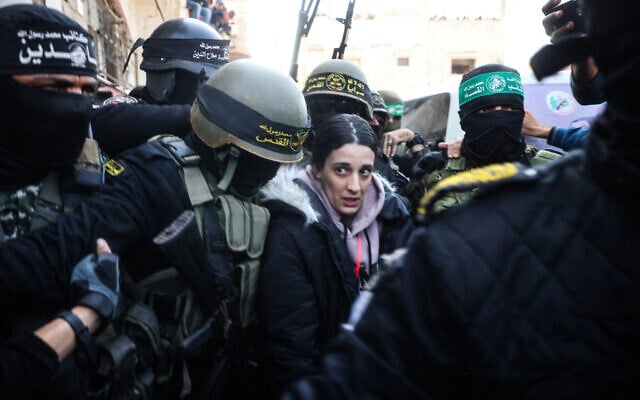
Palestinian terrorists surround Israeli hostage Arbel Yehoud to hand her over to a Red Cross team in Khan Younis on January 30, 2025. (Eyad BABA / AFP)
They were forced to walk through the crowds, with gunmen at their side, from the vehicles that delivered them and, later, to the Red Cross vehicles, in chaotic scenes that prompted outrage from Israel.
“I remember stepping out and seeing that sea of green headbands,” she said. “I was the only woman. My mind was trying to process — am I free? But I’m still surrounded by them? I was terrified, but I knew I had to survive. My thoughts were of Ariel — I had to get back to him.”
Every single day
While speaking with Daily Mail, Yehoud also spoke of the difficulty in being able to speak about her experiences since her release and how she drew inspiration from other former hostages.
Yehoud said she hadn’t been able to watch the stories of other survivors, though that changed when former hostage Romi Gonen revealed in a recent interview that she was repeatedly sexually assaulted by terrorists before being transferred underground with other captives.
“It felt different,” she said. “It was hard for me — but in the end, I decided to watch the segment about her. I realized that what Romi describes experiencing once is what I went through almost every single day in captivity.”
In addition, Yehoud says she endured interrogations, forced conversion attempts and starvation.
There is a lot she says she is still unable to talk about.
“Because it was a very long time, and the things I went through, I went through from beginning to end, so they are in a sealed box,” she told Channel 12.