
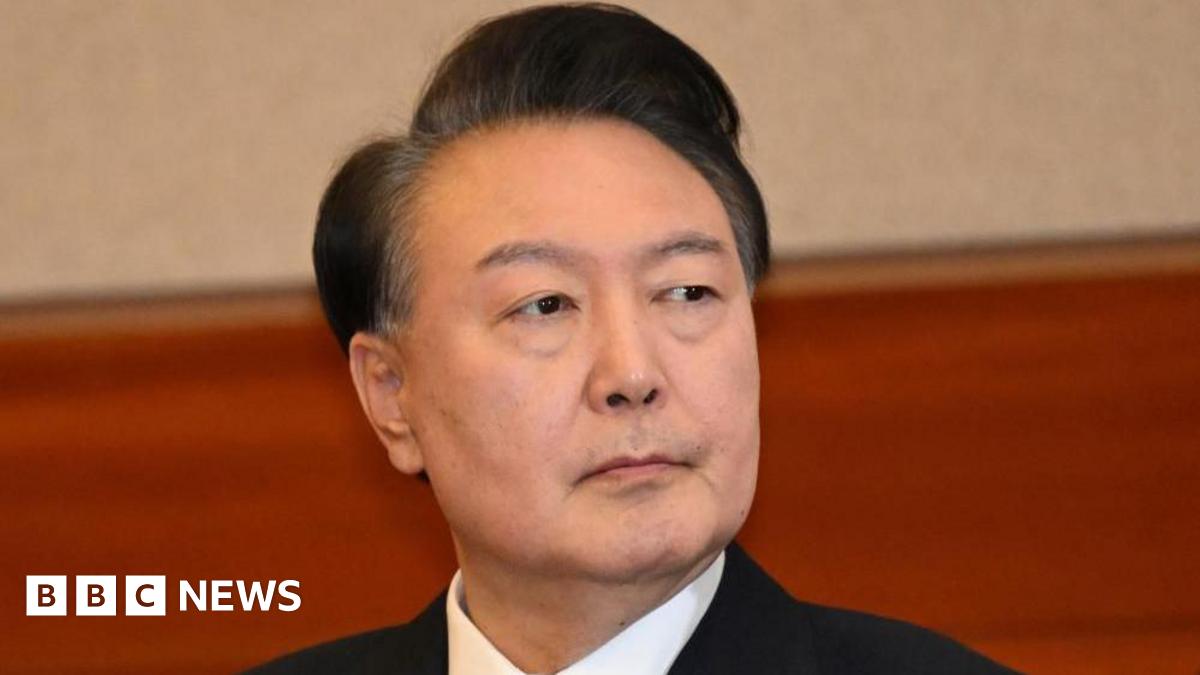
Security was tight outside the court on Thursday, with dozens of police buses forming a cordon to restrict public access. Some 1,000 officers were deployed for security operations, local media reported.
Inside the court, judge Ji called Yoon the “insurrectionist leader”, although the judging panel found insufficient evidence to rule that he’d planned the martial law order a year before his announcement.
Yoon defended his actions throughout his trial, arguing that as president he had had the authority to declare martial law, sounding the alarm over opposition parties’ obstruction of government.
He maintained that the order was necessary “to protect the freedom and sovereignty of the people and to preserve the nation and its constitution”.
The ruling Democratic Party, which won the presidential election after Yoon’s ouster, accused the court of “undermining judicial justice” by not sentencing Yoon to death.
“[Yoon] masterminded an insurrection that shook the very foundations of our nation,” party leader Jung Chung-rae said.
“[Today’s decision] is a clear regress from the people’s revolution… The public will find it deeply unsatisfactory and unacceptable.”
South Korea has not executed anyone on death row since December 1997, so even a death penalty for Yoon would, in effect, be life imprisonment.
Yoon is already serving jail time for abuse of power and obstructing his own arrest after the martial law order. He still faces three more related trials.
Several former presidents before Yoon had also been convicted and jailed, but were pardoned after serving just two to five years in prison – and many expect the same for Yoon.
Additional reporting by Leehyun Choi and Hosu Lee, in Seoul