

Listen to this article
Estimated 3 minutes
The audio version of this article is generated by AI-based technology. Mispronunciations can occur. We are working with our partners to continually review and improve the results.
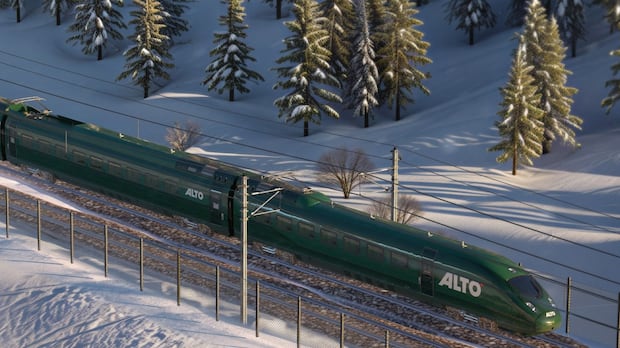
Officials in Kingston, Ont., have signalled their support for high-speed rail, but only on two strict conditions — that it runs along Highway 401 and stops near the city.
Without those elements, there will be no “value or benefit” for the region and council will oppose it, according to a motion put forward by Mayor Bryan Paterson.
Councillors voted 9-2 in favour of those stipulations Tuesday night following a presentation by representatives of Alto, the Crown corporation responsible for the project.
“The case is absolutely, in my view, a slam dunk to add one more stop in Kingston,” Paterson said, describing the condition as “non-negotiable.”
Other councils in the region have been less supportive.
Both Stone Mills and South Frontenac voted unanimously to oppose the proposed southern route through their townships, with the latter insisting there’s “no point” unless the train stops in Kingston.
MP says project ‘should be killed’
Rural leaders and residents have expressed concern over expropriation, impact on local roads and potential harm to environmentally sensitive areas and wildlife.
“I am opposed to Alto. I think this terrible project should be killed,” stated Lanark–Frontenac MP Scott Reid in a video posted to social media on Feb. 11, citing those reasons as well as the project’s proposed budget of $60-90 billion.
On Tuesday, Kingston city councillors asked why the southern route is being explored at all, instead of the original northern one.
Alto staff responded that while a possible route around Highway 7 was examined, that part of the Canadian Shield came with “technical challenges.”
Why not Kingston?
Councillors also asked why Peterborough has been included among the mandated seven stops, while Kingston has not.
“If we are bypassed, once the rail’s down we are going to have generations that suffer the economic impact of high-speed rail not coming to us,” Sydenham District’s Conny Glenn told Alto.
Pittsburgh District Coun. Ryan Boehme pointed to the population density along the St. Lawrence River, and said people have been “screaming for interconnectivity for years.”
“When Alto was created, the mandate was clear it was those seven cities,” replied Alto’s chief communications officer Pierre-Yves Boivin. “I’m afraid that’s all I can say at this point.”
Funding has yet to be secured and it’s estimated construction of the railway, overpasses and fencing needed to protect it would take at least 15 years.
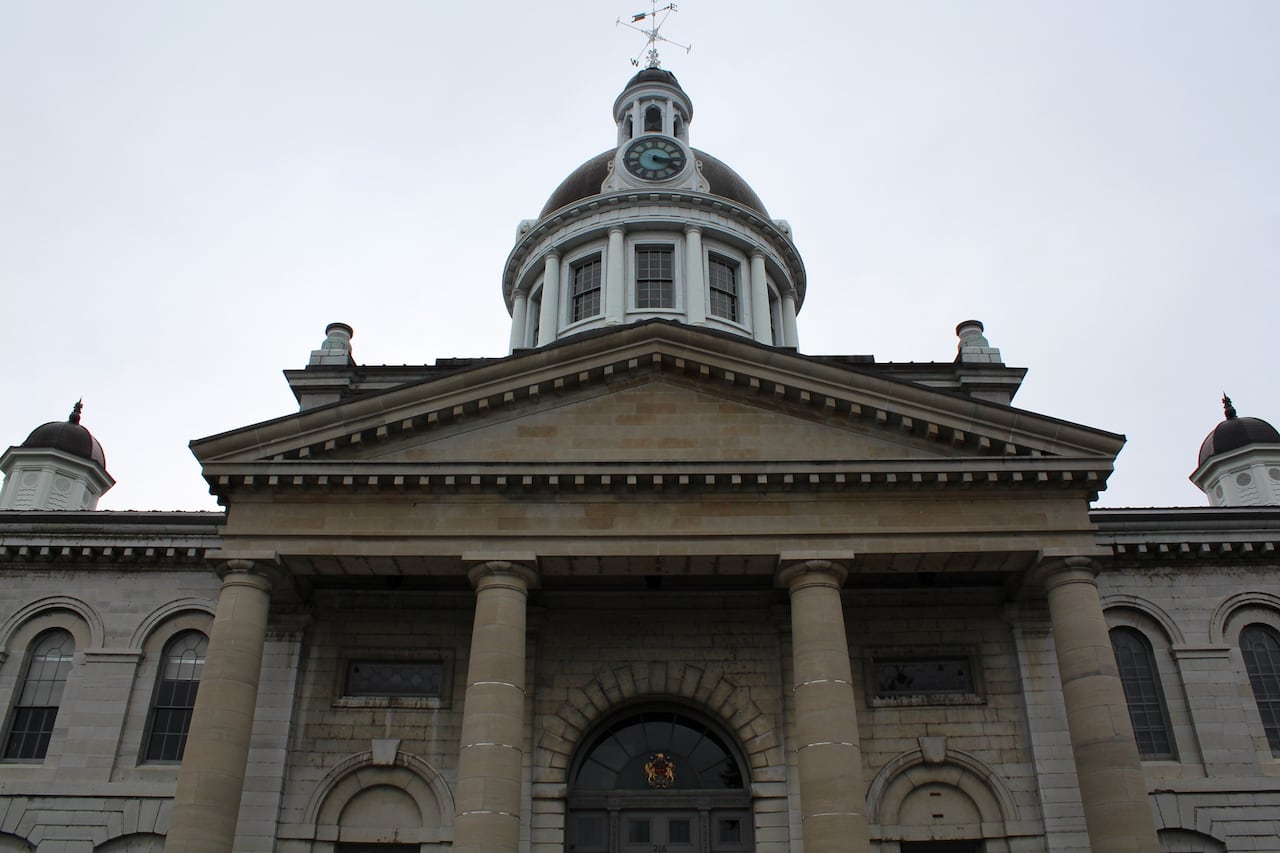 City Hall in Kingston, Ont., pictured on Aug. 1, 2021. (John Last/CBC)’Winners and losers’
While Kingston’s mayor had asked council to approach the matter with a united voice, two members dissented Tuesday.
Glenn said she supports the idea of high-speed rail along highways 401 and 416, but worried about what would happen if the project doesn’t go the way Kingston wants.
“Is this proposal going to include any iron-clad guarantees that we’re going to be properly served and not cause undue harm to our neighbouring communities?” she asked.
“Rail infrastructure should connect communities,” she added. “It shouldn’t divide the corridor into winners and losers.”