
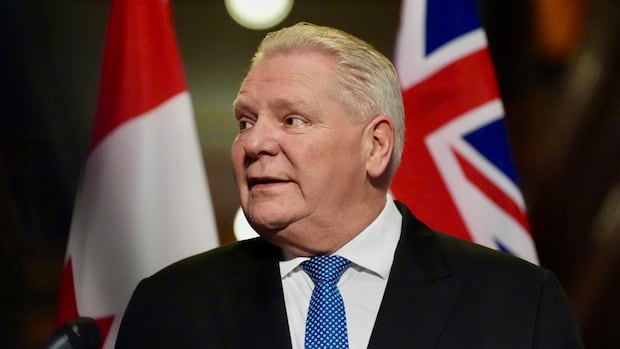
Newly announced changes to Ontario’s post-secondary student assistance program will make it harder for students to study in the fields the premier is encouraging, some students say.
Doug Ford has faced criticism from students since his government announced that starting in the fall, the breakdown of Ontario Student Assistance Program (OSAP) funding for eligible students will change to a maximum of 25 per cent in grants, with funding for loans increased to a minimum of 75 per cent.
The changes will reallocate money to help fund Ontario universities colleges, but many students say reduced OSAP grants will add to their debt load after they graduate at a time when affordability is already an issue in Ontario.
Ford doubled down on the changes Wednesday, saying OSAP recipients have an obligation to study “the jobs of the future.”
“The taxpayers expect the students to go through courses that are going to drive economic growth,” he said, listing STEM, health care, trades and tech as examples.
Students who rely on OSAP have pushed back against the changes, saying it will strain their finances and put them in more debt after graduation. That includes people focusing, or looking to focus, on the very fields Ford has highlighted — some of whom are now reconsidering their studies.
WATCH | Ford says OSAP recipients should study for ‘in-demand’ jobs: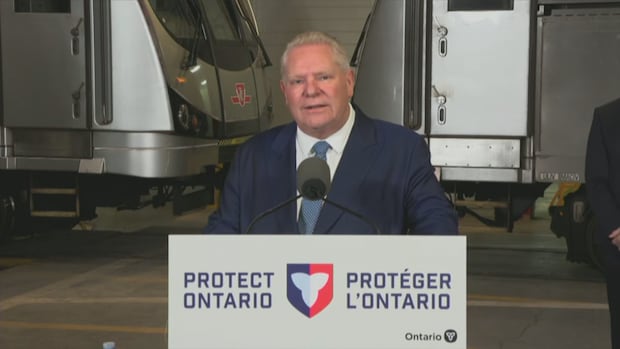
Taxpayers want students to pick courses that will drive ‘growth’: Ford
Ontario Premier Doug Ford is doubling down on his comments around changes to OSAP, saying taxpayers expect students to choose fields of study that will “drive economic growth.”
Lise Watson said her son Foday was hoping to enroll in Western University’s kinesiology program in September. She said the COVID-19 pandemic had hit them hard financially, but the province’s online OSAP estimator had predicted a “healthy grant” that would make Western possible.
With more of that assistance now coming as a loan instead of a grant, she said, they’re having to reconsider his studies.
“We’re all pumped, and we made a plan, and suddenly the rug’s being pulled from under us,” Watson said.
Nursing student worried about mounting debt
The changes are hard, she said, but Ford’s comments about students choosing basket-weaving courses and spending assistance money on frivolous items sting too.
WATCH | Ford says he’s heard of kids spending assistance funds on cologne: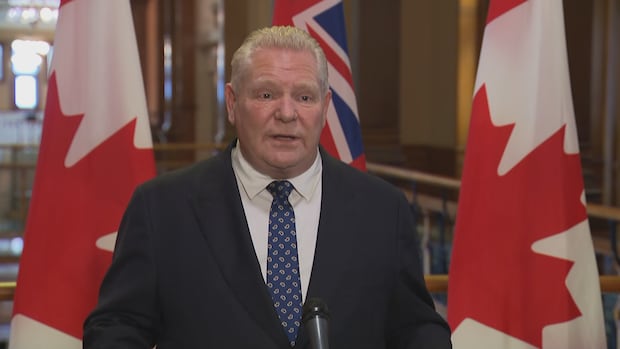
Ford responds to student complaints over OSAP funding changes
Ontario Premier Doug Ford says he has been fielding thousands of complaints since the province announced sweeping changes to its OSAP program. He’s urging students not to pick “basket-weaving courses,” and instead invest in education that gives them in-demand jobs, like health care or trades.
“I worked for almost 30 years in financial aid and students are not spending their money on cologne,” Watson said.
Alden Buckton, a first-year nursing student at Georgian College in Owen Sound, says he relies on OSAP to cover his tuition completely, and he’s now worried that he’ll be weighed down in debt long after he’s entered the workforce if most of his OSAP funds need to be paid back.
Instructors discourage students in his program from working more than two days a week so as to meet the course load, he said, and he’s already spending lots on gas to commute 50 kilometres each day, saying rent near the school is too high.
Buckton said he just wants to work in a field he’s excited about and live a stable life.
“It’s not like I’m picking a course where it’s not in demand. I’m a guy trying to be a nurse,” Buckton said. “With all these loans being added, I do fear that [debt] will follow me for quite some time.”
Students have right to choose field of study: expert
After news of the OSAP changes, some students wrote to CBC Toronto to say it would be harder for them to continue their studies in engineering and computer technology, or to go back to school to get better paying jobs in STEM, because they’ll now be on the hook to pay back more than they initially expected.
Some said they had studied trades, as Ford has encouraged, but couldn’t find apprenticeships after school.
Whether changes to OSAP make it more challenging to study “in demand” jobs, students should be free to study their field of interest, regardless of public assistance, said Daniel Corral, an assistant professor of higher education at the Ontario Institute for Studies in Education at the University of Toronto.
“When students actually enter the job market, those fields could look drastically different,” he said of STEM, health care, trades and tech. “They can be much more competitive or, there may be other fields that are much more appealing to some students.”
Carrol said Ford’s comments “devalue” the contributions of people in other careers, such as teachers, social workers and journalists.
“Not to mention that they also pay taxes … they return back to society as well,” he said.
Opposition wants OSAP changed back
The Ontario NDP has started a campaign to reverse the changes to OSAP that includes an online petition.
Speaking to reporters at Queen’s Park Wednesday, NDP Leader Marit Stiles said the Ford government has made a “terrible decision” that hurts Ontario’s economy.
“When you attack students, when you attack people who are just trying to up-skill and get back out there into the workforce and then you … saddle them with that kind of massive debt, this is going to be a problem for our economy,”
The Ontario Liberals’ education critic, John Fraser, told reporters that every young person he’s spoken with is focused on finding a job out of university, regardless of their field of study, and that Ford’s “basket-weaving” comments were disrespectful.