
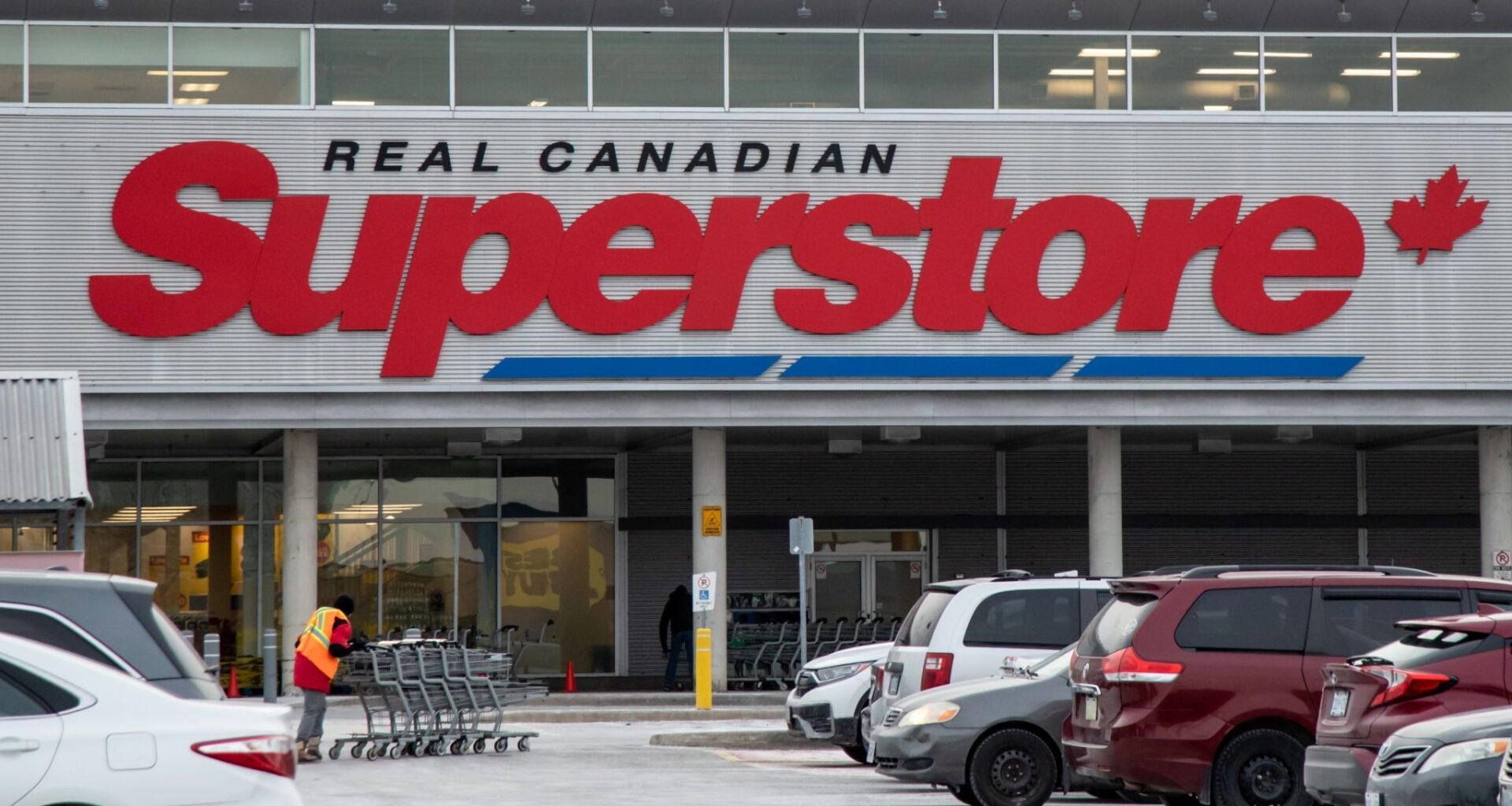
Supermarket chain Real Canadian Superstore has been fined after a federal investigation into in-store displays was deemed misleading.
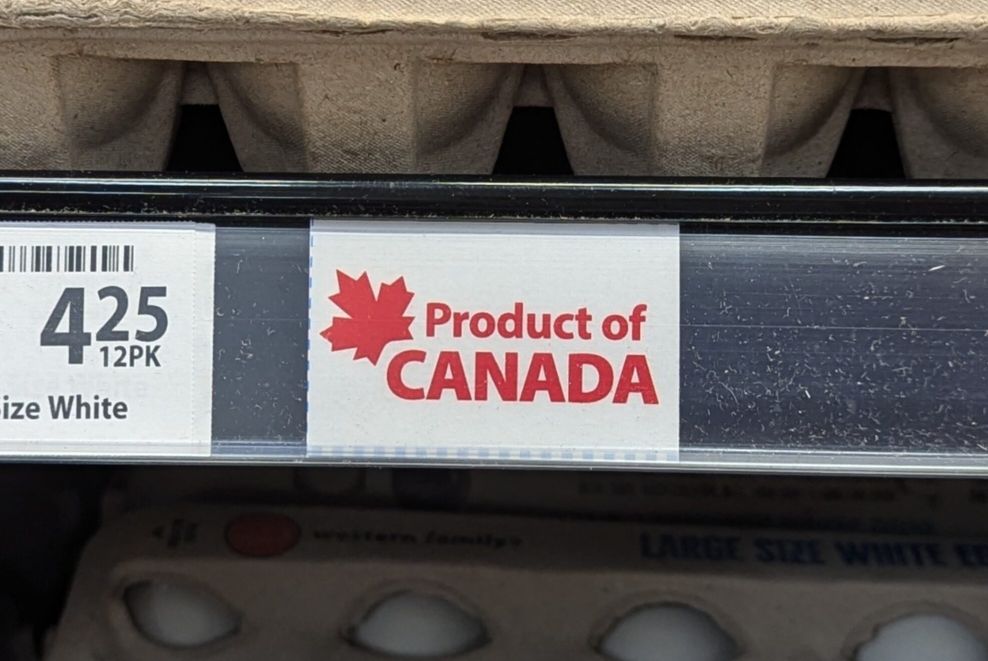
Real Canadian Superstore was hit with a $10,000 penalty by the Canadian Food Inspection Agency (CFIA) due to its “misleading” displays claiming that products are from Canada. In an X post, the CFIA stated that it has issued a penalty for “a violation under the Safe Food for Canadians Act related to misleading Product of Canada product displays.”
📢 The CFIA issued a penalty of $10,000 to Real Canadian Superstore (store #1033) for a violation under the Safe Food for Canadians Act related to misleading Product of Canada product displays. ⬇️https://t.co/aGTixk8OoZ pic.twitter.com/nDIs9CLOS4
— Canadian Food Inspection Agency (@InspectionCan) February 17, 2026
The CFIA says the location involved is store #1033 at 51 Gerry Fitzgerald Dr. in Toronto. Real Canadian Superstore is owned by Loblaw Companies Ltd.
In an email to Daily Hive, Loblaw didn’t specify which product was affected, but a representative stated that the company takes signage responsibilities seriously and that it’s “committed to meeting applicable requirements.”
“With thousands of products in our stores, many of which are sourced from different countries and regions throughout the year, information can change quickly,” they stated. “While we work hard to keep everything up to date, there are times when signage may not be refreshed as quickly as inventory is replenished.”
They also explained that although the company has processes to ensure accuracy, “there is still the potential for human error.”
“We’re sorry for any confusion this may have caused,” they stated. “If something doesn’t look right, we encourage customers to let us know so we can correct it as quickly as possible.”
The CFIA’s website states that a business can only claim that an item is a “Product of Canada” when “all or virtually all major ingredients, processing, and labour used to make the food product are Canadian.”
For example, a cookie manufactured in Canada with oatmeal, enriched flour, butter, honey, and milk from Canada, and imported vanilla, may use the claim “Product of Canada,” even if the vitamins in the flour and the vanilla are not from Canada.
“This means that all the significant ingredients in a food product are Canadian in origin and that non-Canadian material is negligible,” it states.
Yvonne Hanson/Shutterstock
The regulatory agency states that penalties depend on the seriousness of the violation: a minor violation by a business can result in a $1,300 penalty, while a “very serious” violation can result in a $10,000 fine.
The agency also takes into account any prior violations or offences, the degree of intent or negligence, and harm caused or that could have been caused by the violation.
“The CFIA deals effectively and consistently with instances of non-compliance,” states the site. “An administrative monetary penalty (AMP) is one of several enforcement actions at the CFIA’s disposal to address non-compliance.”
The agency has also pointed out the difference between “Made in Canada” vs. “Product of Canada” labels, and urges consumers to report information about deceptive marketing.