
On a lonely road in the war-ravaged Zaporizhzhia region, as icy rain fell on bombed-out ruins of cottages, a Ukrainian soldier issued a gruff warning.
“You’ve come at a bad time! Get out of here now. They will be launching Kabs soon!” he shouted, using the military abbreviation for the Russian guided aerial bombs that can level buildings.
The fighting in Ukraine this winter, the coldest for many years, is unfolding against a backdrop of endless grey and white landscapes, across frozen fields scarred with craters. Close to the front line, anti-drone nets line the roads, like the webs of gigantic spiders.
On Tuesday Ukraine will commemorate the fourth anniversary of Moscow’s all-out invasion, a milestone that few believed would be reached when President Putin launched his “special military operation” in a televised address to the Russian people on February 24, 2022.
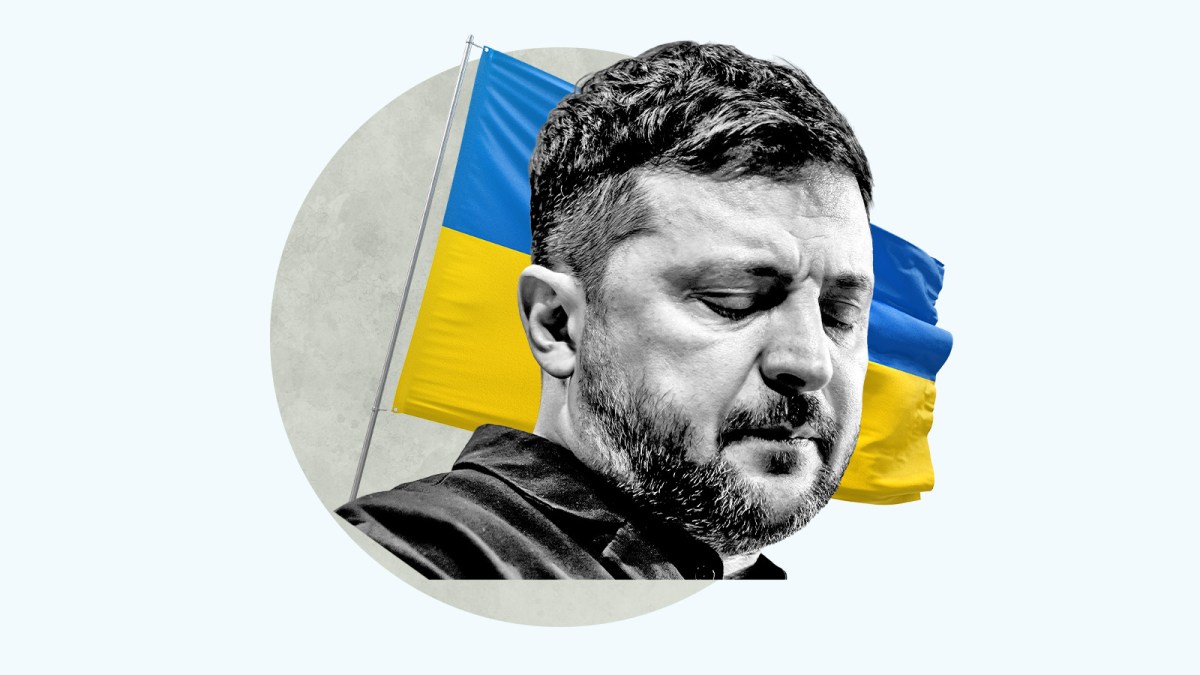
“We are not losing,” said President Zelensky this month, as the White House exerted yet more pressure on Ukraine to bow to Russian demands in exchange for a peace deal before mid-term elections in the US.
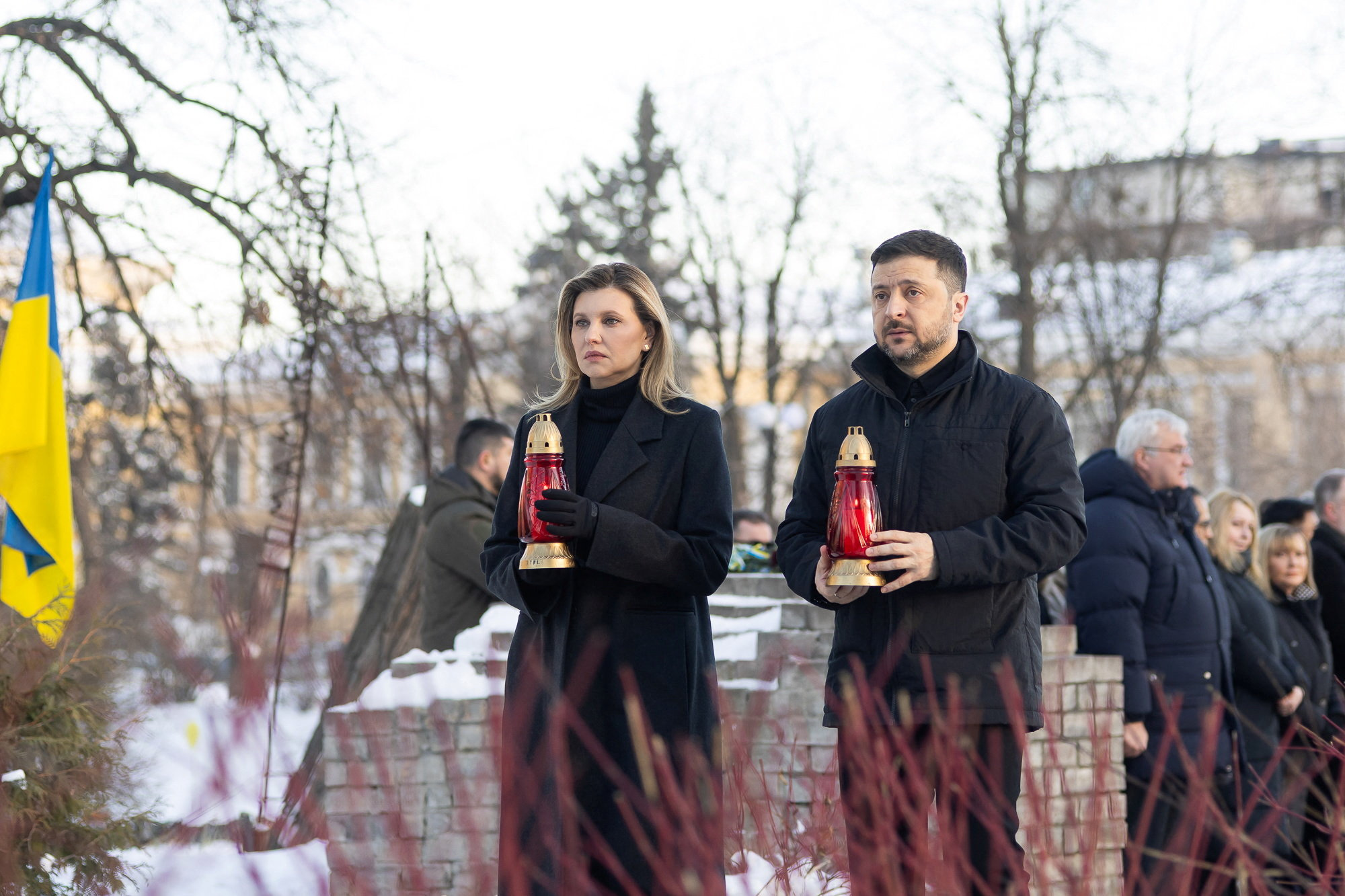
President Zelensky and his wife, Olena, marked the anniversary of the 2014 pro-European Maidan uprising
UKRAINIAN PRESIDENTIAL PRESS SERVICE/REUTERS
Yet Ukraine is not winning, either. While both Russian and Ukrainian forces are making limited advances, there is little likelihood of a breakthrough by either army across the sprawling front, littered with the rotting corpses of untold numbers of soldiers from both countries.
“We are all tired,” said the head of a drone unit with Ukraine’s 33rd Assault Regiment, who goes by the call sign Ecologist. “War exhausts you.”
He lifted his uniform to show a scar close to his heart, from an injury received on a reconnaissance mission with his troops in November. “When I woke up in hospital, the doctors told me that I had been clinically dead for up to 30 minutes,” he said.
Despite fears that even if he survived, he would be brain dead, Ecologist, 49, a former businessman who joined up as an infantryman in 2022, quickly recovered and is back at his post. “There is a colossal amount of work to be done,” he said during an interview at a military base. “We are fighting for our freedom.”
Russian drones fell ‘like bugs’
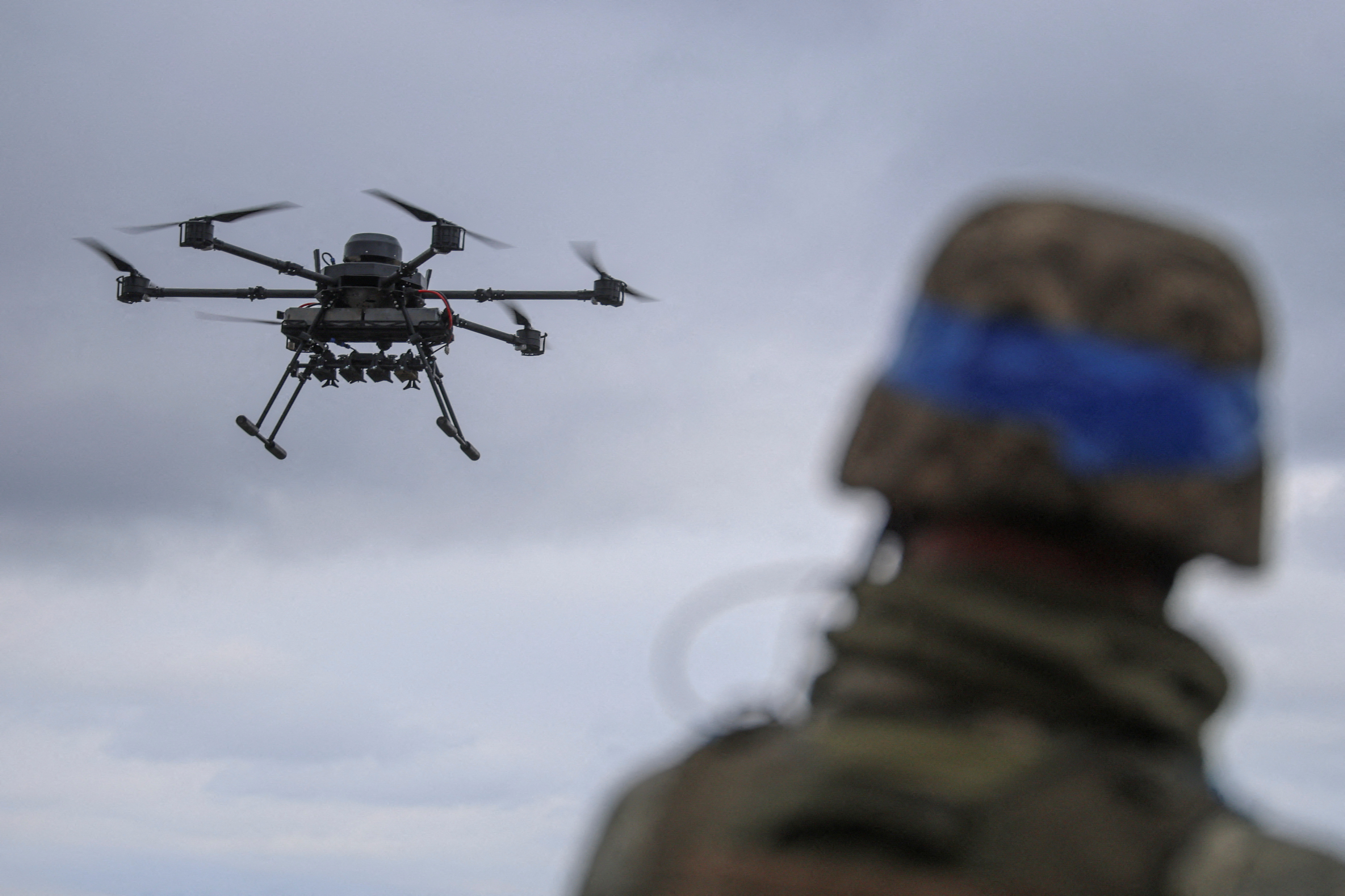
In a much-needed boost to Ukrainian morale this month, Russian forces suddenly lost control of a tranche of their drones in mid-flight.
OLEKSANDR RATUSHNIAK/REUTERS
Ihor, a Ukrainian communications officer, said: “Some of their drones were falling down belly-first, like bugs. Our guys could go and pick them up. Their detonators are at the front, so they didn’t explode.”
A decision by Elon Musk, the head of SpaceX, to sever Russia’s illicit access to his Starlink satellite-based internet service came after talks with Mykhailo Fedorov, Ukraine’s defence minister. At a stroke it deprived Russia’s army of real-time control over some drones and stripped it of its ability to co-ordinate troop movements.
“There were half as many drones as usual in the sky at that moment,” Ihor said at a military base in the Zaporizhzhia region.
Although Starlink does not provide services in Russia, some frontline units had managed to use the system to give commands to troops and pilot drones in Ukrainian territory.
Although Musk’s move also affected many Ukrainian drone systems that had not been added to a “white list” of Starlink terminals agreed with SpaceX, Kyiv’s forces were quickly able to switch to reserve internet systems, Ihor said. The occupying Russians had no such option.
Ukraine was quick to take advantage of the unexpected development, liberating almost 80 square miles of its territory in less than a week, according to data from the Institute for the Study of War, a Washington-based think tank.
Hassan, commander of an assault battalion in the 33rd Assault Regiment, said: “Everything is working fine for us, but they are using maps or radio. They can’t guide their units with drones.” Ukrainian officials have, however, moved swiftly to shut down speculation that their forces are attempting to launch a significant counteroffensive.
Moscow has downplayed the significance of the loss of Starlink. Valery Tishkov, a military communications official, denied that Russian troops had made extensive use of the SpaceX system and insisted that the Kremlin’s forces used their own devices. He said that Russia had only given the impression that it relied on Starlink to “mislead the enemy”.
Pro-war Russian bloggers, who have close ties to their country’s frontline troops, reacted to the statement with a mixture of disbelief and outright mockery. One accused Tishkov and other Russian defence officials of existing in a “parallel reality”. Another wrote: “We are starting to lie not only to others, but to ourselves.”
‘No end in sight’
The loss of Starlink for Russia was welcome news for Kyiv, but Moscow is already recalibrating its communication systems and the setback will not force the Kremlin to end its war.
Three rounds of direct peace talks between Russian and Ukrainian negotiators have so far resulted in no more than a brief truce on energy strikes, which Moscow appears to have used to stockpile missiles, and a prisoner swap. The European Union said this week after talks in Geneva that there were “no tangible signs” that Putin was serious about peace.
Tatiana Stanovaya, an exiled Russian political analyst, said: “As long as Putin is in power, Russia isn’t paralysed by widespread protests and there is at least some money left in the budget for weapons, the war will continue.”
After years of fighting, including covert military operations in the Donbas in the eight years before 2022, Moscow’s forces control a fifth of Ukraine, including Crimea. The job of ensuring that Russia is unable to capture more territory rests on the shoulders of emotionally drained and physically shattered Ukrainian soldiers, many of whom have been at the front for years.
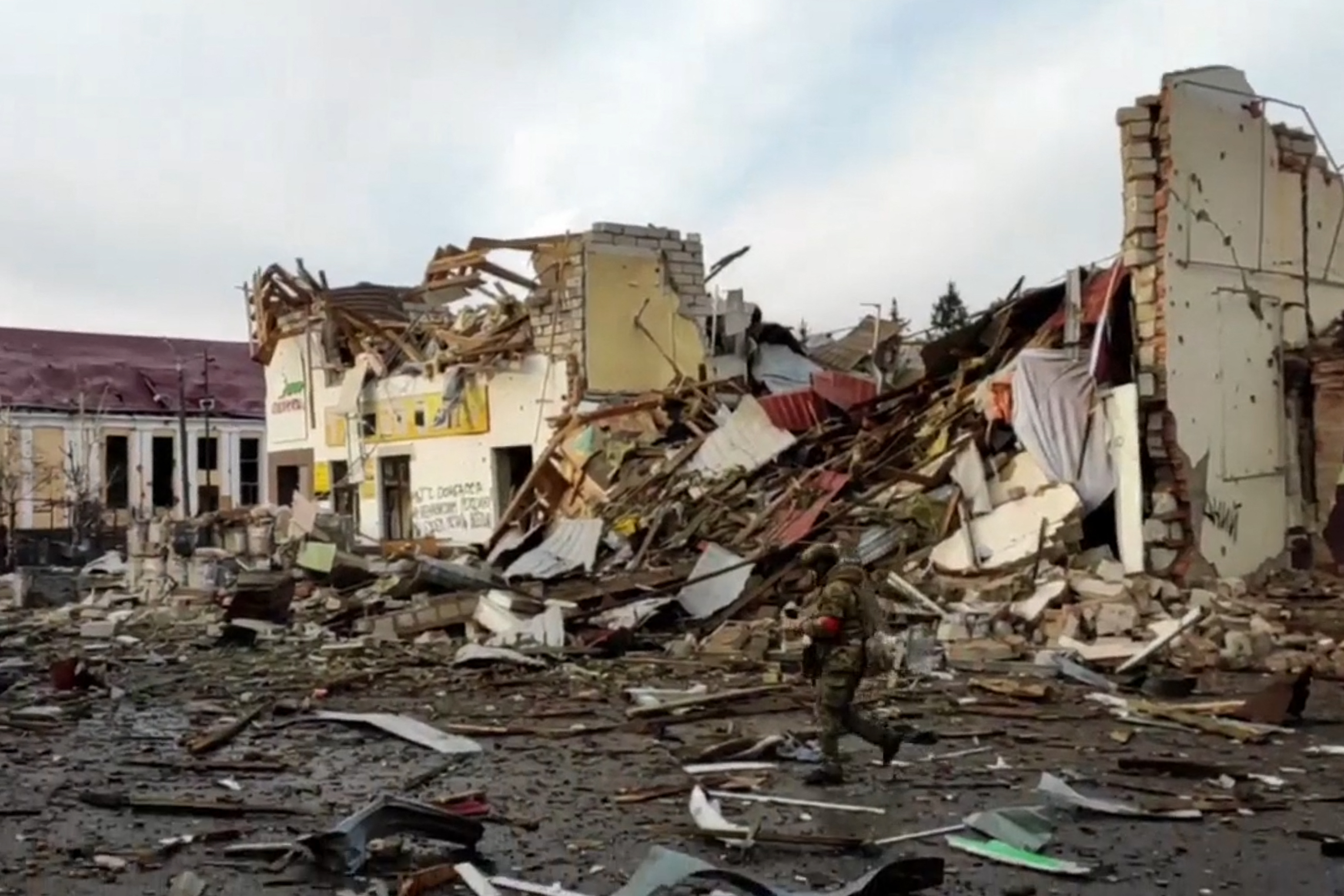
Devastation and destroyed buildings in Sudzha in the Kursk region last year
RUSSIAN DEFENCE MINISTRY/AFP/GETTY IMAGES
Zelensky said this month that 55,000 Ukrainian soldiers had been killed since 2022, although western officials believe the true toll is higher. In the city of Zaporizhzhia, photographic tributes to Ukraine’s fallen stretch down a central city street, a haunting sight that underlines the scale of the losses. Some soldiers are said to have ordered such photographs in advance, in case they died at the front.
‘I just couldn’t take it’
For Ukrainian troops, the war is a battle against not just Russians, but also their own fears. Some men have succumbed to the instinct to flee the battlefields, before overcoming their terror and returning later.
Livesey, an assault trooper from western Ukraine’s Khmelnytskyi region, said he had been serving in the Kharkiv region at the start of the war, when his nerves gave way.
He said: “We were constantly on the front lines and then returning, day after day. I just couldn’t take it. I would return from rotations and there would be no one left among the men I had been with.”
He was given five years in prison for going Awol, a verdict that he initially welcomed.
“I thought, it’s better to be in prison than going back there,” he said. After Kyiv introduced a law in 2024 allowing some categories of prisoners to gain early release in return for military service, he thought again and is serving on the front line with the 33rd Assault Regiment.
He said: “It wasn’t because the conditions were harsh or anything like that, absolutely not. I just didn’t want to waste years of my life doing nothing.” Nor did he want his son, aged nine, to be “ashamed” of him.
His fear has not gone, he admitted, but he has learnt to control it, and to use it to fine-tune his senses on the battlefield. “It’s always scary, but the main thing is to keep your fear contained, like in a cage, and not let it out,” he said.
A former furniture factory employee, Livesey, 33, was injured in the Kharkiv region after his return to the front when he and his fellow troops were hit by Russian mortar fire. He said: “A mortar strike killed two guys instantly. My legs were shredded and another soldier lost an eye.”
His call sign is a tribute to Doctor David Livesey, the ever-smiling character from the Soviet-era film version of Treasure Island. “Everyone said that I always bring a smile,” he said. “But I wondered if maybe I should change it — I have less of a smile these days. Before, I could see the joy in things, but now life is much greyer.”
A shortage of fighters on both sides
Putin’s determination to keep fighting in the face of Russian military casualties that have been estimated at more than one million dead, injured or missing in action means that Moscow is having to work overtime to feed its army with recruits.
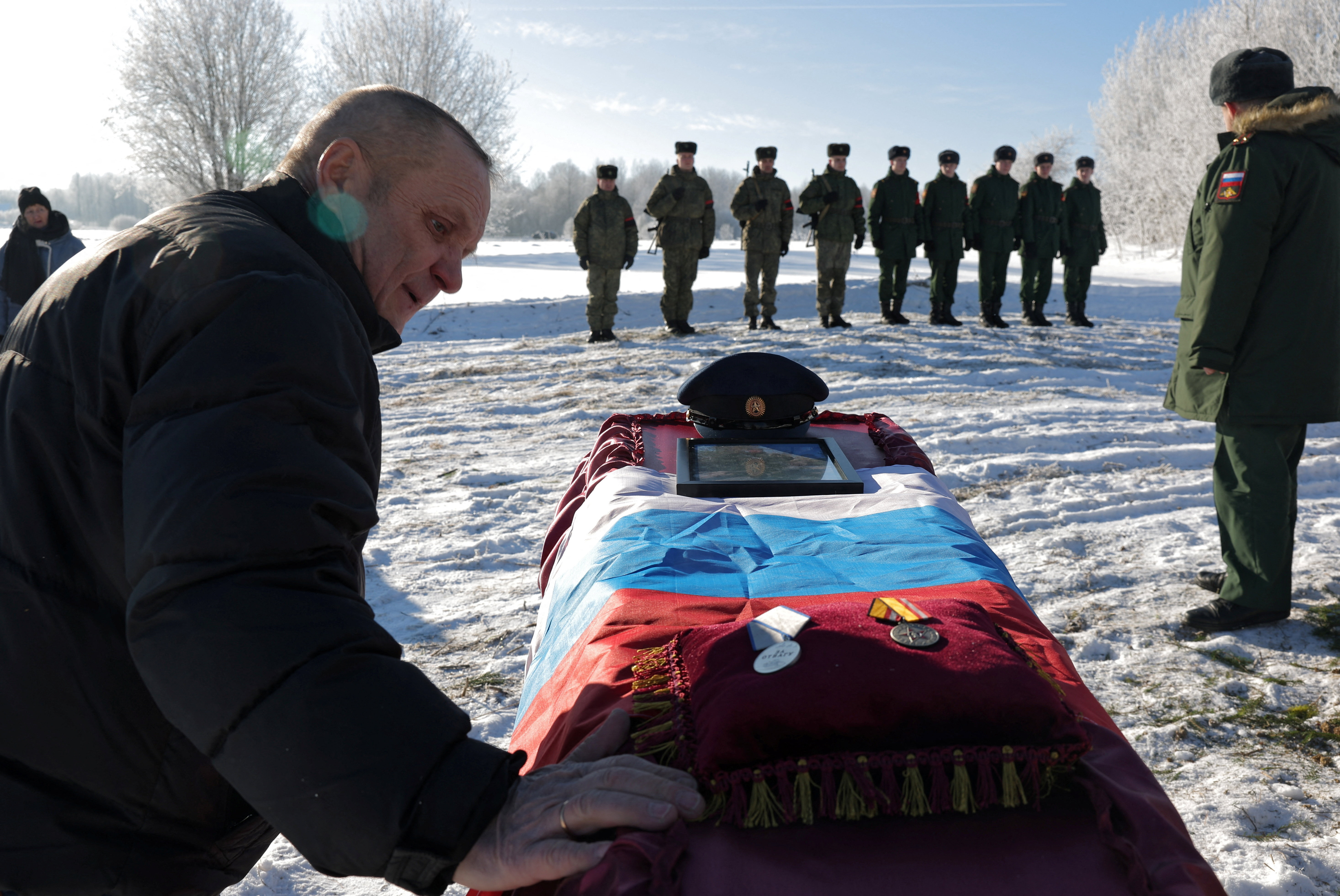
Russians pay tribute to a soldier who was killed during the conflict
ANTON VAGANOV/REUTERS
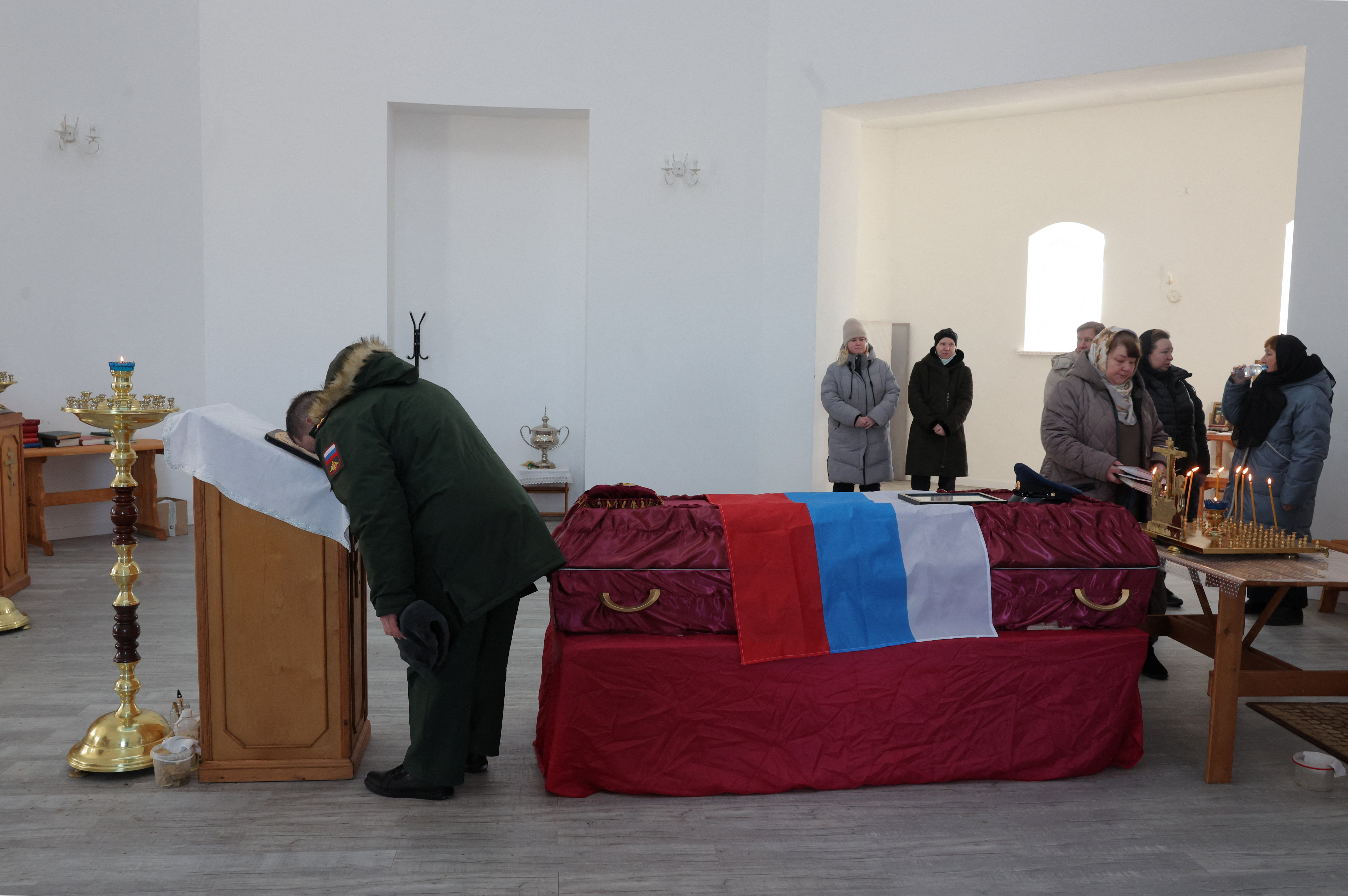
So far, the Kremlin’s war machine has kept running by offering life-changing money to Russia’s poorest to entice them to sign up with the military. Yet even this tactic could be insufficient: Russia is now losing thousands more soldiers at the front than it is able to recruit each month, according to western and Ukrainian officials.
In an attempt to pile on the pressure, Kyiv is seeking to increase Russia’s monthly losses to 50,000 troops, a level that would leave Putin with a choice of scaling back battlefield operations, trying to recruit even more foreign fighters or resorting to mobilisation, which would risk nationwide dissent. Hassan said: “All the prisoners we take differ from one another in many ways, but in one fundamental aspect, they are all the same: they have no motivation at all except for money.
“Any ideological motivation they might have had was back at the start of the war. I haven’t met a single Russian prisoner who sat in front of me and said, ‘This is our land, this is our president, and he’s right’. It’s all about money now.”
Ukraine has its own manpower problems. As Kyiv tries to plug gaps at the front, tensions between draft officers and some sections of Ukrainian society have been transforming into violence. Social media is full of videos of clashes between draft officers, who are often outnumbered, and ordinary citizens, who have taken it upon themselves to rescue the men they are attempting to detain.
A Ukrainian battalion commander who did not want to be identified said: “What will destroy us is not the Russian army, but people within [our country]. Right now, it’s already seen as shameful to be in the army, rather than in hiding. Some people are starting to say that their enemy is not Russia, but those who take them into [our] army.”