
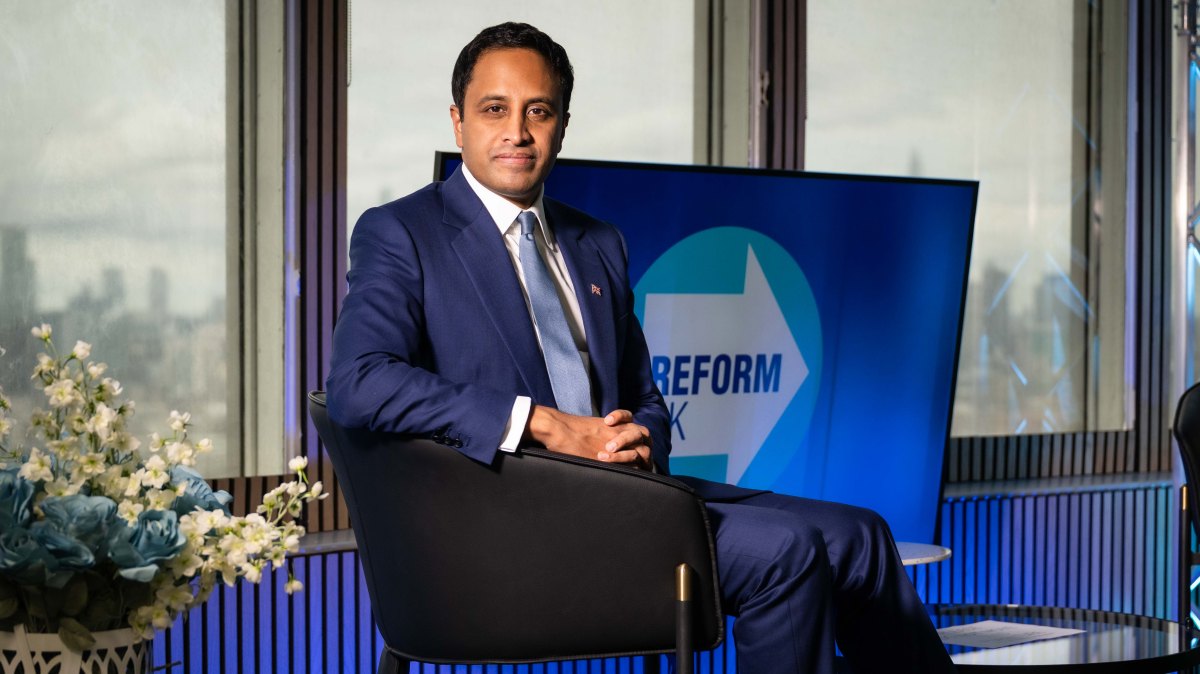
Reform UK will pledge to restore Britain’s Christian heritage by preventing churches being converted into mosques, enacting mass deportations of illegal migrants and persuading British expats to return to the country.
Zia Yusuf, the party’s new home affairs spokesman, said renewing Britain’s Christian faith was vital to tackle the “crisis of meaning culturally” among young people and men in particular.
In an interview with The Times before his first speech on Monday setting out his plans to be home secretary, he said Christianity was “core to the history and the DNA of the country”.
However, he said Britain was losing its Christian values because of the “sheer quantities of people that came to the country in a short period of time”.
Yusuf, a practising Muslim, said: “What we’ve seen is that sense of high-trust society eroded quite rapidly, actually, and that’s in no small part because of the vast numbers of people who have arrived over a short period of time from low-trust societies. Some people might wince at that phrase, but it’s just obviously true.”
Yusuf said Reform would introduce a “patriotic curriculum” in schools that would put Christianity at its heart in order to give children “more things to take pride in again”.
The first step a Reform government would take to restore Britain’s Christian heritage would be to grant immediate and automatic listed status to churches across the UK. This would prevent alterations affecting their historic character, require their upkeep and restrict their change of use.
The party would create a new class for churches that would prevent them being converted into places of worship for other religions. At present, places of worship in England fall under the F1 use class, and changes within this class do not require planning permission.
Yusuf said the move was designed to stop the growing trend of churches being converted into mosques. Reform UK does not have a full list of churches that have converted to mosques but point to a list of at least 40 confirmed conversions in recent years.
Yusuf said he had received regular emails from “anxious residents” across the UK about plans to convert churches into mosques that are going through planning permission.
The Church of England has intervened to block recent efforts to convert historic sites being converted to mosques, including the Georgian church of St John’s Hanley in Staffordshire, which caused a row after Stoke-on-Trent council approved planning permission. The Church of England was able to block the plans only because a restrictive covenant was placed on the church when the site was sold in 2009.
Yusuf said: “Regardless of whether somebody is of faith or not, or which faith they follow, I think the Christian heritage of this country is very important and protecting our heritage and our culture is important, otherwise the country is not a country, it’s just an economic zone.
“And so, as one step in pursuit of that, we will end the incendiary practice of converting churches into mosques or any other places of worship by granting listed status automatically to all churches and prohibiting that.”
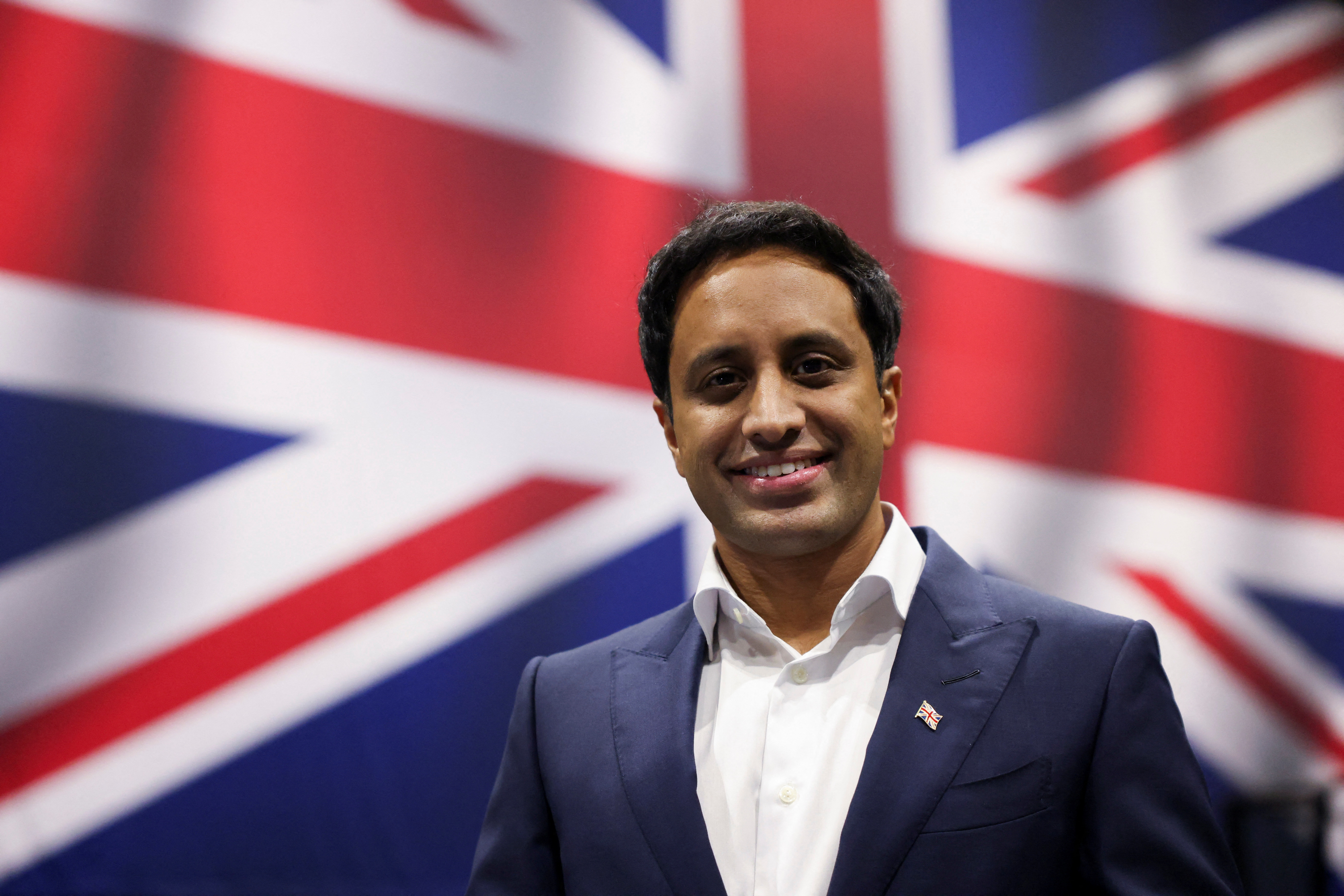
Yusuf after a Reform rally in 2024
HOLLIE ADAMS/REUTERS
The number of people who describe themselves as Christian in England and Wales fell below half of the population for the first time in the last census, in 2021, a 13 per cent drop since the previous census, a decade earlier.
• Experts pour cold water on claims of ‘Christian revival’ in Britain
By contrast, there was a rise in the number of people describing themselves as Muslims, by 44 per cent to 3.9 million in the last census, and Hindus, by 22 per cent to 1 million.
Yusuf, who was born in North Lanarkshire in Scotland to immigrant parents from Sri Lanka, said he would like to see more people attend church but accepted it would be beyond the remit of a home secretary.
He said: “I would argue there is a crisis of meaning culturally, particularly amongst men and young people. I do think a sense of belief in God and patriotism, while they’re not necessarily the same thing — I think there is some connection there.”
He added: “I think if politicians play their part, then I’m optimistic that over time … they will have more things to take pride in as they are made to feel proud of their history again, rather than being taught that they should be ashamed of [it].”
Yusuf will pledge a radical crackdown on Islamic extremism by mandating police to search the home of an individual after three referrals to Prevent, the UK’s counterterrorism programme. Prevent’s resources will be reallocated to ensure three quarters of its funds are spent tackling the threat of Islamic terrorism, to match MI5’s caseload.
Yusuf said he was personally supportive of a ban on the burqa and all face coverings, although he said the party had not yet formulated its official policy on the issue.
• Libby Purves: Face it, there’s good grounds to curb the burqa
A Reform government would have a “goal” of having more people leave the UK than immigrate each year, driven by its plans to deport 188,000 illegal migrants with five flights a day and an RAF jet on standby in case of mechanical problems.

Farage and Yusuf at the launch of the party’s plan to deport asylum seekers, in August
TOLGA AKMEN/EPA
However, Yusuf said the party hoped that there would be a surge in British expats returning to the country. Reform will launch an “outreach” programme in expat communities overseas by encouraging British citizens in countries such as Dubai, Australia and Singapore to return to the UK by pledging lower taxes and a tougher approach on law and order.
Nigel Farage, the party leader, believes a Reform government would stop the small boats crisis within weeks because its plans to detain and deport every arrival would deter migrants from making the Channel crossings in future.
Yusuf said that if necessary, a Reform government would physically turn back migrant boats in the Channel and pointed to the support of Jordan Bardella, the leader of France’s hard-right National Rally, who is the favourite to become the next French president. “We’re very open to using the navy to do that as part of this project,” Yusuf said.
Yusuf has been the centre of several public spats with Reform colleagues over the past year. This included a row over the party’s policy on a burqa ban with Sarah Pochin, one of the party’s eight MPs, while Rupert Lowe, the MP for Great Yarmouth, was thrown out of the party after allegations that he made threats of physical violence against Yusuf.
Last year Yusuf described the party’s newest Tory defectors, Robert Jenrick and Suella Braverman, as representing “the most insidious form of politician”.
However, he played down signs of friction with the pair now they sit alongside him in Reform’s “shadow cabinet”, dismissing the comments as the “rough and tumble of party politics”.