
U.S. President Donald Trump in the East Room of the White House on Monday.Evan Vucci/The Associated Press
U.S. President Donald Trump is facing an uphill battle to win back the public to his economic and immigration agenda with his State of the Union address on Tuesday evening.
The speech to a joint session of Congress, which starts at 9 p.m. EST, unfolds as voters, increasingly frustrated at the cost of living and the President’s inability to make good on promises of lower prices, have driven down his poll numbers. Much of his agenda, including hefty tariffs on foreign imports and cuts to health care spending, threatens to make everything even more expensive.
Americans are also souring on Mr. Trump’s program of mass immigration roundups and deportations, and the brutal tactics deployed by federal agents, who gunned down two protesters last month in Minneapolis.
The Supreme Court, meanwhile, took away Mr. Trump’s favourite tariff tool, the International Emergency Economic Powers Act, or IEEPA, last week, ruling that he had exceeded his authority by using the legislation to impose levies.
On the foreign policy front, the President is undertaking a military buildup to potentially attack Iran, a measure he may also seek public support for.
Analysis: Donald Trump’s State of the Union address comes at an unusually provocative moment
In a little over a year since returning to office, Mr. Trump has moved far and fast on his agenda. But as he faces midterm legislative elections in November, the President has struggled to keep popular support for his policies, particularly the trade and immigration measures that have long been at the centre of his political agenda.
Key to the speech will be whether Mr. Trump can find – and stick to – a convincing argument for why voters should trust him on such issues and not hand the opposition Democrats a congressional majority.
So far, Mr. Trump has mostly dismissed public concern about his policies. At one speech last December, he referred to the affordability issue as a “hoax” invented by Democrats. He said people should deal with the higher prices his tariffs entail by making do with less.
“You know, you can give up certain products. You can give up pencils,” he said. “You don’t need 37 dolls for your daughter. Two or three is nice.”
Also to be seen is whether Mr. Trump will adhere to key messages for voters or stray into personal attacks.
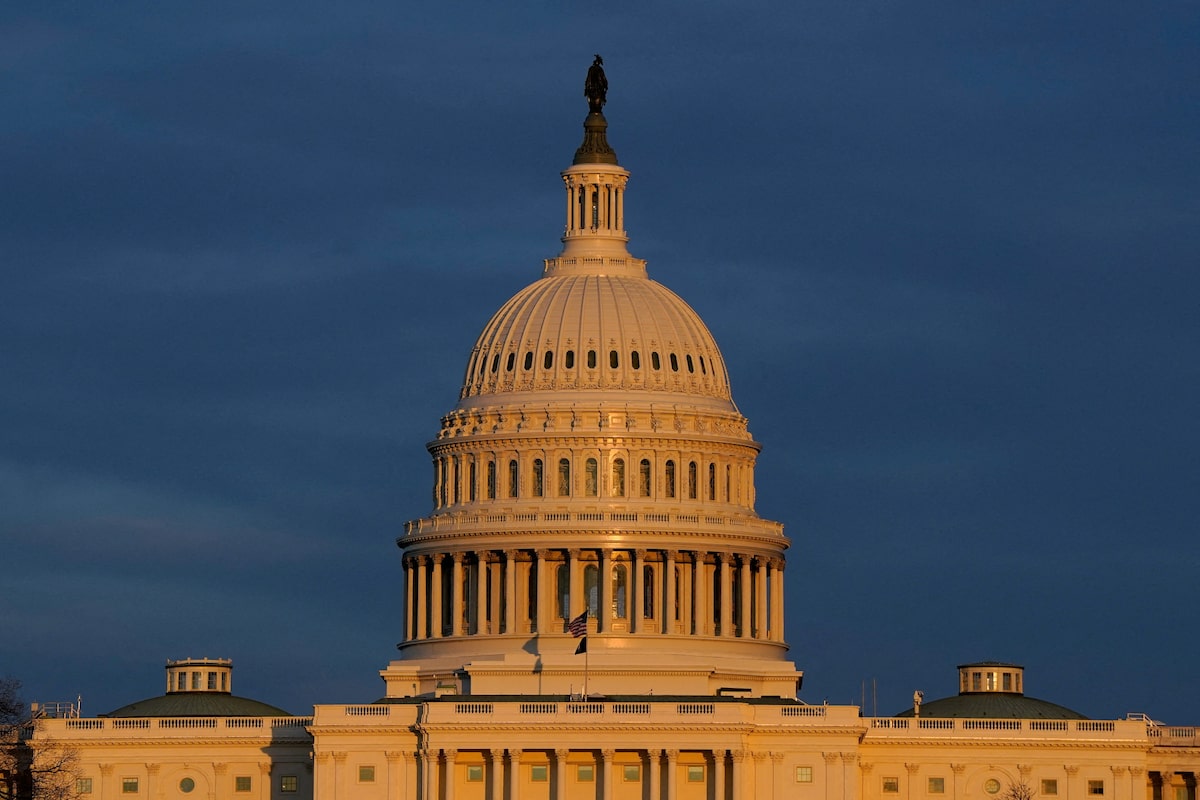
The U.S. Capitol ahead of the State of the Union address, in Washington, D.C.Elizabeth Frantz/Reuters
New U.S. tariffs come in at lower 10% rate, Trump administration working to hike to 15%
Supreme Court justices are expected to attend the Tuesday speech, sitting in a place of honour. While there is no rule that members of the top court must be there, it is common for at least a few to attend.
After the IEEPA ruling, Mr. Trump vented his fury on the six justices who voted against him, labelling them “fools” of whom he was “ashamed.” He reserved particular ire for his own appointments, Neil Gorsuch and Amy Coney Barrett, calling them “an embarrassment to their families.”
Canadians will be watching for any sign that Mr. Trump’s treatment of the country is going to get worse. He has periodically threatened to end the U.S.-Mexico-Canada Agreement that governs continental trade and to raise tariffs on Ottawa even higher.
After the IEEPA ruling, using another piece of legislation, Mr. Trump announced a new global 10-per-cent tariff – which he is now trying to hike to 15 per cent – on all imports and said he would work toward further country-specific and sector-specific levies.
Both chambers of Congress, meanwhile, have passed measures rebuking aspects of Mr. Trump’s tariff regime, with a handful of Republicans breaking ranks with the President to vote with Democrats. Such moves are a limited indication that his grip over his own party, which was close to absolute last year, has begun to slip.