

Listen to this article
Estimated 4 minutes
The audio version of this article is generated by AI-based technology. Mispronunciations can occur. We are working with our partners to continually review and improve the results.
Hundreds of community organizations and programs are bracing for cuts after the Nova Scotia government reduced grants by $130 million in its budget this week.
The grant reductions will impact everything from scholarships, the arts and sports to programs for Mi’kmaw, Black and Gaelic communities, climate change, health, seniors, youth and many more.
Funding cuts range from smaller amounts such as $1,000 for a NSCAD scholarship or $5,000 for the African Heritage Month proclamation to millions of dollars, such as $3.7 million for graduate scholarships, $1.6 million for locally managed museums and $10 million for the Nova Scotia Apprenticeship Agency. See below for the full list of cuts.
The cuts come as the provincial government grapples with a $1.2-billion deficit. The budget, which was released on Monday, contained news of broad cuts, which will result in job losses across the province.
How are you affected by the grant cuts? Email us at cbcns@cbc.ca.
Previously, the province had budgeted $328.6 million for grants to groups and programs across the province. That amount is now reduced by nearly 40 per cent to $198.2 million.
The cuts vary by department. The $17.5 million in grants awarded by the Department of Municipal Affairs has been completely eliminated. The $5 million in grants issued by the Department of Environment and Climate Change has been slashed by 96 per cent to just $210,000.
The grant money awarded by the Department of Education and Early Childhood Development has been cut from $12 million to $6 million.
WATCH | N.S. culture minister on why funding for certain programs will see cuts: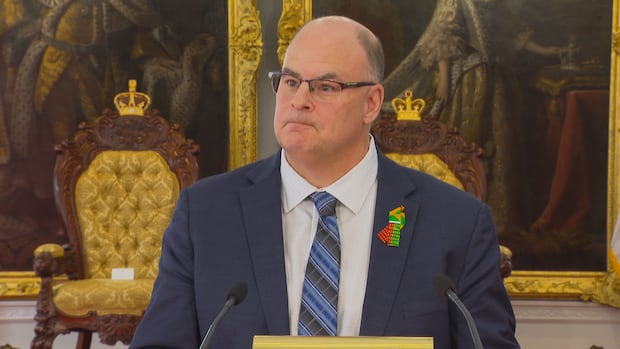
N.S. culture minister faces questions about cuts to tourism, arts
On Wednesday, Communities, Culture, Tourism and Heritage Minister Dave Ritcey deferred to staff when asked if stakeholders would be given a reason why certain programs were chosen for funding cuts.
Other departments are seeing smaller cuts. For instance, the $40 million in grants Seniors and Long-term Care awards annually is being reduced by 7.5 per cent. The $13 million in grant money controlled by the Department of Health and Wellness has been cut by 20 per cent.
The minister of communities, culture, tourism and heritage, Dave Ritcey, told reporters Wednesday the decision to make cuts to grants was not taken lightly.
Ritcey could not explain why cuts were made to the specific organizations and programs, saying only that staff within the department made the decisions.
“We’re talking about the need to focus on the resources that make the biggest difference — and that’s education, health care,” he said. “Right now, we’re focusing on what Nova Scotians need the most at this time.”
He said organizations were not provided a rationale for the reductions.
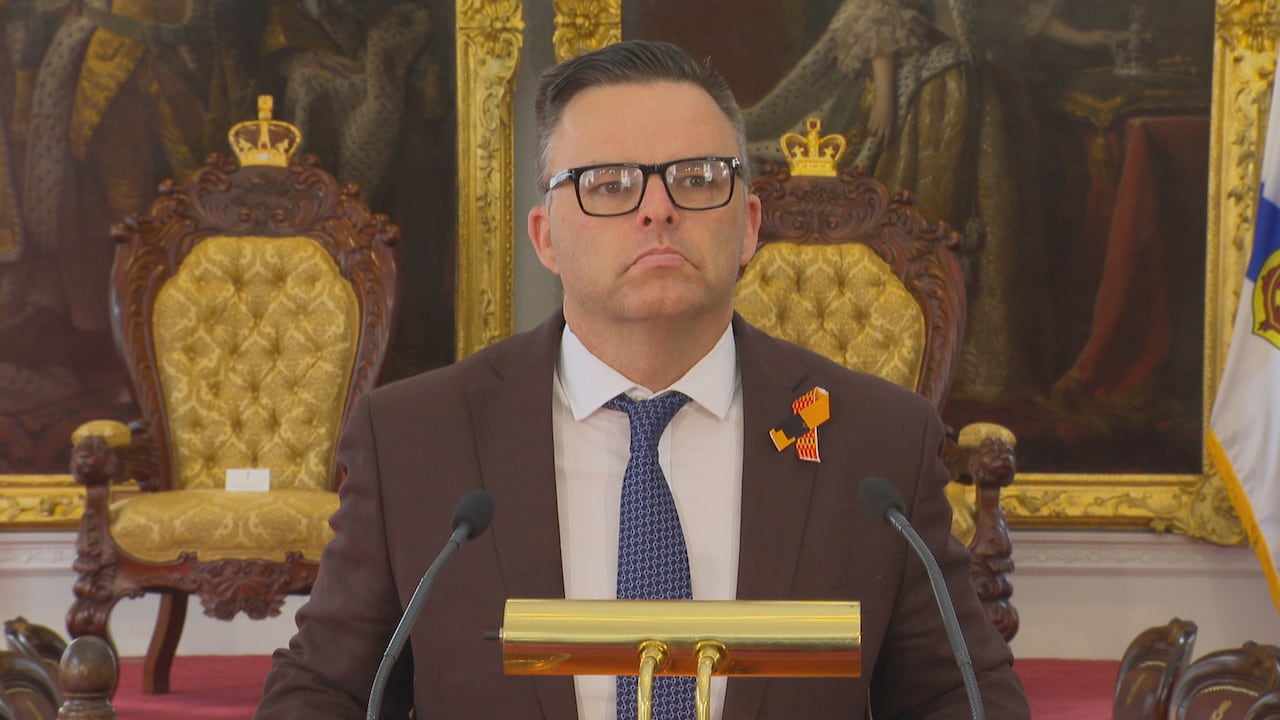 Brendan Maguire is the minister of education and early childhood development. (Jeorge Sadi/CBC)
Education and Early Childhood Development Minister Brendan Maguire told reporters that making cuts is always tough.
“It’s not cliché and it’s not just words, but it does actually weigh on you. Like, these are people in community and you want to support them,” he said.
Maguire said decisions on community grant reductions were made based on whether there were already in-house resources in place, and whether the community programs were meeting their goals.
“We know there’s going to be impacts quite frankly and we’re just working within our fiscal envelope and we’ll continue to work with the community to do the best we can.”
Future of student transit pass in doubt
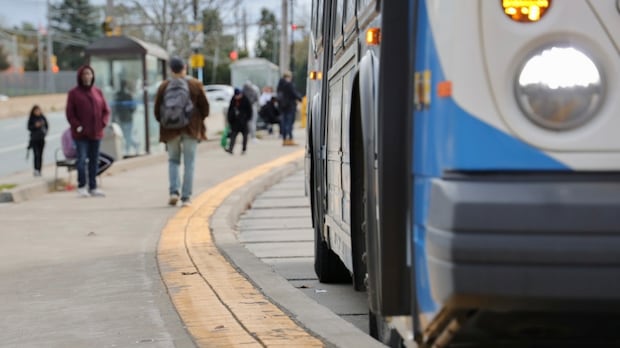
Among the cuts is provincial funding for the student transit pass pilot program. Halifax Regional Municipality Coun. Sam Austin said the city received a letter from the province Tuesday afternoon saying its funding for the program would be discontinued.
The pilot allowed students in junior high and high school to use Halifax Transit for free.
Austin said he’s unsure whether the municipality will be able to absorb the difference, and that council will have to discuss what to do.
He said the program was useful to families.
“It means that parents don’t necessarily have to drive kids everywhere. It gives them some independence in those kind of formulative years. And ideally it sets up a pattern of like, hey, transit’s a normal part of everyday life and creates a potential lifelong transit user.”
Deputy education minister Tracey Barbrick said the transit pass pilot was not used enough to justify the expense of $1.2 million. Instead, the province will funnel $600,000 through the Department of Opportunities and Social Development to low-income families with children who need help paying for bus passes. The other $600,000 will be redirected to bolster the province’s bottom line.
MORE TOP STORIES