
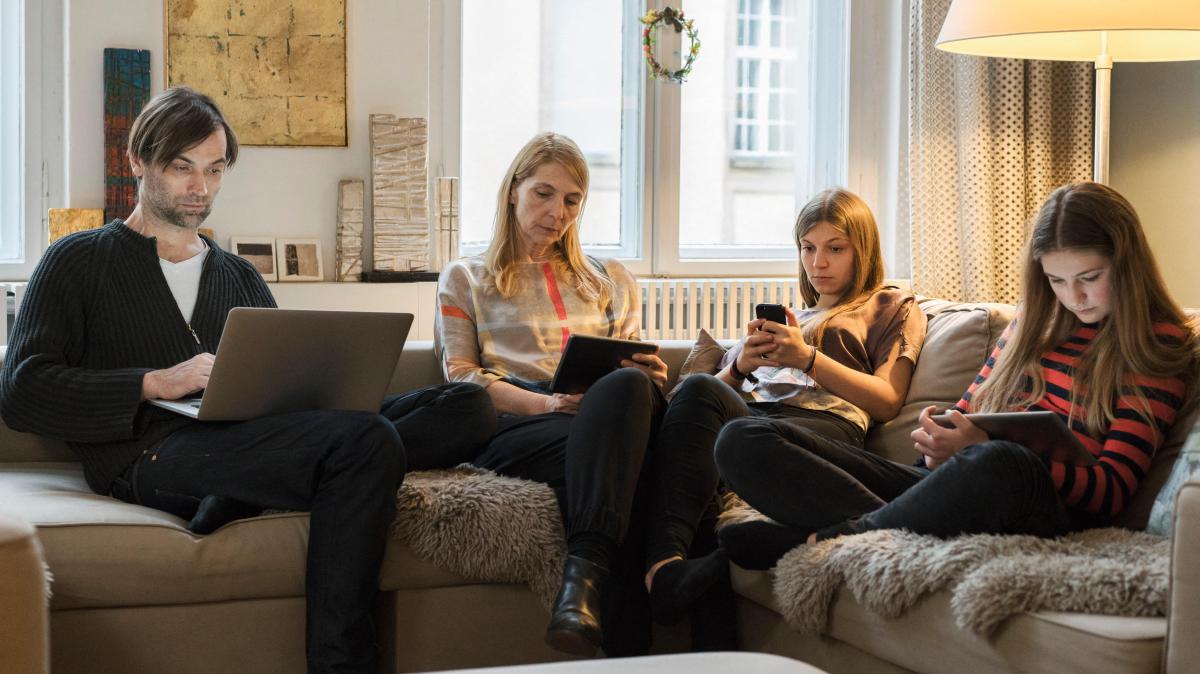
Parents are becoming the “invisible welfare state” for young adults who are less likely to find jobs because they are living at home cost-free, the government’s work tsar has said.
Alan Milburn told The Times that parents were facing a significant financial cost which will lead to some having to defer retirement. They are also often having to cope with the “mental health crises” of children who are struggling to find jobs.
Milburn, who is leading a government review of youth unemployment, said: “Every parent loves their kids but parents are entitled to a life as well.”
The number of young people not in employment, education or training, known as Neets, increased in the final months of last year to edge close to one million, figures released on Thursday showed.
• The kids won’t move out — so we built them an extension
Milburn warned there was “a whole generation of young people now who are out of the labour market, not able to live independently and who are becoming more or less reliant on their parents”.
He said: “Official figures on Neets mask a family support system that is on the brink. Too many parents are becoming the invisible welfare state. They are financing adult children and often absorbing their mental health crises at the same time. They are the unwitting victims of this Neet crisis.”
The Institute for Fiscal Studies (IFS) previously found that the proportion of adults in their twenties and thirties living with their parents had risen in the past two decades. Between 2006 and 2024, the rate among 25 to 34-year-olds rose from 13 per cent to 18 per cent.

Rachel Reeves, watched by an apprentice. The overall unemployment rate rose to 5.2 per cent for the three months to November
JONATHAN BRADY/AFP
The Office for National Statistics (ONS) found that more than half of young people in their early twenties now live with their parents. Separate figures from this month found young men were more likely to live at home with their parents than women.
Much of this is attributed to rising housing costs. However, it has also been suggested that young adults could be more discerning about which job to take if they had the comfort of living at home.
Among those over 22 and living with their parents, the unemployment rate is more than double the rest of their cohort, at 8.2 per cent.
Milburn said there had been “an inversion of a century-long trend line where young people were able to move out and get on”.
“They are stuck at home and it sometimes becomes harder to escape. Particularly if they have applied — as many young people have — for hundreds of jobs and not even got a response,” he said. “Having costs borne by their parents can be seen as a disincentive but it’s not what most young people want. They want to be able to work and get on in life but the opportunities available for them are not as good as they should be.”

Alan Milburn says “parents are entitled to a life as well”
TIMES PHOTOGRAPHER RICHARD POHLE
He added: “It’s not by choice but necessity that so many end up staying in the House of Mum and Dad.”
The IFS found there were roughly two groups of young people who were living with their parents. One group were able to live at home and pay reduced or no rent, so were able to reduce their debts or increase savings. The other group moved back in with parents as a result of experiencing some sort of negative event such losing their job or a relationship breakdown.
Bee Boileau, a research economist at the IFS, said: “What we found is that those with lower income and lower wealth were more likely to be living at a parental home. Maybe this says something about people’s lower lifetime income, or maybe this is that while living with parents they have lower income, but they might be holding out to find a job that’s a better fit for them, for example, which might improve their longer run incomes.
“There’s some evidence from the US that living at a parental home when you’re in your twenties and thirties might have quite important job-match effects, so that you hold out a bit longer searching for a higher-quality or better-fitting job.”
• Alan Milburn: We blame the young, but we’re not investing in them
Milburn said there was also an impact on parents. “It has an emotional cost, it has a financial cost and it probably has a cost in terms of family wear and tear,” he said. “There are ricochet effects of this Neet crisis spreading up the generations.
“It means that, at least for some parents a retirement has to be deferred. It’s putting lives on hold but it’s also having a detrimental effect on quality of life as well. Every parent loves their kids but parents are entitled to a life as well. It’s a story that hasn’t been told about the impact on parents.”
The ONS reported that the number of Neets aged 16 to 24 was 957,00 in the three months from October to December. That was an increase from 946,000 in the previous quarter, and represented 12.8 per cent of the age group. The data covers young people who are unemployed or economically inactive, and not those who are in formal education or completing an apprenticeship or vocational course.
• Is unemployment still the price we have to pay for low inflation?
This is just the latest data pointing towards a tough labour market, particularly for entry-level positions. Figures from the ONS this month showed that the overall unemployment rate rose to 5.2 per cent for the three months to November. However, it also showed that job vacancies rose slightly to 726,000 for the three months to January.
Milburn said that the impact of AI on graduate jobs could “make this problem five-fold worse”. He also suggested that some government’s policies, such as raising national insurance contributions for employers, could have had an impact.
He told Times Radio: “We’ve got to look at these sorts of factors. Every time an employer takes on a young person it’s always a risk because they’re unproven. What we’ve got to do is make sure that everything that happens is about minimising the risks and maximising the incentives for employers to take on young people.”