
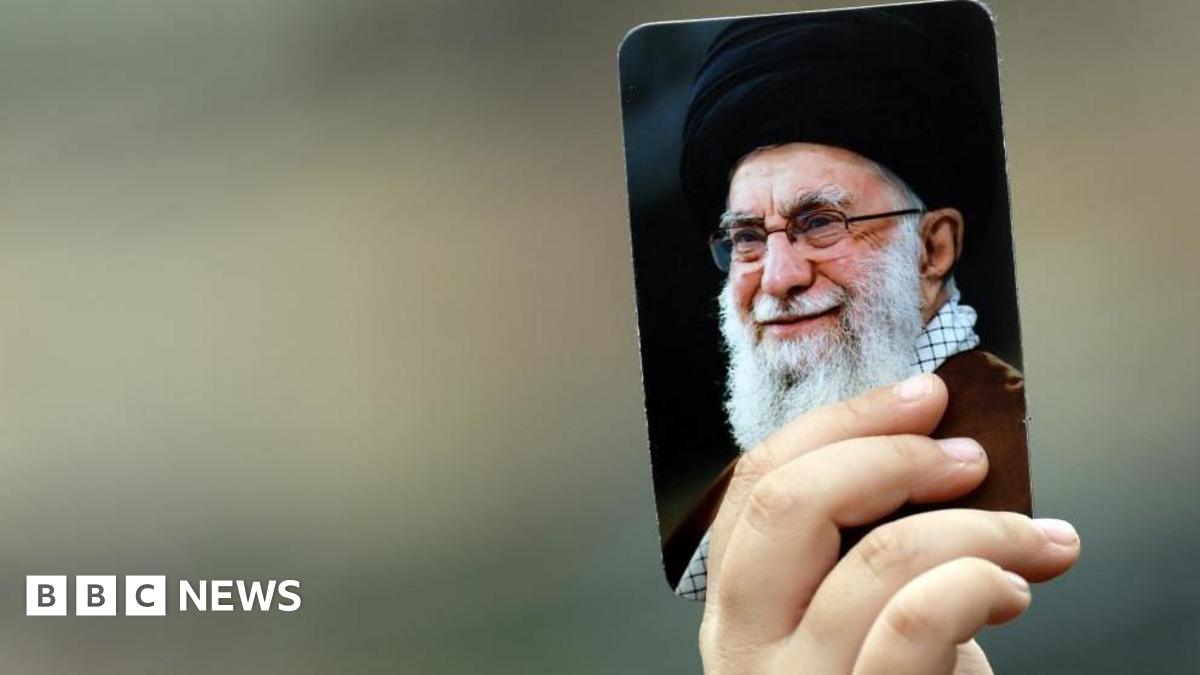
The prospect of further regional escalation now hangs over the crisis.
From the point of view of Iran’s leaders, if the conflict widens and its militant groups allies across the Middle East join the fight, Tehran could gain some leverage to press for a ceasefire or at least avoid a total surrender on terms dictated by the US and Israel.
From another perspective, sustained military pressure, combined with renewed large-scale protests, could push the Islamic Republic toward systemic breakdown.
Should elements of the security forces fragment or refuse orders, any formal constitutional transition process may quickly become irrelevant, overtaken by developments on the ground.
The coming days will reveal whether the IRGC and other elements of the country’s coercive apparatus can remain cohesive in the absence of its long-serving supreme leader.
For now, all scenarios remain in play.
The Islamic Republic appears to be holding a weaker hand than it did before the strikes – deprived of its central authority figure, stripped of key commanders, and exposed to continuing military pressure.
Yet, it retains institutional structures, armed forces and a capacity for retaliation that complicate any straightforward path to regime change.
The death of Ali Khamenei has pushed Iran into a volatile and uncertain phase.
What happens next will depend on whether Tehran can maintain internal control under continued air strikes, whether protests gather momentum, and how far the fighting spreads across the region.
The direction of events is likely to become clearer in the coming days, as all sides test their military limits and their political resolve.