
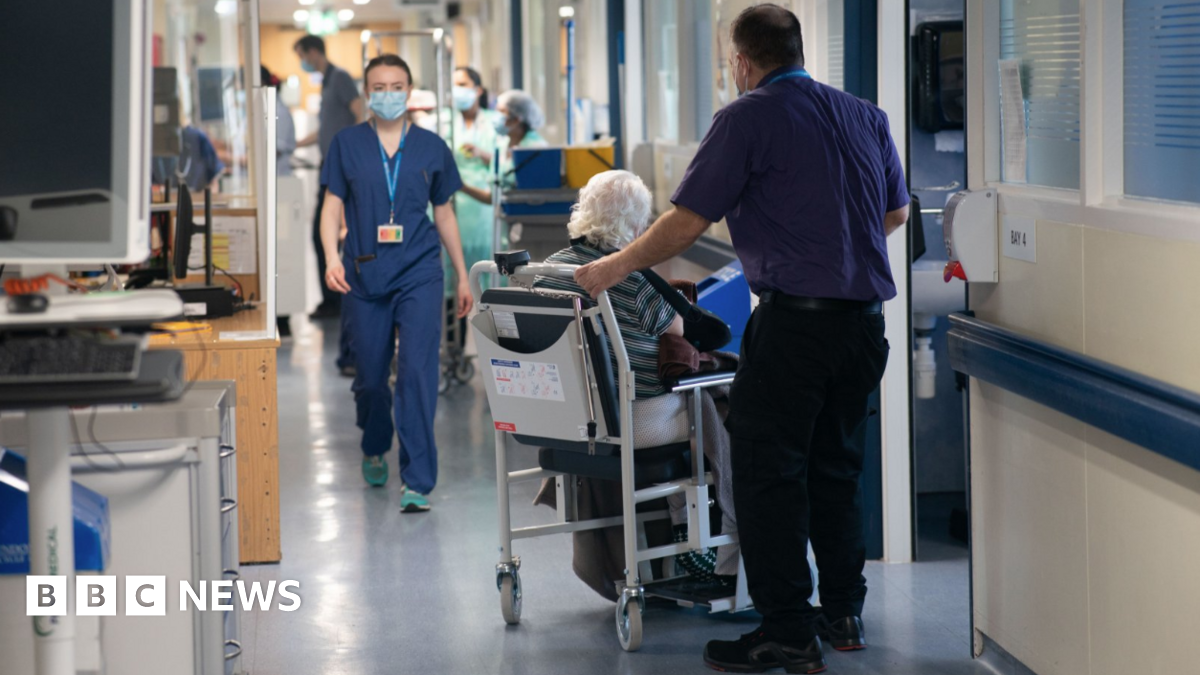
Aside from the misery facing patients, the pressure on medical staff is huge.
The Royal College of Nursing has been campaigning on the issue for several years.
“We’re hearing from members who are going to work, feeling anxious and upset. We’ve had members saying they’re sitting in their car crying before they go into work,” said Simon Browes, the college’s North West regional director.
“It’s because they can’t do the job they want to do and they’re faced with this distressing, relentless situation”.
Corridor care is now so normalised in most hospitals that staff are assigned to it, like another ward.
Patients are monitored and treated but the lack of facilities and privacy, along with the intense pressure on medical staff, creates conditions which do little to help them recover.
Several families with recent experience of A&E waits told us they had seen patients in discomfort because there was no one to help them go to the toilet.
One said another patient had soiled himself waiting. The lack of dignity came up repeatedly with those who got in touch.
The Royal College of Emergency Medicine has described the situation countrywide as “a national shame”, while the Royal College of Nursing has called it “a national emergency”. Both are demanding an end to the practice.
Browes, who worked as a nurse before taking on his role at the RCN, said the health risks to patients of corridor care are well known.
“We’re going to see people dying who should not die. We’re going to see people leaving the profession because they can’t work under those conditions any more,” he said.
The data showed big variations between hospitals with Whiston, Royal Blackburn, Royal Preston and Arrowe Park particularly struggling with long waits. In contrast, the three Manchester hospitals, along with Fairfield General in Bury and Furness General in Barrow, saw comparatively few.
The reasons for the current situation are complex and most are out of the control of the hospitals themselves.
A major factor is the crisis in social care provision, which sees older, more frail patients trapped in hospital beds for days or even weeks because a suitable care package cannot be found.