
Tweet
Email
Link
Threads
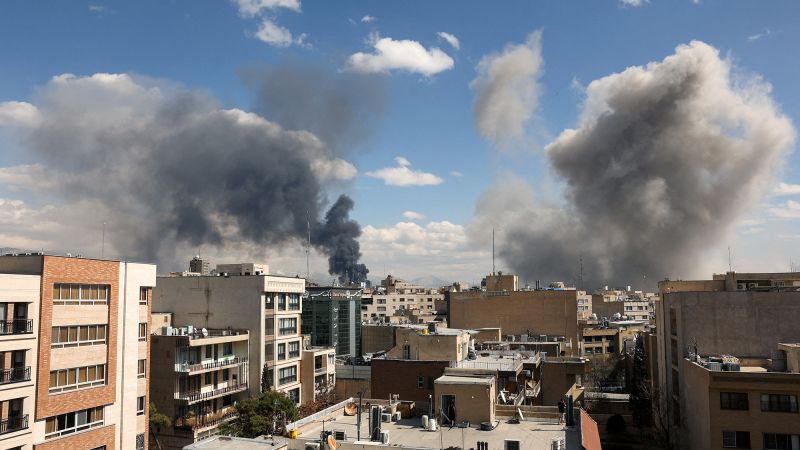
If you’re feeling on edge watching the headlines, you’re not alone — the uncertainty after the US entered a war with Iran has rattled many Americans and raised questions about what comes next. President Donald Trump said Sunday that the war could last four to five weeks, though analysts emphasize the situation remains fluid.
Here’s what else you need to know to get up to speed and on with your day.
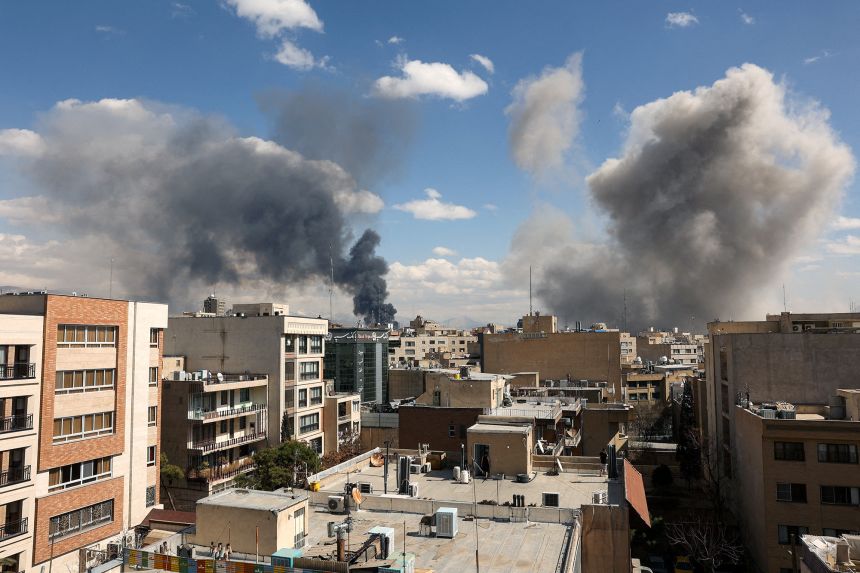
The US and Israel began joint strikes on Iran over the weekend, killing its supreme leader and launching a war that is quickly escalating across the Middle East. Iran’s retaliation has been swift and expansive, with attacks targeting almost all of its neighbors, many of which are US-allied Gulf countries typically regarded as safe, luxury destinations for tourists and expats. CNN has reported on deaths and damage in the United Arab Emirates, Iraq, Jordan, Qatar, Bahrain, Kuwait and Saudi Arabia. At least three US service members were killed in Kuwait, with President Donald Trump warning there could be more US casualties.
VISUALS: Here’s a look at the conflict in maps and charts
Air travel across the Middle East has been thrown into chaos by the war in Iran, as thousands of flights are grounded in one of the world’s busiest travel regions. Several airlines in US-friendly Gulf states have been affected, including in United Arab Emirates cities Dubai and Abu Dhabi, which have become the target of Iranian retaliation for hosting US military bases. Airspace closures are also in place over Qatar, Kuwait, Israel, Bahrain and Iraq. The disruptions are expected to last for at least several more days. Travelers are urged to check with their airlines about rebooking or refunds, though many are reporting long waits and limited assistance due to overwhelming demand.
Oil and natural gas prices jumped today as the conflict with Iran intensifies, threatening the flow of energy to global markets. Brent crude, the global benchmark, spiked 9% to trade at above $79 a barrel. The US benchmark, meanwhile, climbed nearly 8% to around $73 a barrel. Large-scale unrest, strikes that take out oil production, or a shutdown of a critical oil shipping channel could eventually send oil to $100 a barrel or even higher, industry analysts warn. If that happens — and the market is currently betting against that scenario — gasoline prices could go through the roof. That could force Americans to pay a price for regime change in Iran, further exacerbating affordability concerns.
Two people were killed and 14 others injured early Sunday in a mass shooting in Austin, Texas, as a bar in a busy nightlife district was preparing to close. Investigators are examining whether the suspect — who was fatally shot by police — was motivated by recent US and Israeli strikes on Iran, though officials caution it’s too early to draw conclusions. The suspected gunman was wearing a shirt with an Iranian flag beneath a hoodie reading “Property of Allah,” a law enforcement official told CNN. Authorities were also seen on Sunday at a home connected to the suspect, likely investigating his phones and computers to determine if he was reading any propaganda or left any writings indicating his motive.

Gunshots ring out in Austin bar district

Gunshots ring out in Austin bar district
1:20
Voters head to the polls Tuesday for the first state primaries in Arkansas, North Carolina and Texas — an early test of party strength in this year’s election cycle. The contests could offer a snapshot of where Democrats and Republicans stand with their core voters as candidates look for signs of momentum heading into the general election. The marquee race is the US Senate primary in Texas, analysts say. Early voting data suggest a notable uptick in early Democratic turnout, which could point to a continuing trend of strong enthusiasm among the party’s base.
GET 5 THINGS IN YOUR INBOX
The show formerly known as the SAG Awards took place on Sunday in Los Angeles. See who won.
America’s teachers are working two jobs and barely getting by
Across the country, many of America’s teachers are taking on side hustles and second jobs just to make ends meet.
Some hospitals and clinics tell CNN they are shutting down or scaling back services after the “big beautiful bill” slashed more than $1 trillion in federal health care funding.
A groundbreaking international clinical trial has been testing this implanted device as a treatment therapy for Parkinson’s.
Contrary to the chatter you may hear online, AI isn’t on the verge of wiping out entire industries. History even shows that the most disruptive technologies have not shrunk the economy, analysts say.
🌤️ Check your local forecast to see what you can expect.
And finally…
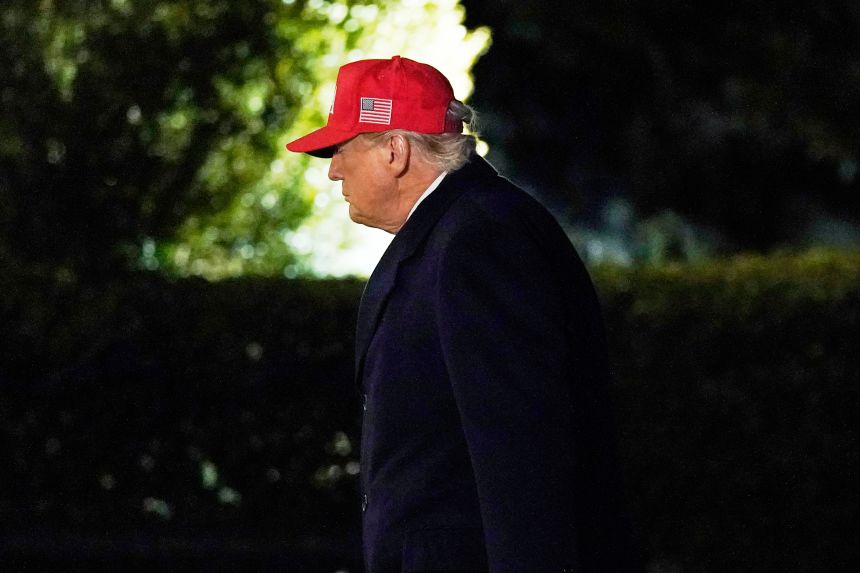
Congress hasn’t officially declared war since World War II, but presidents have used a string of legal loopholes for military action without going to Congress. CNN’s Phil Mattingly explains in this video.