
President Donald Trump acknowledged the potential for a longer-term conflict in the Middle East, saying Monday that the goals of the U.S.-Israel war against Iran are to destroy the regime’s nuclear program, its navy and its stockpile of long-range missiles and capability of making more.
Offering his most detailed attempt yet at justifying the air campaign launched over the weekend, Trump said the U.S. military anticipated it would last “four to five weeks, but we have capability to go far longer than that.”
The president claimed, without offering evidence, that Iran had been close to developing missiles that could reach the U.S. itself.
“The regime already had missiles capable of hitting Europe and our bases, both local and overseas, and would soon have had missiles capable of reaching our beautiful America,” Trump said in White House remarks at a Medal of Honor ceremony for veterans of World War II, Vietnam and Afghanistan.
Trump’s remarks followed the government’s first public briefing since Saturday’s attack, during which Defense Secretary Pete Hegseth and Air Force Gen. Dan Caine, chairman of the Joint Chiefs of Staff, said the conflict was likely to cost more U.S. lives.
“This not a single overnight operation,” Caine said. “The objectives CENTCOM has been tasked with will be difficult and gritty work. We expect to take additional losses.”
The briefing came after three U.S. fighter jets were mistakenly shot down by Kuwaiti air defenses during active combat in Iran overnight, according to U.S. Central Command. The crews survived.
A fourth U.S. service member was confirmed dead, however, after Iran’s initial retaliation for Saturday’s airstrikes.
The Associated Press, citing the Iranian Red Crescent Society, reported that the airstrike campaign has killed 555 people so far in Iran.
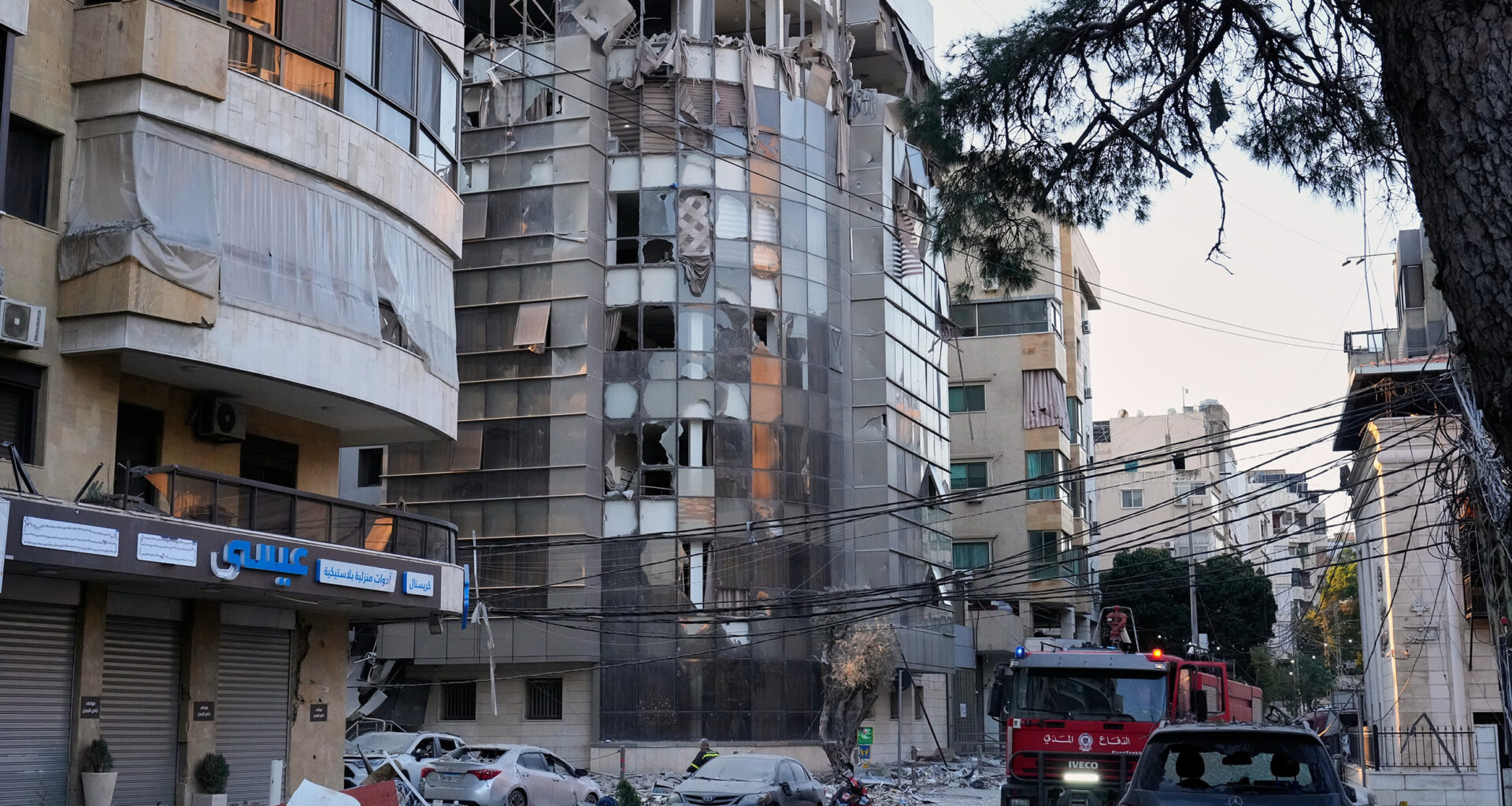
As the conflict widened, Iran launched drone and missile attacks against Israel and other U.S. allies in the region. Lebanon’s Iran-backed militant group, Hezbollah, mounted a retaliatory attack against Israel, which struck back, killing 31 people and wounding an estimated 149 more, according to Lebanon’s health ministry.
The State Department urged U.S. citizens to leave Lebanon “while commercial flight options remain available,” citing a “volatile and unpredictable” security situation.
Cities in oil-rich Persian Gulf countries, including the United Arab Emirates’ Dubai and Abu Dhabi, and Doha, the capital city of Qatar, have been among the targets of Iran’s retaliatory drone and missile strikes.
Qatar shuttered the world’s largest liquefied natural gas export facility Monday after it was targeted by an Iranian drone, according to a statement form QatarEnergy.
Dubai International Airport, a global travel hub, grounded commercial airline flights in the wake of Saturday’s attacks. The Emirates airline, headquartered in Dubai, announced Monday it would resume operating a “limited number” of commercial flights. Others, including flydubai and Etihad Airways, followed suit.
Recommended

Sydney Carruth is a breaking news reporter covering national politics and policy for MS NOW. You can send her tips from a non-work device on Signal at SydneyCarruth.46 or follow her work on X and Bluesky.

Julia Jester covers politics for MS NOW and is based in Washington, D.C.

© 2026 Versant Media, LLC
