
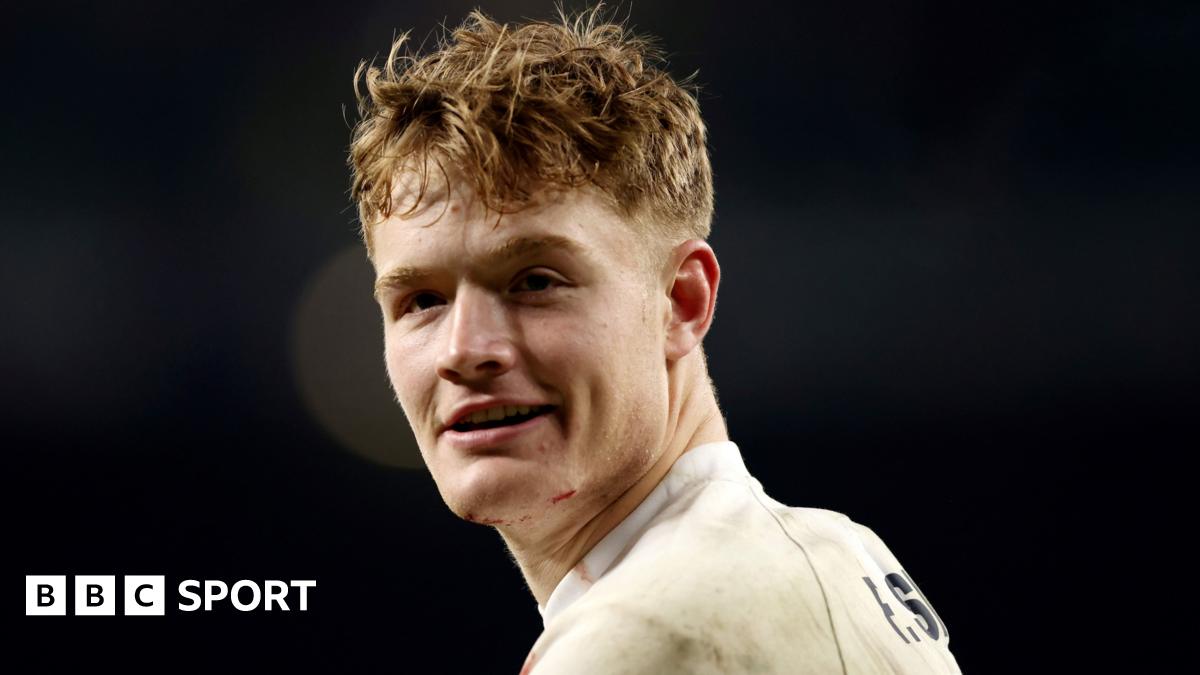
Analysis by rugby union news reporter Mike Henson
Steve Borthwick is a more funky selector than he is often given credit for.
He has switched between three fly-halves in little more than a year, brought both wingers and flankers into the centres, and has shuttled between various back-three options, building an arsenal of different options.
However, completely gutting the backline – even with some of the changes forced upon him – would be his most radical call yet.
Cohesion, often a buzzword last year, has been abandoned for new faces and untested combinations. Seb Atkinson and Tommy Freeman have not played a minute of rugby together as a centre partnership.
A home loss to Harlequins back in February 2022 was the only occasion that Atkinson and Fin Smith started for Worcester’s first team together, before heading their separate ways.
So, is it justified? England’s performances in the past two Six Nations games – which lacked both tactical agility and basic accuracy – were nearly unrecognisable from the team that had amassed 12 successive wins in their previous dozen games.
England’s management might well think there is little point developing their squad depth, as they did notably in the summer tour to Argentina, if they don’t use it to shake up the team and stimulate competition when first-choice options fail to deliver.
However, such big calls place a big strain on any team.
England’s players have talked regularly about strength of team spirit and culture inside the camp, which is easy to do when the team is winning. That will be tested more rigorously by this slump in form.
Few of those dropped can have any complaints based on their performances in the defeats by Scotland and Ireland. However, some will doubtless feel that they have enough credit in the bank from England’s year-long winning streak to survive a cull.
How a new backline comes together and how the squad circle the wagons for a testing trip to Rome will be intriguing to see.