
Prominent conservatives are balking at President Donald Trump’s war with Iran in ways they didn’t when he struck Iran’s nuclear facilities last year and Venezuela two months ago.
Megyn Kelly said she had “serious doubts about what we are doing.” Tucker Carlson called it “absolutely disgusting and evil” (after being a little more muted following the June strikes). Fox News host Will Cain has questioned the clarity of the mission. And a number of prominent conservative influencers have echoed those concerns.
But just how representative are these comments of the sentiments on the broader political right?
The answer right now is “not very.” Republicans have largely supported the US decision to take military action — including 77% to 23% in a new CNN poll. And that matters a great deal when it comes to keeping GOP lawmakers in line. (The US strikes on Iran are unpopular overall, including by a 59%-41% margin in the CNN poll.)
Still, the war with Iran could challenge Trump’s ability to hold his base together in a way his previous foreign strikes did not.
That’s because his base is pretty lukewarm — even bordering on skeptical in some ways.
And a prolonged conflict that leads to broader war and more US casualties could be a tough sell for the president who campaigned on ending wars rather than starting them.
Even with strong GOP support — 55%-13% in a Reuters-Ipsos poll and 81%-12% in a Washington Post poll — there are warning signs for Trump.
For one, the Republicans who say they support the US strikes on Iran don’t do so very strongly.
The percentage of Republicans who “strongly” approved was just 37% in the CNN poll and 54% in the Washington Post poll. The Reuters-Ipsos poll, which offered just two options, showed 45% of Republicans either opposing the strikes (13%) or declining to weigh in (32%).
And that last poll actually showed significantly fewer Republicans supporting this mission than the June strikes. The 55% support now is down from 69% in the summer.
The polls today also show some real reservations on the right with how we’ve gotten to where we are today and what happens from here.
Among Republicans:
About one-third said Trump hadn’t clearly explained the mission, in both the Washington Post poll and a CBS News-YouGov poll conducted right before the US launched strikes.
Just 54% in the Washington Post poll said they wanted Trump to continue striking Iran, which he’s doing.
Just 41% strongly favored overthrowing the Iranian government in the CNN poll.
51% were at least “somewhat” concerned about the US getting bogged down in a full-scale war in the Washington Post poll.
The thread that runs through many of these findings is something we’ve seen after Trump’s previous strikes in Iran and Venezuela: His base seems to be much more okay with brief missions with quick deliverables and no blowback.
But what happens when that’s not the case? What happens when it’s more of a prolonged war?
We’ve already seen six US soldiers killed and more than a dozen seriously injured. And the Reuters-Ipsos poll showed 42% of Republicans said they’d be more likely to oppose the mission if US troops were killed or injured.
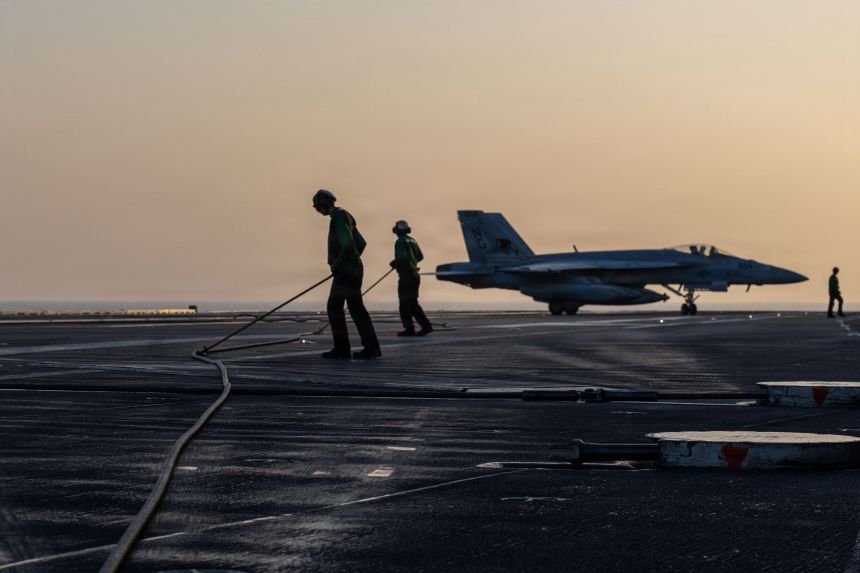
We’re also seeing gas prices start to spike, and 34% of Republicans said that would make them more likely to oppose the mission in the Reuters-Ipsos poll.
Also, 46% of Republicans trust Trump “moderately” or less than that when it comes to making decisions about the use of force in Iran, per the CNN poll.
The previous strikes in Iran and Venezuela were not popular. But they didn’t become major issues because, as with so many controversial Trump actions, they were brief stories from which the political world quickly moved on.
The war in Iran appears to be developing differently.
It’s a little like the immigration crackdown in Minneapolis. Aspects of Trump’s deportation program were unpopular long before two US citizens were killed — thanks to the mistaken deportation of Kilmar Abrego Garcia, other deportations without due process, the use of masked agents and other events. But the weekslong saga in Minneapolis trained people’s eyes on the situation in a way that made it difficult to avert their gazes — which did not help Trump.
It remains to be seen if Iran will pan out the same way. The president’s base has given him plenty of berth over the last decade, even when his actions transparently violated his promises. And he could try to wrap up military action quickly before it becomes a liability.
In comments to the New York Post on Monday, Trump downplayed public opinion surveys and said it’s “not a question of polling.”
“I think people are very impressed with what is happening, actually,” he said. “I think it’s a silent — if you did a real poll, the silent poll — and it’s like a silent majority.”
But Trump used an opposition to foreign wars to bring into his coalition lots of people who might not otherwise be politically inclined. To the extent the war with Iran continues, he could find it difficult to convince those people to stay in his corner.
Even Republicans’ tolerance seems to be quite limited right now.
And seeing prominent conservatives express skepticism about Trump’s foreign adventurism could certainly give people the permission structure to balk.