
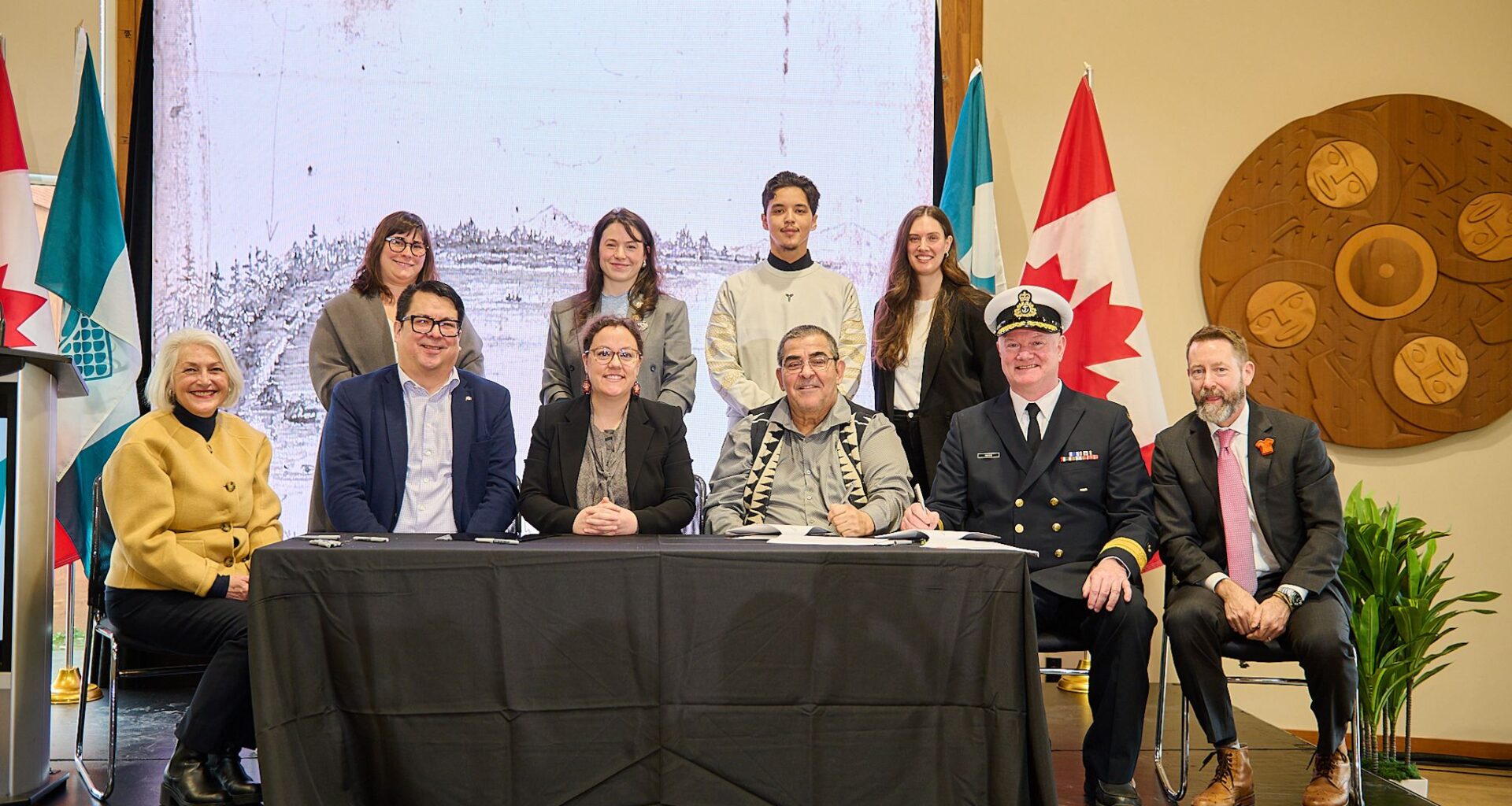
The BC NDP-led provincial government faced sharp criticism from the opposition after confirming it was not a signatory to a February 2026 federal agreement recognizing the Musqueam Indian Band’s Aboriginal rights, including providing a framework for pursuing Aboriginal title in a major area of Metro Vancouver and the surrounding area.
During question period at the legislature Monday, BC Conservative MLA Scott McInnis for the riding of Columbia River-Revelstoke pressed BC NDP leadership over the Feb. 20 agreement between the Government of Canada and Musqueam, which establishes shared marine and fisheries decision-making in and around the Lower Mainland, and creates a framework for incrementally establishing Aboriginal title in the area the First Nations considers as its traditional territory.
“We’ve heard nothing from this government,” McInnis told the House, asking Premier David Eby to clarify what recognition of Aboriginal rights and title “means in the context of our province today.”
Responding on behalf of the provincial government, BC Indigenous Relations and Reconciliation Minister Spencer Chandra-Herbert said the province was not involved in negotiating the agreement and did not receive the full text ahead of time.
“The agreement that the member refers to was an agreement signed with the federal government, not the provincial government,” said Chandra-Herbert, who is also an MLA for Vancouver-West End. The minister reiterated that position repeatedly under questioning, saying the provincial government “was not at the negotiating table” and “was not a signatory of the agreements.”
Trevor Halford, interim BC Conservative leader and the MLA for Surrey-White Rock, accused the provincial government of being out of the loop on a matter with potentially significant implications for British Columbians.
Speaking at a separate press conference on adopting permanent daylight time on Monday, when asked by media, Premier Eby said the provincial government was not briefed “at the political level” on the agreement.
“To the best of my understanding, the provincial government was not briefed at the political level on this,” said Eby.
“I can’t say whether or not at this stage whether any public service members had line of sight to it. I certainly didn’t.”
However, Eby said he was “not surprised” the federal government was engaged in discussions with Musqueam, noting the long history of legal and constitutional issues involving the First Nation, including fishing rights and a longstanding Aboriginal title claim against Ottawa.
“The lesson the federal government is learning over the weekend is that there is a heightened environment for these conversations and these agreements right now, and they have to go above and beyond,” said Eby.
He added that the provincial government would engage with the federal government to better understand the implications of the agreement while recognizing “the importance of this work to be done.”
Later in the day, legislature reporter Rob Shaw said that just hours after Eby made that assertion at a press conference, the premier’s office stated that Eby had, in fact, attended the signing event last month in person in his own riding, but was still unaware of the contents of the agreement.
In a follow-up statement issued Monday, Musqueam Indian Band said the trio of agreements are intended to support its role as stewards of the Fraser River and establish work groups and advisory committees focused on emergency marine management, spill response, environmental protection, and fisheries.
“These agreements effectively support Musqueam’s long-established role as stewards of the Fraser River and create work groups and advisory committees focused on important issues,” stated the First Nation.
Musqueam emphasized that the agreements — at least at the moment — “do not relate to land ownership” and have “absolutely no impacts to fee simple lands/private property.”
The First Nation also acknowledged public reaction in the wake of the court’s August 2025 Cowichan Tribes’ Aboriginal title decision in southeast Richmond and said it is appealing that judgment. It reiterated that its approach to private property has not changed.
“As stated by Chief Sparrow in December 2025, ‘Musqueam is not coming for anyone’s private property. Our approach to traditional unceded territory is one of partnership and relationship with our neighbours, not trying to take away our neighbours’ private property.’”
According to a copy of the full agreement published by Global News on Monday, one of the most important statements in the document is: “Musqueam has unextinguished Rights and Title within the Musqueam Territory.” That means Musqueam’s rights were never legally extinguished and still exist today. The agreement also connects this recognition to Canada’s Constitution Act of 1982, stating that Section 35(1) “recognizes and affirms the existing Rights and Title of the Aboriginal peoples of Canada.”
At the same time, the document makes it clear that this is not a final treaty or land claim settlement. It says: “This Agreement does not constitute a treaty or lands claims agreements within the meaning of sections 25 or 35 of the Constitution Act, 1982.”
It also protects Musqueam’s legal position by stating: “This Agreement does not create, amend, define, establish, abrogate or derogate from Musqueam’s Rights and Title.” In other words, signing this agreement does not take away, reduce, or redefine Musqueam’s rights. In fact, the agreement must be read in a way that supports those rights: “This Agreement is to be construed as upholding Rights and Title, including Musqueam’s Rights and Title, and not as abrogating or derogating from them.:
Instead of solving everything at once, the agreement sets up a step-by-step approach. It explains that “Incremental Implementation Measures contribute to the incremental implementation of Musqueam’s Rights and Title.” This means the federal government and Musqueam will negotiate specific agreements over time, and each of those agreements will deal with practical details. The framework itself is legally enforceable, because “As of the Signing Date, this Agreement is binding on the Parties and the Parties are entitled to rely on this Agreement.”
The agreement also connects this work to the United Nations Declaration on the Rights of Indigenous Peoples. It commits both sides to act properly and respectfully, stating: “The Parties agree that they shall act in good faith in the implementation of this living Agreement.” It further says: “This Agreement shall be implemented in a manner that upholds the honour of the Crown.”
As well, the agreement protects both sides from legal consequences beyond what is written. It states: “Nothing in this Agreement or the Musqueam Narrative will be construed as: (a) an admission of any fact or liability,” which means the agreement cannot be used as proof that either side admits wrongdoing in court.