
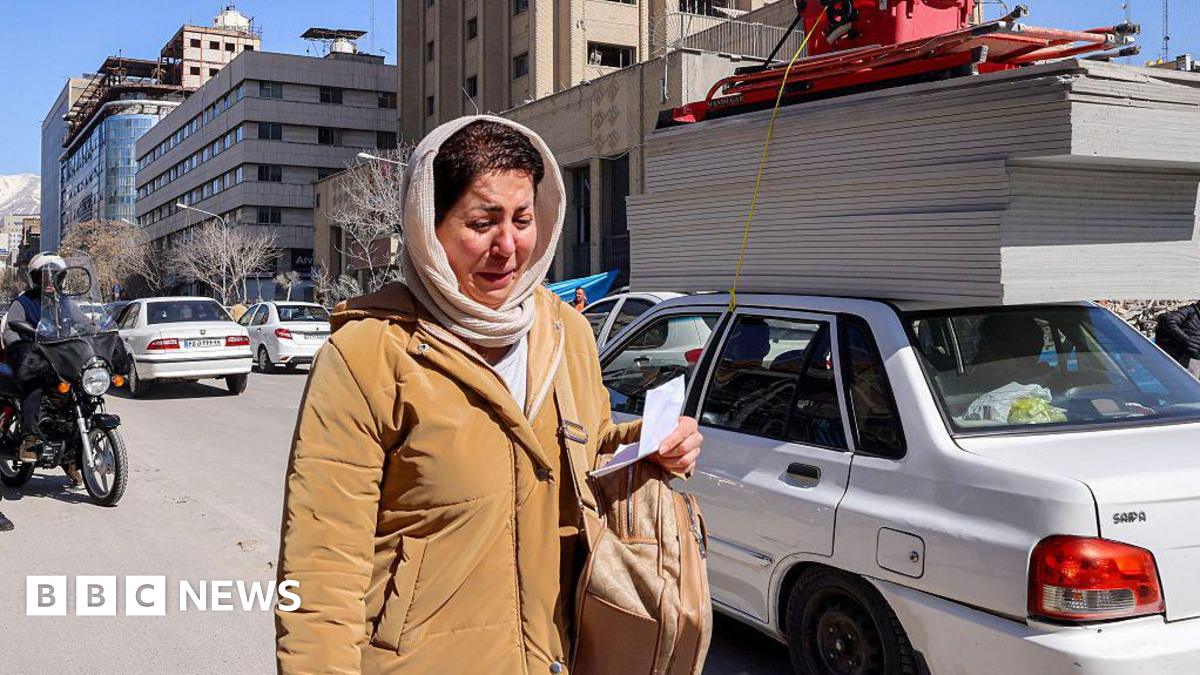
US and Israeli strikes over the past few days have worsened the situation, according to some residents who have managed to find fleeting internet connections amid internet blackouts to speak to BBC Persian.
International news organisations are often refused visas to Iran, which severely limits their ability to gather information about what’s going on inside the country. Internet blackouts make the situation even harder to report on.
One person based in Tehran, called Pouya, said prices have gone up since the war broke out on Saturday.
“I was just checking [the prices] – rice is now at 625 tomans; it was 530 before the war,” he said.
He added that the items most adversely affected are potatoes.
Iranian state news outlets have reported that “in line with the government decision to prioritise the provision of essentials”, the export of all food and agriculture products has been banned “until further notice”.
Internet packages have also risen in price, according to Shayan, a resident of the city of Karaj, about an hour’s drive from Tehran.
“It’s very difficult to get online now,” he said, adding that the price of internet packages via Elon Musk’s Starlink has increased “enormously”.
Omid, a 26-year-old in Tehran, said “people are becoming slightly uneasy about how long the situation is dragging on”.
He said he had assumed the US and Israel would target certain individuals like Ayatollah Ali Khamenei, who was assassinated on Saturday, and that the attacks “would be over by now”.
But he said he had heard more explosions in the city early in the afternoon on Tuesday and due to the continued strikes he had stocked up on essentials.
However, not all shops remain open. “There is a greater security presence on the streets, but the streets themselves are empty,” he said. “Some shops have closed, particularly those near the affected areas.”