

Gene Sticco, a former nuclear protection specialist for the United States Air Force, shared his thoughts on the “unpredictable” and “deteriorating” situation unfolding in the Gulf
12:15, 03 Mar 2026Updated 13:11, 03 Mar 2026
What to know about the latest US-Israeli attacks on Iran
A former nuclear protection specialist has pinpointed four potential places in the UK that Iran could target. Over the weekend (Saturday, February 28), a joint US and Israel offensive was launched against Iran, aiming to topple the republic’s regime, which triggered counterattacks across the Gulf.
Prime Minister Keir Starmer ruled out using British bases for strikes on Iran, saying that the UK does not endorse “regime change from the skies”. However, it doesn’t means that the UK will refrain from participating entirely.
He committed to allowing the use of UK bases for defensive measures to protect allies in the region under threat from retaliatory attacks. This follows an incident where RAF Akrotiri, a British military airbase located on the Mediterranean island of Cyprus, was targeted by a one-way attack drone, whilst locations in the British hotspot of Dubai also came under fire.
It’s now been suggested that Iran is “very likely” to intensify its assaults on UK assets. Gene Sticco, a former United States Air Force nuclear protection specialist who managed security operations for energy firms like Shell and BHP, offered his insights on the “unpredictable” and “deteriorating” situation unfolding in the Gulf.
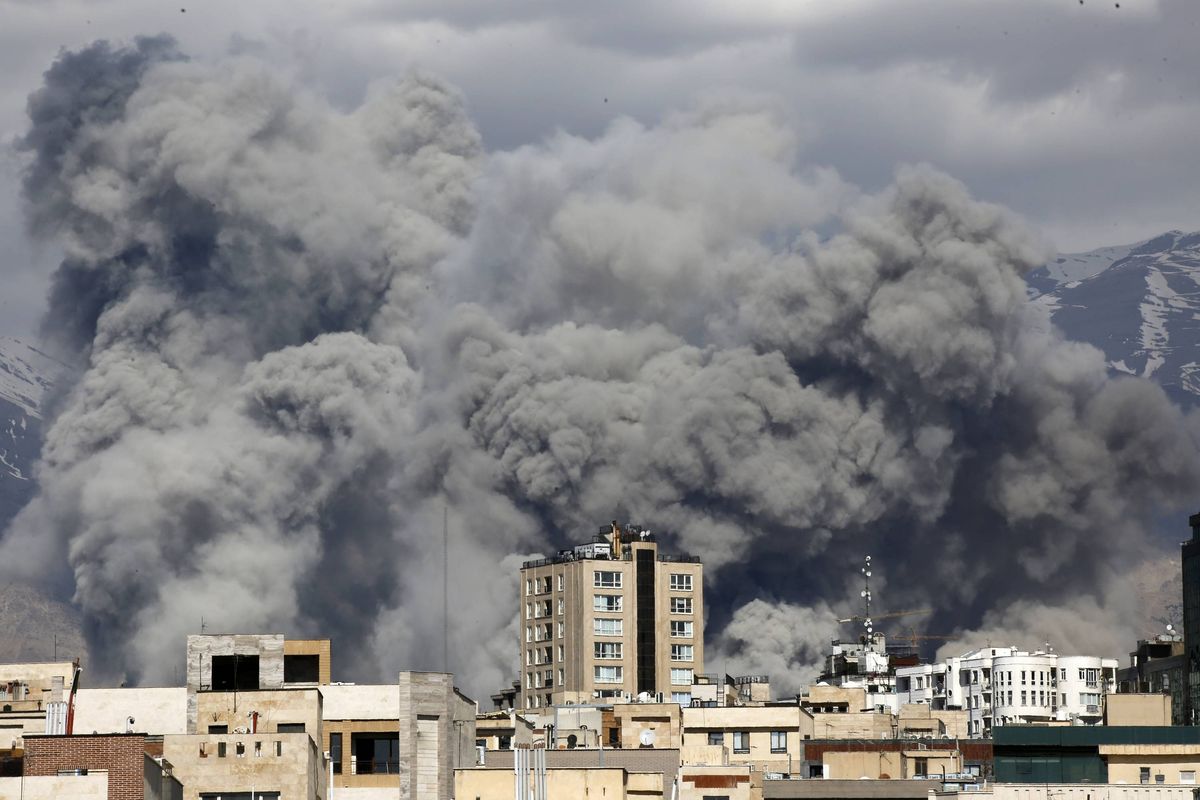
Gene Sticco weighed in on the “unpredictable” and “deteriorating” situation(Image: Anadolu via Getty Images)
Gene, who penned a book about his time in the industry, Unconventional: A True Story of Oil, Intelligence and Consequence, suggested Starmer’s move has “crossed a line that Iran will view as participation”.
He acknowledged any strike on British territory is highly improbable, especially considering Iran’s “conventional military reach doesn’t extend to the British mainland with any reliability”.
However, should an incident occur, there are four locations that could potentially be in the firing line. Gene outlined: “In terms of UK-based military infrastructure that could be targeted through unconventional or cyber means, the obvious ones are RAF Fairford if it’s being used for US operations, the naval facilities at Portsmouth and Devonport, and GCHQ in Cheltenham, though that last one would be a cyber target rather than a kinetic one.”
RAF Fairford, near the market town of the same name in the Cotswolds, has previously been used by the Americans for long-range heavy bombing operations, and is reportedly poised for use in the Iran conflict.
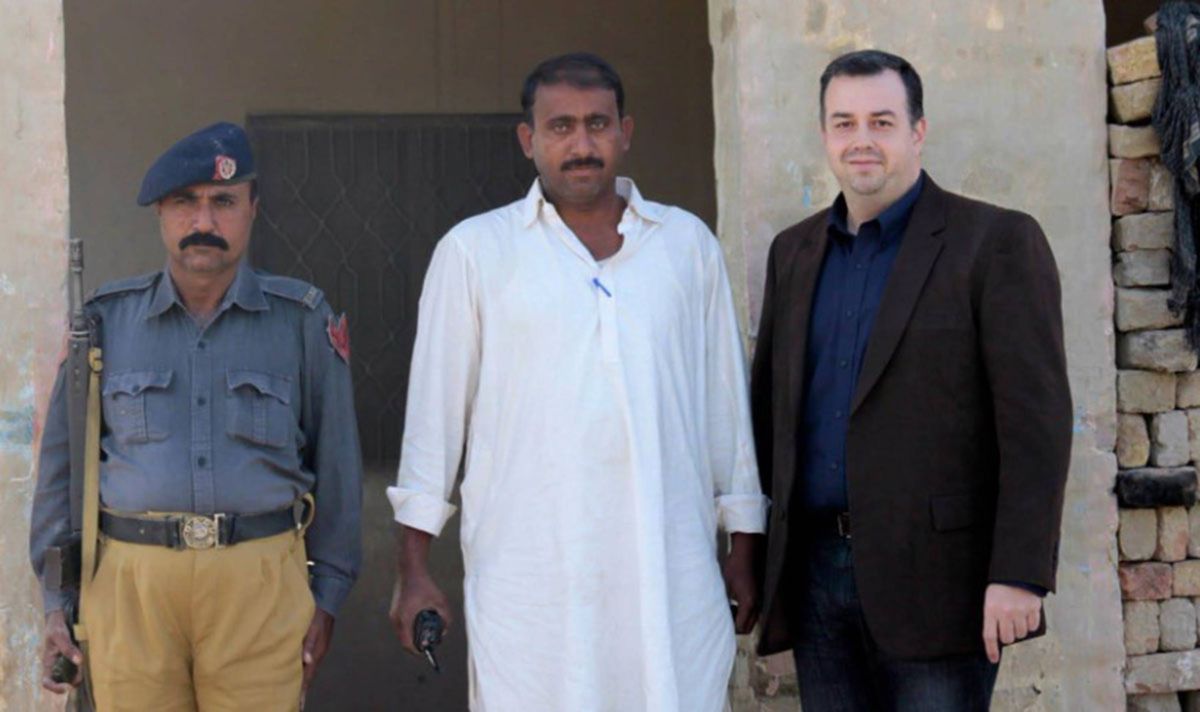
Gene (R) claimed Starmer’s decision “crossed a line that Iran will view as participation”(Image: Gene Sticco)
Portsmouth houses HMNB Portsmouth, where the Royal Navy stations almost two-thirds of its surface ships, including the aircraft carriers HMS Queen Elizabeth and HMS Prince of Wales.
HMNB Devonport in Plymouth stands as Western Europe’s biggest naval base and accommodates amphibious vessels, research and survey craft, plus Royal Navy frigates. Meanwhile, the top-secret GCHQ (Government Communication Headquarters) in Cheltenham serves as Britain’s premier intelligence, security, and cyber agency.
Whilst Gene believes a full-scale assault on the UK is improbable, he remains “more concerned” about covert operations.
“Iran has maintained intelligence networks in the UK and across Europe for decades,” he explained. “If Iran were to attempt something on UK soil, it would most likely take the form of a cyberattack on critical infrastructure, an attack on an Israeli or Jewish community target, or an attempt to strike a military or government-affiliated location.
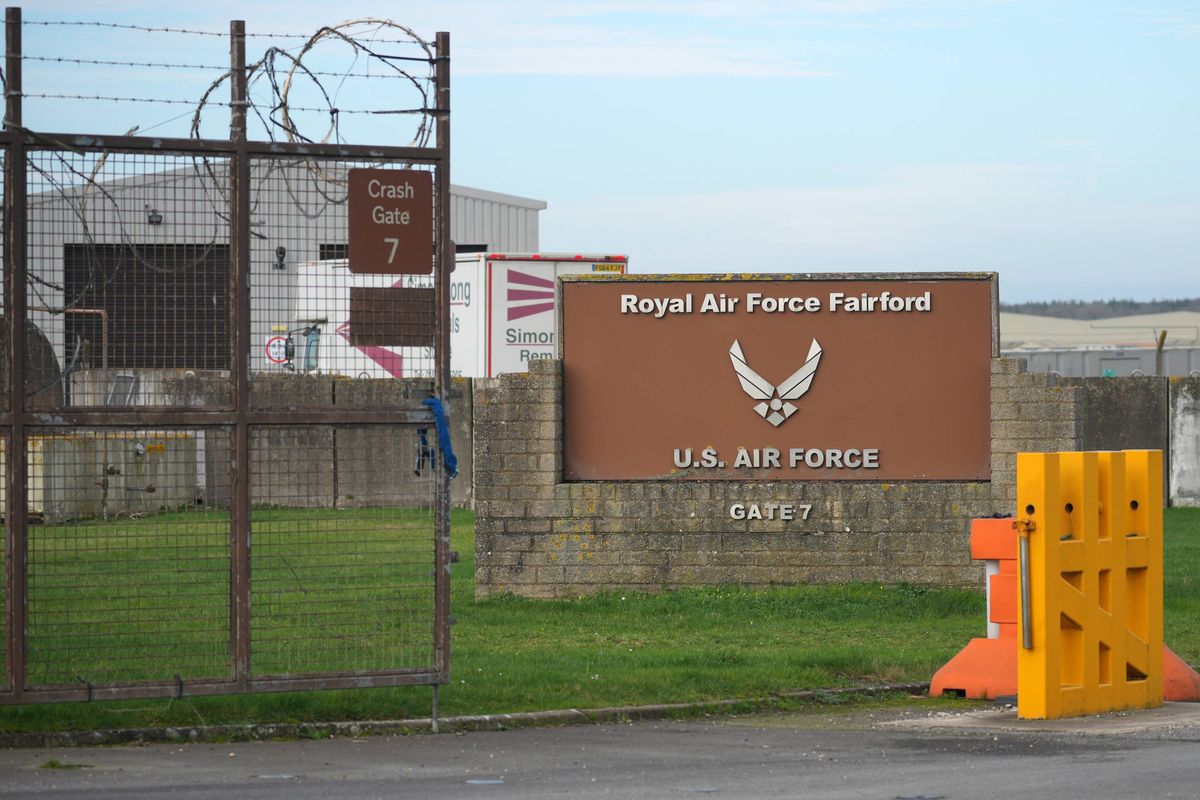
RAF Fairford has a history of use by the US to conduct long-range heavy bombing(Image: Getty Images)
“The UK terror threat level will almost certainly be raised if it hasn’t been already. But I want to be clear: the probability of a large-scale conventional military strike on the UK mainland remains very low. The threat is asymmetric, covert, and harder to see coming.”
Any such strike would probably target the GCHQ facility Gene mentioned in Cheltenham.
He proceeded to outline how Britons can protect themselves amid heightened international tensions. Gene added: “For ordinary British citizens, the safest posture is the same one that applied during previous elevated threat periods: stay informed, stay aware of your surroundings, and follow government guidance.
“The reality is that the UK’s domestic security services, MI5 and counter-terrorism policing, are very good at disrupting plots before they materialise. The infrastructure is there. The people are capable.
“But no system is perfect, and the sheer volume of intelligence traffic generated by a crisis of this scale stretches resources.”
As of March 2, 102,000 British citizens had registered their presence in the Middle East with the UK Government, though Foreign Secretary Yvette Cooper has suggested the figure could stretch as high as 300,000 across the Gulf.
Gene highlighted that those currently in the region pose the most pressing worry, urging people to “get out if you can”. With the Government reportedly drawing up evacuation plans, he pressed people to “take the offer” should such opportunities materialise.