
Unlock the Editor’s Digest for free
Roula Khalaf, Editor of the FT, selects her favourite stories in this weekly newsletter.
The Royal Navy’s delayed deployment of an advanced warship to Cyprus to bolster the island’s air defence has shone a spotlight on the “threadbare” state of the UK’s maritime force, according to defence analysts.
The Cypriot government has said it was “disappointed” in Britain and had to draft in support from France, after UK Ministry of Defence officials confirmed that there would be a two-week delay to a Type 45 destroyer arriving in the eastern Mediterranean.
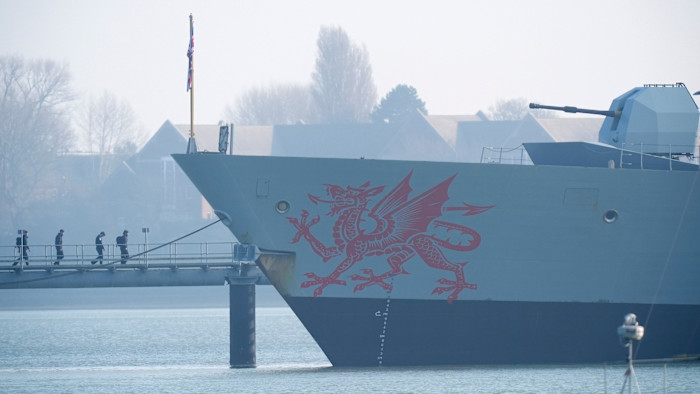
HMS Dragon, which is equipped with the cutting-edge Sea Viper missile system, will not set sail from Portsmouth until next week, with the journey expected to take a further week. Officials said it had been getting ready to deploy to the Arctic and preparations, such as fitting out the ship with ammunition and other supplies, are required for the new mission.
Tom Sharpe, retired Royal Navy commander, said: “The navy is threadbare. This has been 30 years in the making and does not reflect the excellence of our current sailors. It is, nevertheless, true. Huge investment and a cultural clear out are both required to reverse this decline. I’m not seeing signs of either.”
One senior defence official acknowledged the smaller size of the naval fleet compared with earlier eras, but insisted it was a political decision not to deploy more maritime assets to the Mediterranean and Gulf regions as the Iran war escalated.
“This isn’t the Royal Navy of the Grand Fleet in Jutland [Britain’s 151-warship force in the biggest naval clash of the first world war], but there are extremely capable ships that could be pointed in the direction of the Persian Gulf if the prime minister wants them to be,” the official said.
The official said it would be possible to deploy a carrier strike group with 10 days’ notice if Downing Street desired, and pointed to other options available at a high state of readiness, including two minehunters in Portsmouth, a frigate taking part in a working-up exercise in Plymouth and an Astute-class submarine that has been involved in trials in Australia in recent weeks.
 A Sea Viper missile is launched from HMS Dragon © PO(Phot) Jim Gibson RNR/Royal Navy/UK MoD
Nick Childs, naval warfare analyst with the International Institute of Strategic Studies in London, takes a different view. “It is a readiness issue in the sense that in the past you would have had more availability of ships,” he said.
He added that in 2018, when the UK participated in strikes against Syrian chemical weapons targets, for example, there was a Type 45 destroyer sent to the eastern Mediterranean to provide air defence, including for Cyprus. “That was frankly because there was a ship available in the region at the time that was doing Nato tasking.”
As of earlier this week, all six Type 45 destroyers were in UK ports, which Childs said was “not ideal”.
He added: “It is an issue that ultimately the ship you decide you need to send is one that has just come out of a maintenance period, and was basically empty of ammunition and stores. So you know you have to spend time loading her up and preparing her before you can even deploy her.”
Sidharth Kaushal, senior research fellow in sea power at the Royal United Services Institute, a London-based think-tank, agreed there was an issue with the navy’s fleet availability.
“Over the past decade, there was the idea that the navy should focus heavily on outputs: presence and activity, but with an increasingly old fleet. If you maximise presence with an ageing fleet, things break down even faster than they otherwise would. It has been self-defeating in some respects,” he said.
The Type 45 destroyers in particular have had to spend a lot of time in maintenance “due to teething problems” and issues with maintenance, including spare part and engineer shortages.
Kaushal also raised well-known concerns about crew numbers in the navy, largely prompted by retention problems.
An MoD spokesperson said: “We are reinforcing our defensive presence in the eastern Mediterranean. Royal Navy Wildcat helicopters armed with Martlet drone-busting missiles are deploying within days. They will reinforce our RAF Typhoons, F-35B jets, ground-based counter-drone teams, radar systems and Voyager refuelling aircraft already deployed,”
The spokesperson added that the Royal Navy “is working as fast as possible to prepare HMS Dragon for deployment”.