
Iran’s foreign minister Abbas Araghchi called it an “atrocity at sea” and said the US would “bitterly regret” the attack.
US defence secretary Pete Hegseth touted it as an example of America’s military prowess, claiming it was “the first sinking of an enemy ship by a torpedo since World War Two”.
While it is the first time since 1945 that an American submarine has sunk an enemy ship this way, the UK and Pakistan have both sunk vessels using torpedoes since then.
The Iris Dena was one of about 20 Iranian navy vessels destroyed since Israel and the US launched co-ordinated strikes on Iran over the weekend.
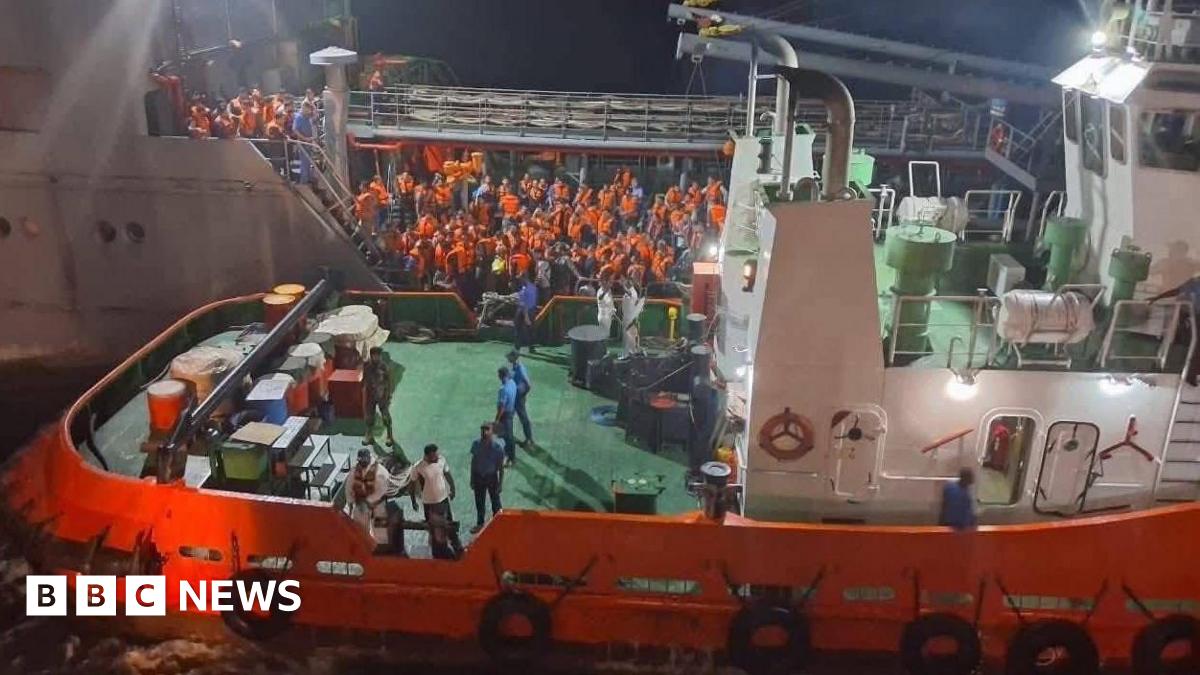
And on Thursday, the Iris Bushehr requested permission from Sri Lanka to come into port, citing engine issues.
Dissanayake eventually allowed it to dock at the port of Trincomalee, though the vessel was near the country’s main commercial port in Colombo. He added that there was a risk of the country’s maritime industry being “adversely affected”, should the ship have docked in Colombo.
The crew members of the Irins Bushehr, including 53 officers, 84 cadet officers, 48 senior sailors and 23 sailors, will be brought to Colombo.
As of Thursday, Sri Lanka’s navy is also still searching through its waters for crew members of the Iris Dena who are still missing.
The 32 survivors from the Iris Dena are now being treated at a hospital in Galle for serious injuries.
Sri Lanka has maintained a long-standing policy of non-alignment since it became independent in 1948.
It has strong economic and diplomatic ties with both Iran and the US.
Sri Lanka had bought $250 million worth of crude oil from Iran and is paying back through monthly exports of tea. The US, on the other hand, is the primary destination for Sri Lankan garment and apparel.