
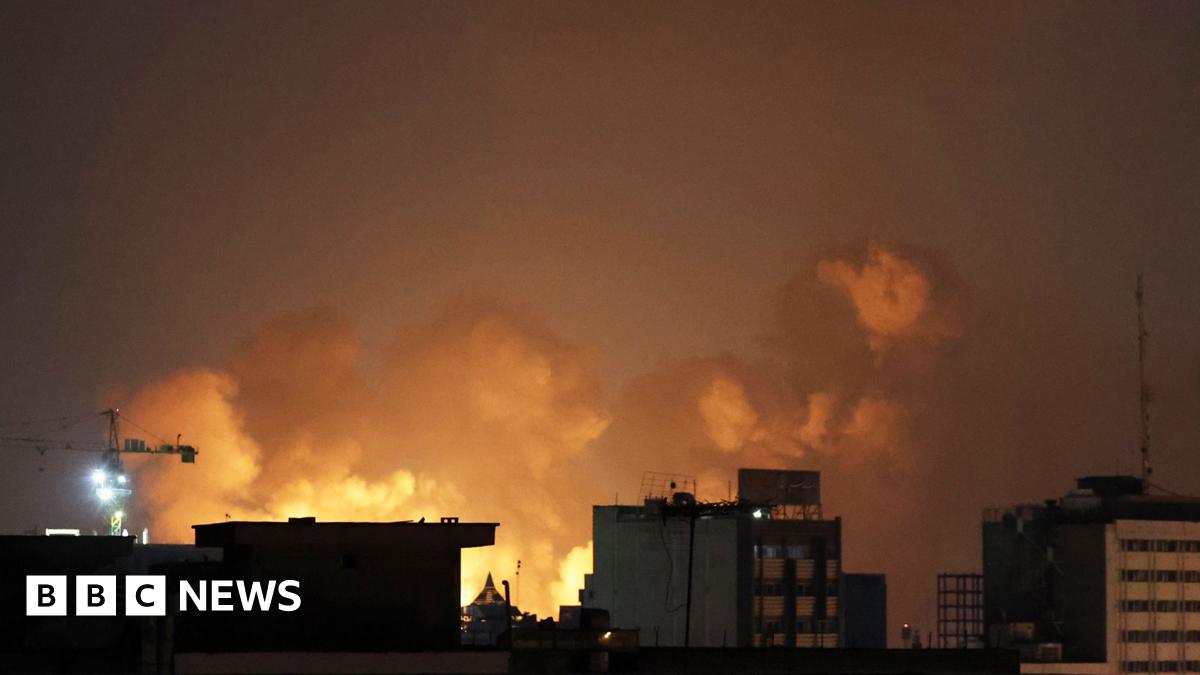
“The house was shaking for five minutes straight. Last night was the worst night,” says a man in his 30s.
He says he could barely sleep because of the “constant explosions.”
Another woman in her 40s said she “woke up to the sound of explosions at 05:00 and haven’t been able to sleep ever since”.
The BBC is withholding the identities of those we speak to for their own safety.
International news organisations are often refused visas to Iran, which severely limits their ability to gather information about what’s going on inside the country. Internet blackouts make the situation even harder to report on.
Another young man has described the fear he and his family have felt in recent days in Damavand, a city near Tehran where they have moved to temporarily.
“I’d never seen an explosion up close before,” he said.
“I actually saw it with my own eyes from inside the house. I saw a light suddenly shoot up into the sky. All the windows in the house started shaking. My family was so frightened you wouldn’t believe it.
“They said we’d have to go with two cars, because one car wouldn’t be enough to take our things.”
“I can see a lot of dissatisfaction with the war among ordinary people,” he added.
BBC News is unable to verify casualty counts from inside Iran, but US-based Human Rights Activists News Agency (Hrana) has reported 1,168 civilians have been killed since the war began, including 194 children.