
Another First Nation in Metro Vancouver is reviewing the Government of Canada’s Aboriginal rights and title recognition agreements with the Musqueam Indian Band, as neighbouring First Nations seek clarity on how the deals may affect their own rights and the areas they consider to be part of their traditional territories.
Tsawwassen First Nation announced Thursday it is analyzing Musqueam’s three agreements with the federal government to determine their meaning and possible implications.
The agreements, signed on Feb. 20, establish shared marine and fisheries decision-making in and around the Lower Mainland and create a framework for incrementally establishing Musqueam’s Aboriginal title in the area the First Nation considers to be its traditional territory.
“We approach our relationships with neighbouring Nations with respect and care. At the same time, we have a clear responsibility to uphold and protect our Treaty rights, including our rights at Brunswick Point and in the Fraser River,” said Tsawwassen Chief Laura Cassidy today.
“As we review Canada’s agreements with Musqueam, we are committed to open dialogue and to ensuring that reconciliation moves forward in a way that honours the rights and responsibilities of all Nations.”
This week, following a public outcry, the federal government published the full text of the agreement on an accessible webpage.
As well, earlier this week, Squamish Nation said it would challenge any suggestion that the agreements extend into areas that it considers to be its traditional territory and has begun a legal review.
Tsawwassen’s response took a more measured tone, acknowledging the Musqueam agreement as a milestone while emphasizing the need for further dialogue among First Nations and governments.
“We acknowledge this significant milestone and recognize the work that has gone into achieving it. Every Nation’s path is unique, and we respect the decisions communities make based on their own needs and priorities,” reads Tsawwassen’s statement.
“Tsawwassen First Nation maintains strong and respectful relationships with our neighbours, including Musqueam. We share many values and remain committed to working together in a good way… As our review continues, we look forward to meeting with our neighbours and with our treaty partners to discuss how our respective approaches to reconciliation can complement one another. These conversations will take time, and we are committed to approaching them collaboratively.”
Tsawwassen also stated it expects levels of government to uphold their responsibility to consult and act “honourably in all matters affecting our rights and interests.”
“Tsawwassen First Nation remains committed to protecting the rights of our members, including our right to fish in the Fraser River, as affirmed in our Treaty,” continues the statement.
The Musqueam, Squamish, and Tsawwassen First Nations have overlapping areas they consider to be their traditional territories. There is also significant overlap between the Tsleil-Waututh First Nation and the traditional territories claimed by the Musqueam and Squamish.
Tsawwassen’s claimed traditional territory spans Richmond, Delta, White Rock, Surrey, New Westminster, Coquitlam, Port Coquitlam, Langley City, Langley Township, and an expansive watershed area around Pitt Lake, as well as Salt Spring Island, Galiano Island, Mayne Island, Saturna Island, North Pender Island, and South Pender Island.
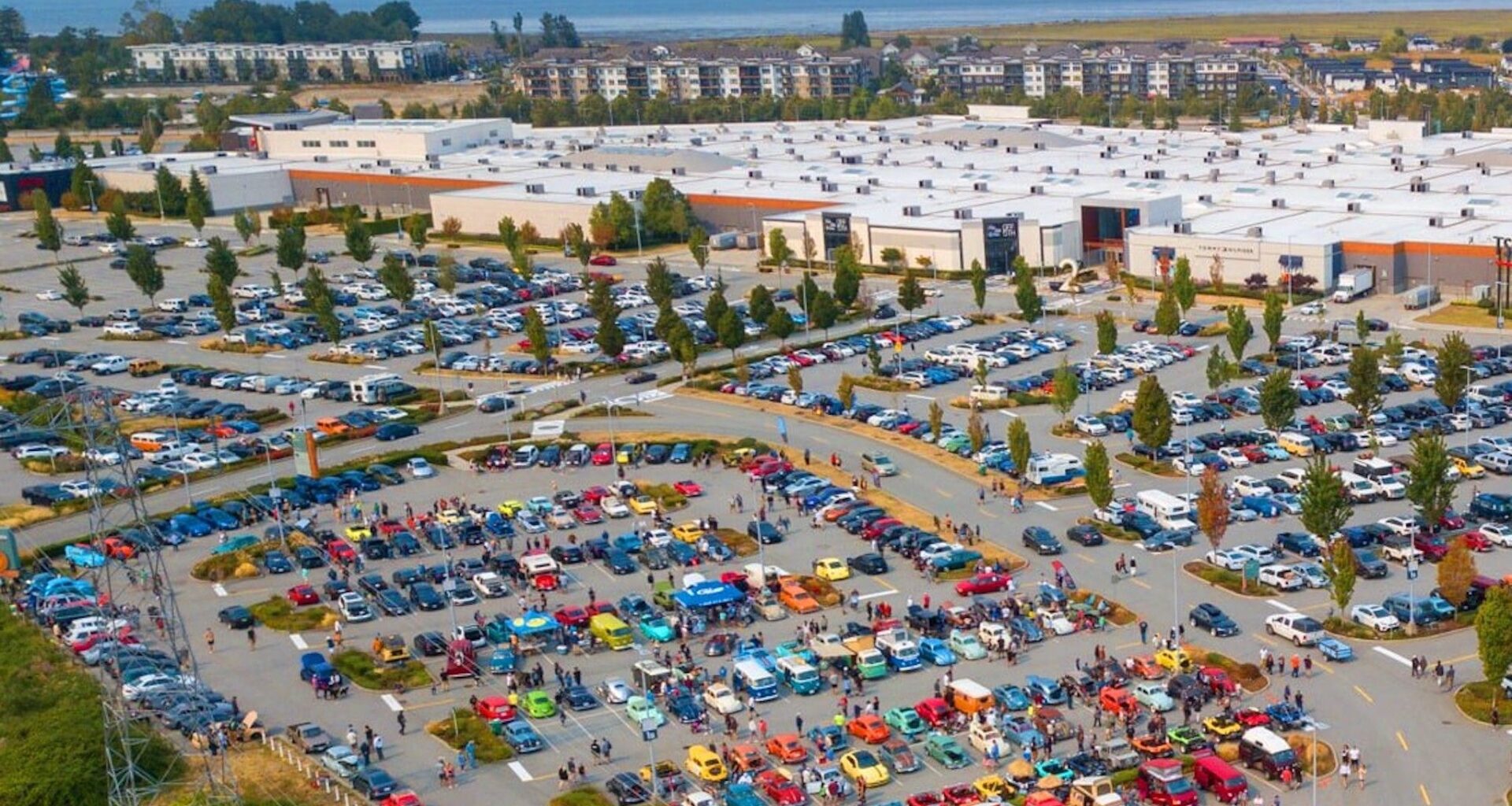
In 2009, Tsawwassen finalized and secured a legally binding treaty with the provincial and federal governments, establishing self-government and recognizing land rights for areas in southwest Delta. It was the first modern treaty in the Lower Mainland, providing a cash contribution and transferring about 1,800 acres of land in the Tsawwassen area of Delta, with significant portions — formerly agricultural uses — now used for the major retail developments of Tsawwassen Mills and Tsawwassen Commons, and industrial and residential projects.
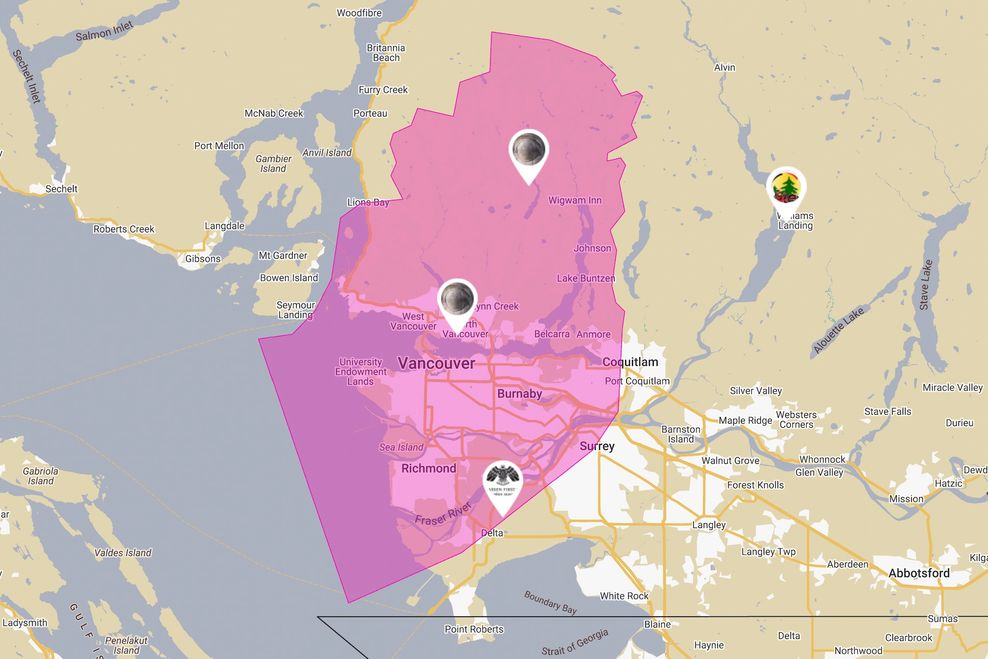
Areas asserted to be the traditional territory of Musqueam Indian Band. (BC Treaty Commission)
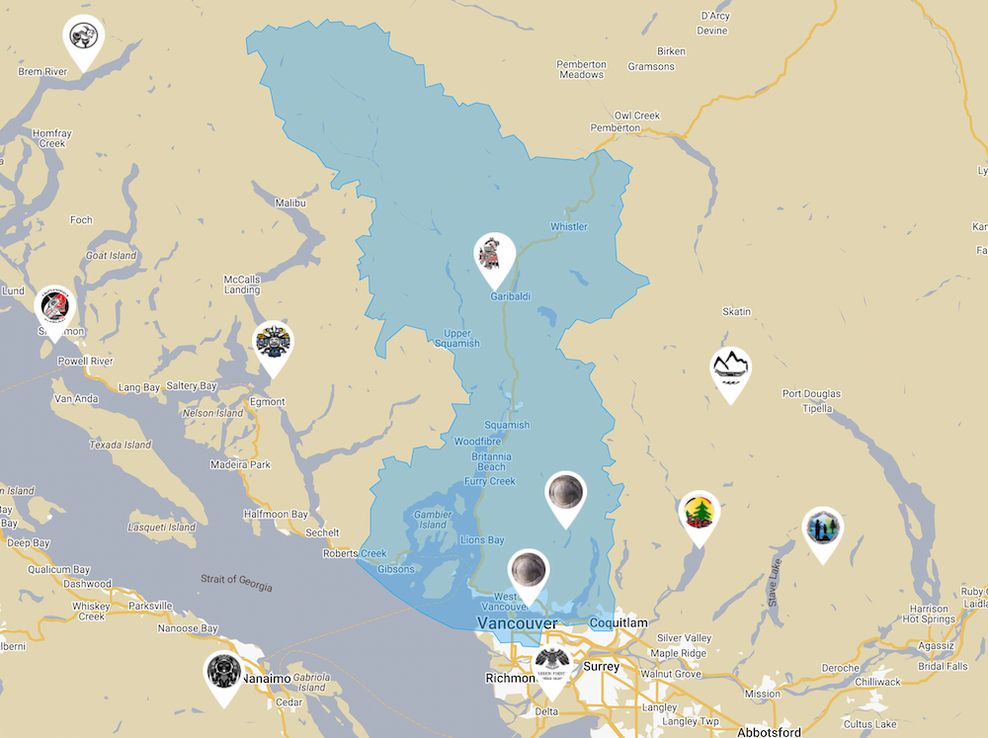
Areas asserted to be the traditional territory of Squamish Nation. (BC Treaty Commission)
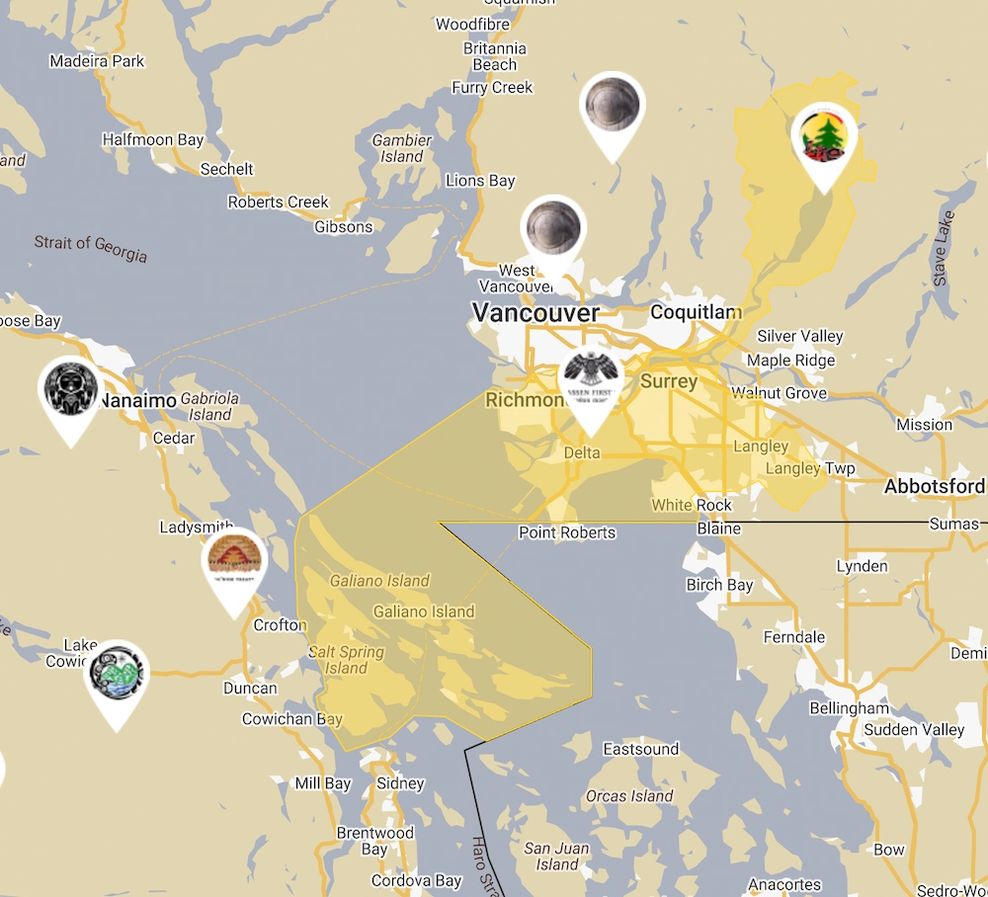
Areas asserted to be the traditional territory of Tsawwassen First Nation. (BC Treaty Commission)
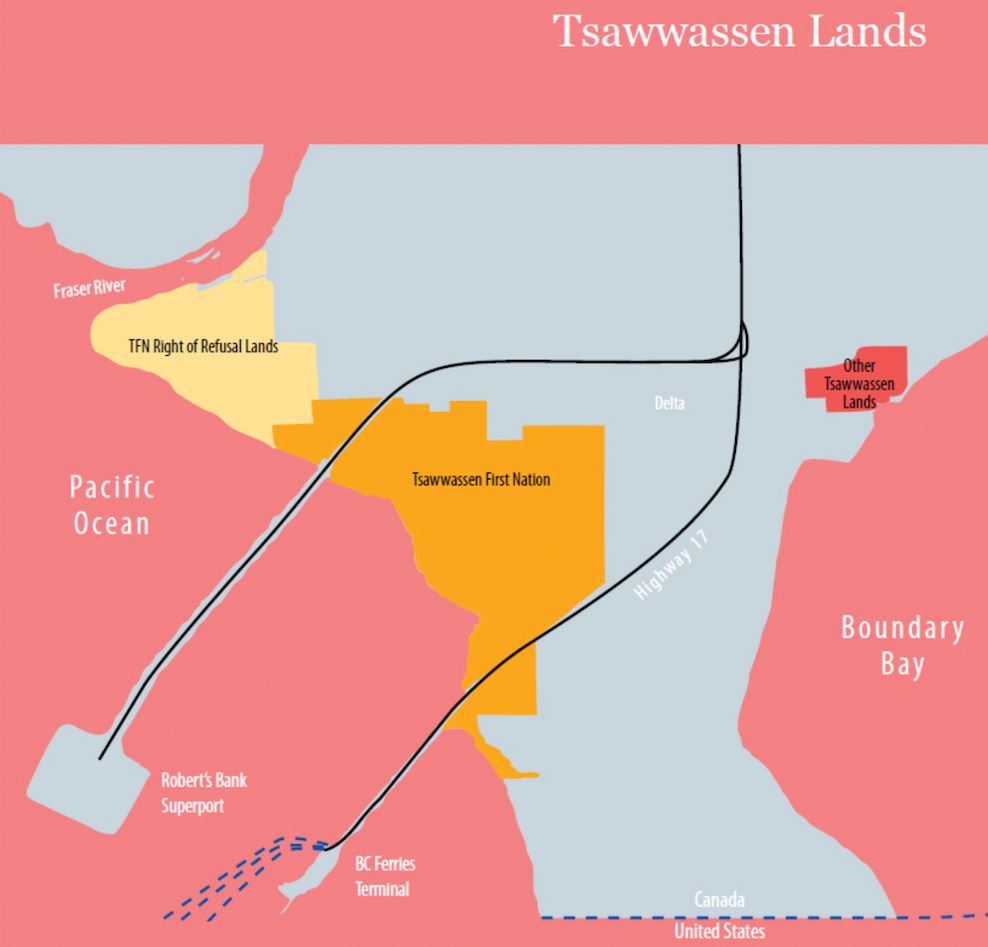
Tsawwassen First Nation treaty lands. (Government of Canada)
Together, the responses from neighbouring First Nations add to the growing debate and uncertainty surrounding public and private land ownership in British Columbia.
The Musqueam agreements come amid heightened public criticism and scrutiny following recent Aboriginal title court decisions involving the Cowichan Tribes in southeast Richmond and the Haida Nation in Haida Gwaii, as well as other land claims moving through court and negotiation processes.
Although the Cowichan Tribes assert they are not pursuing fee-simple title private property, at least not at this time, the August 2025 court decision — now being appealed by various governments, as well as Musqueam and Tsawwassen — grants them both public and private properties in the land claim area in southeast Richmond.
Similarly, Musqueam’s current leadership has emphasized that it is not going after private property. But the newly signed agreements with the federal government do not establish any guardrails to ensure that the future gradual implementation of Aboriginal title and other rights does not span private property. Moreover, the agreement appears to intentionally leave the framework flexible and open-ended, describing it as the “implementation of this living agreement” — potentially open to additions and changes to interpretation over time.
These issues have also been amplified by ongoing controversy over the provincial government’s Declaration on the Rights of Indigenous Peoples Act and broader debates about Indigenous rights and reconciliation, with growing concern that provincial and federal governments are taking a highly deferential approach to First Nations at the complete expense of private property rights, public lands for the benefit of the general public, economic and political stability, and the broader public interest and collective good.