
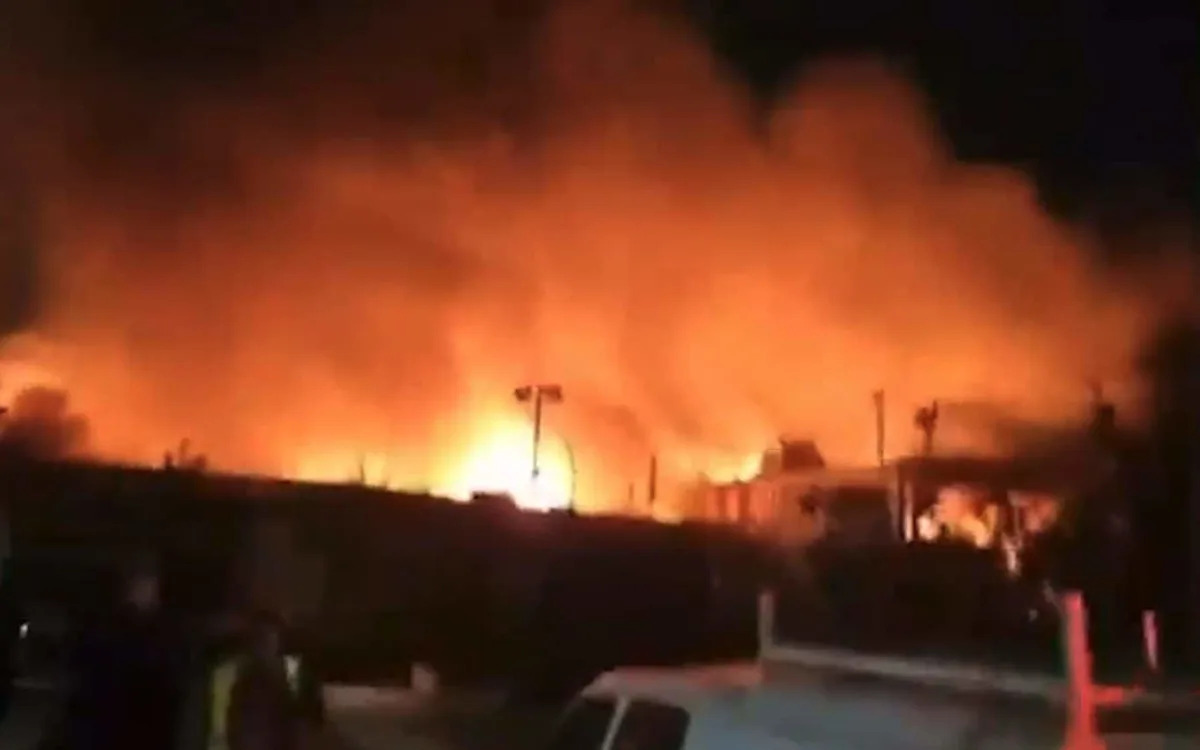
Iranian cluster bombs have rained down across parts of Israel, including a rural community near Tel Aviv.
Tehran launched a fresh salvo of ballistic missiles overnight on Thursday, which were accompanied by about a dozen smaller bomblets designed to spread damage across a vast area.
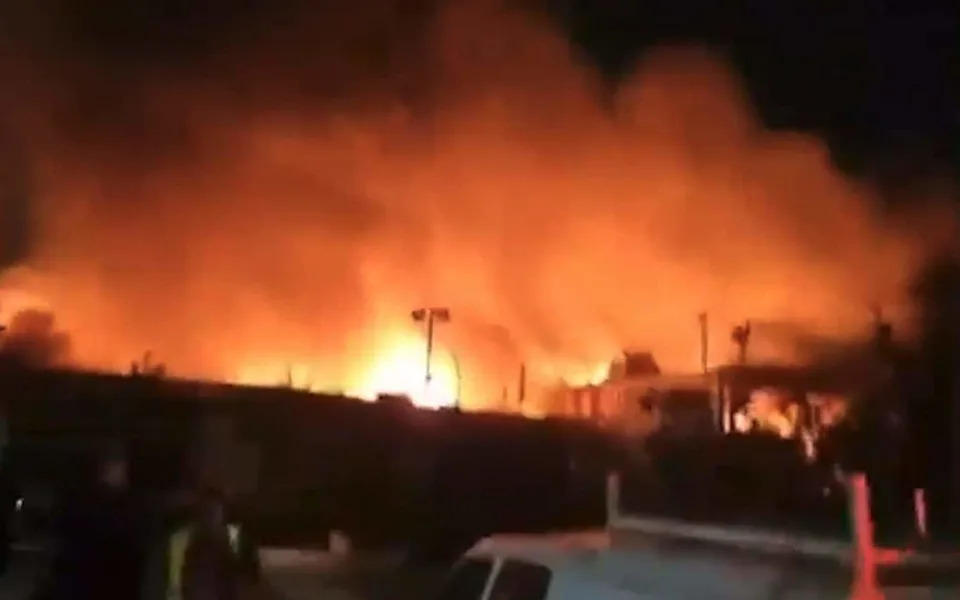
Flames rise over the Tel Aviv skyline during the Iranian missile barrage – Reuters
One of the devices slammed through the roof of an empty workshop in the village of Bareket, 12 miles east of Tel Aviv.
The explosion, shortly after 10pm, triggered an inferno that gutted the building. The property was about 30ft away from several homes where young families and children were sheltering.
Rafael Steansky, 26, lives next to the blast site and said it was an “act of God” that nobody was hurt.
“We heard a big boom. The second we went outside, we saw everything up in smoke with fire all around,” he told The Telegraph on Friday.
“Everything was in flames. We couldn’t believe it. Everyone lives so close, it’s a miracle the bomb didn’t kill anyone.”
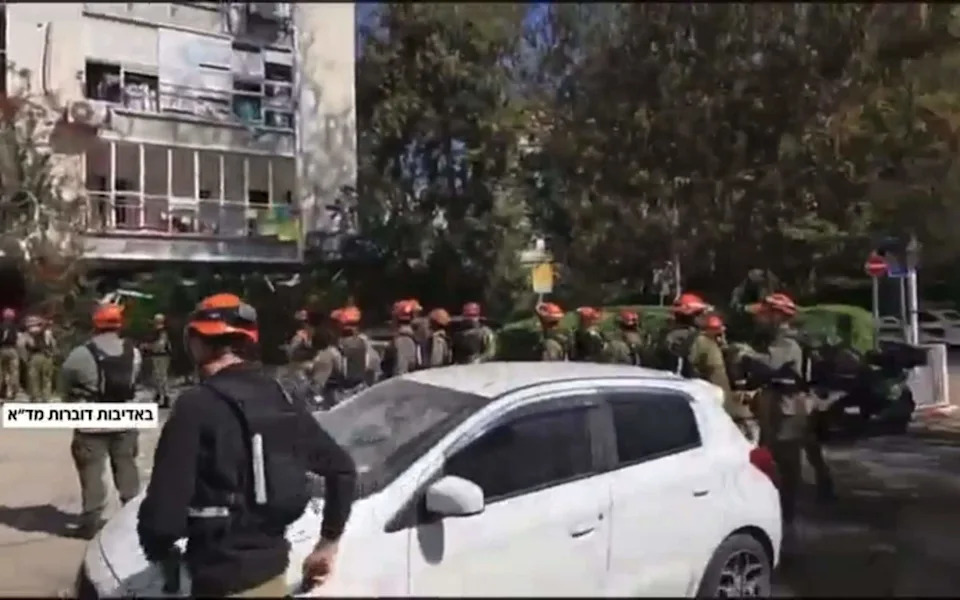
Emergency services on the streets of Tel Aviv on Friday as the explosives fell on the city
Yehoshafat Hilel lives in a caravan next to the impact site, and was protected from debris tearing into his home by a wall, which was peppered with black scorch marks from shrapnel. “I was very lucky. It is amazing nobody was hurt,” said Mr Hilel, 59.
Other devices have reportedly landed in the neighbouring community of El’ad, the only locality in Israel officially designated a religious municipality. There were no reports of any injuries.
Locals believe the Iranians were trying to target Ben Gurion Airport, which is less than a mile from Bareket. The Israel Defense Forces (IDF) have not confirmed Tehran’s suspected target.
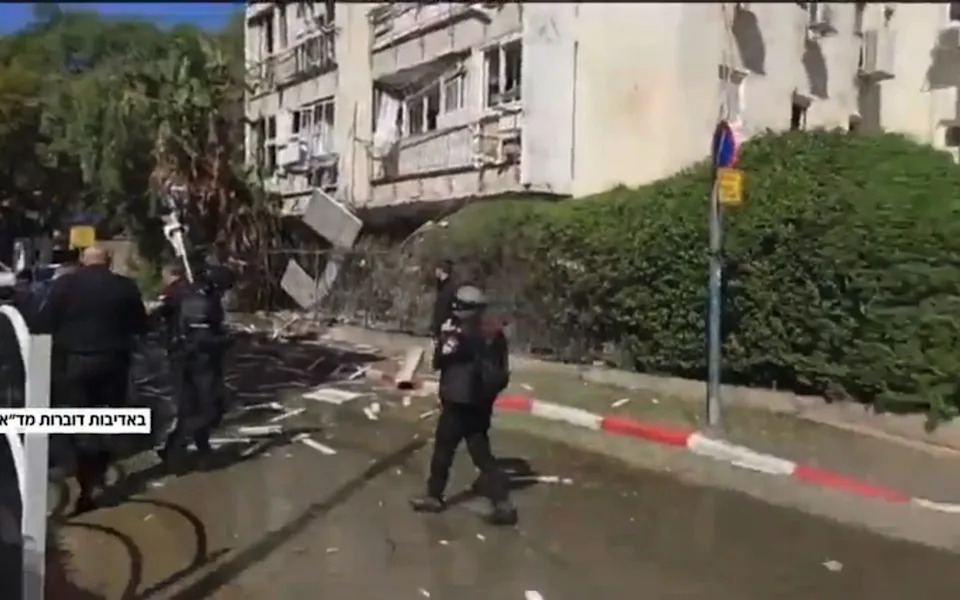
The aftermath of cluster bomb that fell on Tel Aviv

The Iranian missiles light up the sky over Israel during the attack – Reuters
The intensity of missile barrages from Tehran has slowed in recent days, as the IDF and American forces continued to target missile-launching sites across the Islamic Republic.
Tehran has been criticised for using cluster munitions, which are indiscriminate in the mayhem they can cause. The Geneva Conventions outlaw such devices.
The missiles carry relatively small bombs, which are dispersed from a high altitude and cause damage across a radius of several kilometres.
Around 40 per cent of submunitions do not explode upon impact, posing a danger to civilians who might later stumble upon them.
Reports suggest Iran has launched at least six such devices since the joint US-Israeli strikes assault began. Israel has been accused of using similar weapons in strikes on Lebanon.
Iran’s president said on Friday that mediation efforts to end the war have begun. Masoud Pezeshkian said his country was “committed to lasting peace,” but added that Iran would keep defending itself.
But intense air attacks continued to pound Tehran and other Iranian cities on the seventh day of the US-Israeli attacks.
Pete Hegseth, the US defence secretary, warned that the bombardment was “about to surge dramatically”.
Israel’s military said a new wave of strikes had been launched on Tehran, targeting “regime infrastructure” in a “new phase” of the war, while the US said its B-2 bombers had dropped dozens of “penetrator” bombs on deeply buried ballistic missile launchers inside the country.
Since the war began, more than 1,300 Iranians, including at least 181 children, have been killed in US-Israeli strikes, Unicef said on Friday.