
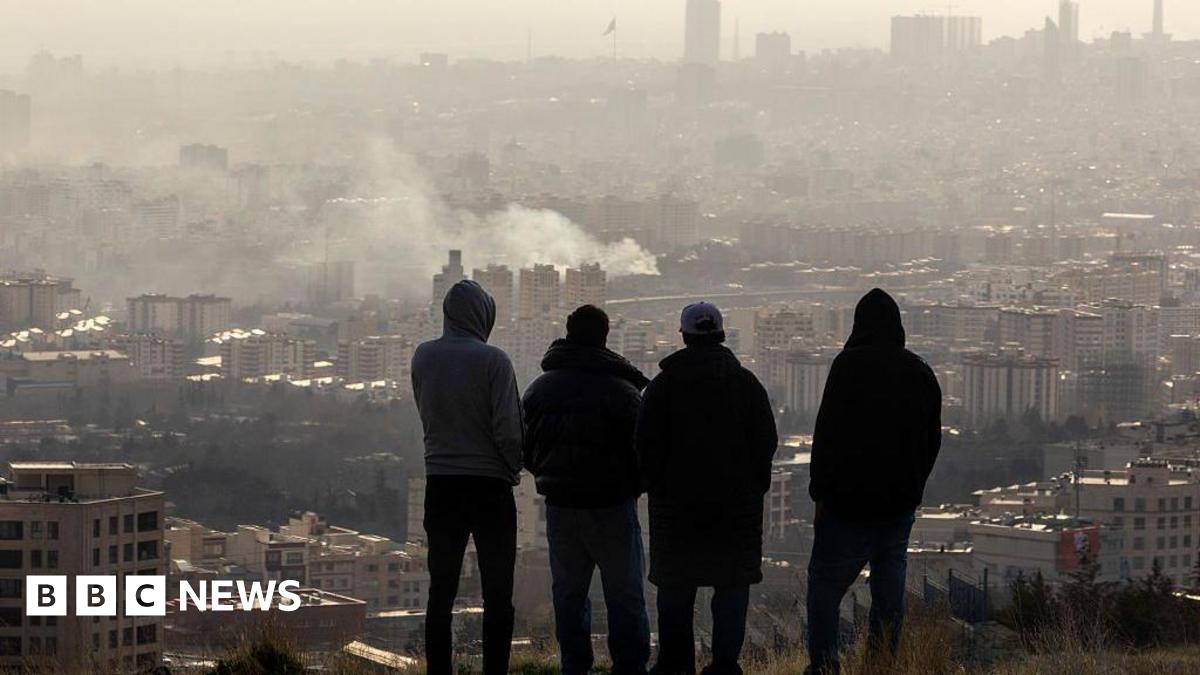
The regime still instils fear and no one who voices any opposition to it is willing to give their name for fear of the repercussions on them or their family.
But a week on, while some people are still celebrating every strike on the regime, others are increasingly frightened, questioning the motives and endgame of the war.
“The goal of this war isn’t to bring about freedom or democracy for the Iranian people,” Ali told us.
“It’s for the geopolitical benefit of Israel, the US and Arab countries in the region.”
Mohammad, who is in his 30s and lives in Tehran, said that he had wanted a deal between the US and Iran that would have avoided the war.
“Deep down, I always hoped an agreement would be made,” he said.
He had thought that he would be happy at Khamenei’s death, but in the end “felt nothing”.
He told my colleague Soroush Pakzad that he is now filled with uncertainty about the future – and, with regime checkpoints everywhere on the ground and bombardments from the sky, he is afraid.
Others Iranians speak of feeling a mix of fear, stress and hope.
One woman told me that I would have to live in Iran for 40 years to understand the complexity of what she and other Iranians are now feeling.
“We laugh and are happy when the regime is hit, but when children die and our infrastructure is destroyed, we worry about the future of our country,” she said.
There are no opinion polls in Iran but most Iranians appear to despise a regime that has brought such immense suffering to them.
While it still has large numbers of die-hard supporters, its many opponents are split between those cheering on the US and Israel, and those who are deeply suspicious.